Allergens collect in carpets, rugs, and floor-level dust, making consistent cleaning especially important for allergy-sensitive households. The right robot vacuum can help by running frequently, capturing fine debris, and limiting contact with collected dirt.
These 10 picks cover useful options for pet hair, mixed flooring, smart mapping, mopping, and hands-off self-emptying. Pay close attention to filtration, dock design, brush maintenance, and whether the robot matches your home’s floor plan.
Best 10 Robot Vacuum for Allergies Picks for 2026
Best HEPA Bagless Option

- True HEPA filtration captures 99.97% of dust and allergens.
- Bagless self-emptying base stores up to 30 days of debris.
- LiDAR mapping and Matrix Clean provide systematic coverage.
Best For: Pet homes seeking HEPA filtration without disposable bags
Best Long-Term Sealed Storage
Dreame D20 Air Plus Robot Vacuum and Mop

- Sealed 4L bag stores debris for up to 120 days.
- Bag is designed to lock in 99.9% of allergens.
- 20,000Pa suction and adjustable mopping cover multiple surfaces.
Best For: Busy pet households wanting low-contact, infrequent emptying
Best Renewed Budget Pick
Shark IQ Self-Emptying Robot Vacuum
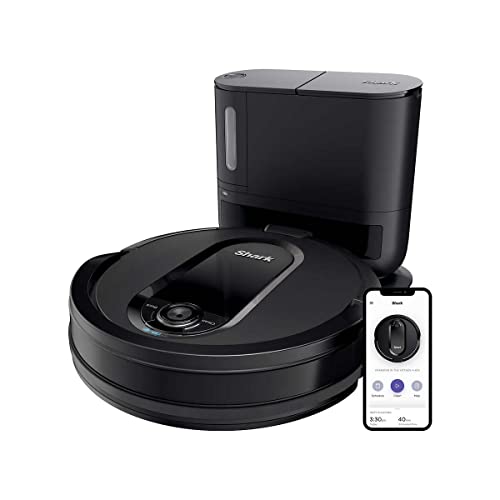
- Self-empty base stores up to 30 days of debris.
- High-efficiency filter captures dust, dander, and pet allergens.
- Room mapping and a self-cleaning brushroll aid routine cleaning.
Best For: Budget-conscious pet owners comfortable buying renewed
Best Vacuum-and-Mop Value

- 8,000Pa suction targets dust, hair, and carpet debris.
- Washable filter and dual anti-tangle design simplify maintenance.
- LiDAR mapping, no-go zones, and mopping add versatility.
Best For: Homes wanting strong routine cleaning without auto-emptying
Best Value Self-Emptying Pick

- Bagless self-emptying with a reusable dust cup
- 6000Pa suction for pet hair and everyday debris
- LiDAR maps up to five levels and supports no-go zones
Best For: Pet owners wanting low-waste, hands-off daily cleaning
Best for Pet-Hair Control

- Sealed 2.7L dock offers up to 7–9 weeks of self-emptying
- 10000Pa suction targets pet hair and carpet debris
- Dual anti-tangle brushes reduce hair-wrap maintenance
Best For: Pet homes with carpets and frequent fur buildup
Best for Allergen Containment

- AllergenLock bags trap 99% of pollen and mold
- Self-empties for up to three months
- LiDAR, 15000Pa suction, and carpet-safe mopping controls
Best For: Allergy-conscious homes prioritizing sealed dust disposal
Best Hands-Free Pick

- 8,000Pa suction with carpet boost
- Self-emptying bin rated for up to 90 days
- LiDAR mapping and washable high-efficiency filter
Best For: Pet owners wanting automated, low-contact cleaning
Best Slim Budget Option

- 5,000Pa suction and HEPA filter
- Slim 2.99-inch design for low furniture
- Vacuum-and-mop function with four controls
Best For: Smaller homes needing accessible routine cleaning
Best Mapping and Mop Control

- 6,000Pa suction with automatic carpet boost
- 90-day self-emptying dust-bag station
- LiDAR mapping and adjustable water flow
Best For: Multi-room homes with mixed floors and pets
Best HEPA Bagless Option – Shark AI Ultra Robot Vacuum
If you want a robot vacuum for allergies without handling a disposable bag, the Shark AI Ultra combines true HEPA filtration with a bagless self-emptying base. Its LiDAR mapping, strong suction, and Matrix Clean navigation make it a practical choice for regular whole-home cleaning.
Best For: Pet-owning households that want HEPA filtration, hands-free emptying, and methodical coverage on carpets and hard floors.
Pros:
- True HEPA filtration captures and traps 99.97% of dust and allergens down to 0.3 microns.
- Bagless base holds up to 30 days of dirt and debris.
- Matrix Clean makes multiple passes, while LiDAR mapping supports precise navigation.
- Self-cleaning brushroll and strong suction help collect pet hair and dander.
Cons:
- Bagless emptying may expose you to collected debris during maintenance.
- It does not include mopping functionality.
This is a particularly allergy-focused pick if you prefer a sealed filtration system but do not want to buy replacement bags. Recharge and Resume and up to 120 minutes of runtime also support larger cleaning areas.
Best Long-Term Sealed Storage – Dreame D20 Air Plus Robot Vacuum and Mop
The Dreame D20 Air Plus is a strong robot vacuum for allergies for households that want infrequent dust disposal. Its sealed 4-liter bag is designed to lock in 99.9% of allergens, while powerful suction and simultaneous mopping cover both carpets and hard floors.
Best For: Busy families and pet owners who prioritize long intervals between emptying and want vacuuming plus mopping in one robot.
Pros:
- Sealed dust bag holds up to 120 days of dust, pet hair, and debris.
- The self-sealing bag is designed to lock in 99.9% of allergens with less dust release.
- 20,000Pa suction targets embedded carpet dust, pet hair, and debris in floor crevices.
- Adjustable water flow enables simultaneous vacuuming and mopping.
Cons:
- Uses replacement dust bags rather than a bagless base.
- App connectivity supports only 2.4GHz Wi-Fi and is intended for USA use.
- Its rectangular form may be less maneuverable in some spaces than a round robot.
Among these options, the D20 Air Plus stands out for minimizing contact with collected allergens during disposal. Its 150-minute battery life, LiDAR navigation, and edge-to-corner cleaning further suit larger or pet-heavy homes.
Best Renewed Budget Pick – Shark IQ Self-Emptying Robot Vacuum
Shark IQ App-Controlled Self-Emptying Robot Vacuum, RV100AE/UR1000SR - Black (Renewed)
Check Price On AmazonFor shoppers seeking a more affordable robot vacuum for allergies, this renewed Shark IQ model pairs a self-emptying base with a high-efficiency filter. It maps rooms, cleans methodically, and uses a self-cleaning brushroll to help manage pet hair on carpets and hard floors.
Best For: Budget-conscious pet owners who want room-select cleaning and automatic emptying in a renewed model.
Pros:
- Bagless self-empty base holds up to 30 days of dirt and debris.
- High-efficiency filtration helps capture dust, dander, and pet allergens.
- Total Home Mapping supports room-specific cleaning and row-by-row coverage.
- Self-cleaning brushroll helps reduce hair wrap during cleaning.
Cons:
- As a renewed product, it includes a 90-day limited warranty.
- The supplied details identify a high-efficiency filter but do not specify a HEPA rating.
- It lacks the newer model’s LiDAR and Matrix Clean features.
This model makes sense when automatic dirt storage and pet-hair handling matter more than premium allergen specifications. Verify the renewed condition and warranty terms before buying, especially if filtration performance is your top priority.
Best Vacuum-and-Mop Value – Roborock Q7 L5 Robot Vacuum
The Roborock Q7 L5 is a versatile robot vacuum for allergies that combines 8,000Pa suction with a washable filter and electronic mopping. Its LiDAR mapping, dual anti-tangle design, and app-based room controls make it well suited to frequent dust and pet-hair maintenance.
Best For: Homes needing strong everyday vacuuming, mopping, multi-floor mapping, and low-maintenance hair handling.
Pros:
- 8,000Pa suction lifts dust, hair, and debris from carpets and floor cracks.
- Washable filter can be maintained without relying on disposable filters.
- Dual anti-tangle design helps reduce hair wrap in pet homes.
- LiDAR mapping, no-go zones, and room scheduling support targeted cleaning.
Cons:
- It does not include a self-emptying dock, so the bin requires manual emptying.
- The integrated dustbin and water-tank combo may be less convenient to handle.
- Supports only 2.4GHz Wi-Fi.
The Q7 L5 is a good fit if you want allergy-conscious routine cleaning but do not need an auto-empty station. Its washable filter and strong suction are useful for ongoing dust control, while the mop module adds flexibility for hard floors.
Best Value Self-Emptying Pick – Airzeen Q20 Ultra
If you want a robot vacuum for allergies that can handle everyday dust, pet hair, and crumbs with minimal intervention, the Airzeen Q20 Ultra is a practical option. Its bagless self-emptying design, washable dust cup, LiDAR mapping, and up-to-6000Pa suction are suited to hard floors and low-pile carpets.
Best For: Pet-owning households seeking an affordable vacuum-and-mop robot with reusable, low-waste maintenance.
Pros:
- Bagless self-emptying dust cup can provide up to 45 days of cleaning and is rinseable for reuse.
- Up to 6000Pa suction with three power levels lifts dust, pet hair, litter, and crumbs.
- LiDAR navigation supports precise mapping, up to five maps, room targeting, and no-go zones.
- Combines vacuuming, sweeping, mopping, and auto-recharging with resume cleaning.
Cons:
- Its sponge filter is less specifically allergy-focused than an allergen-sealing bag system.
- Only 2.4GHz Wi-Fi is supported.
- The mop holder should be removed before carpet cleaning to avoid wetting carpets.
The Q20 Ultra stands out for flexible mapping and reusable self-emptying rather than specialized allergen containment. It is a sensible choice when pet-hair pickup and reduced daily cleanup matter more than premium filtration features.
Best for Pet-Hair Control – Roborock Q7 M5+
The Roborock Q7 M5+ is a strong robot vacuum for allergies when pet hair and carpet debris are recurring problems. It pairs 10,000Pa suction with a sealed 2.7L dust bag, dual anti-tangle brushes, and LiDAR navigation for longer, more consistent cleaning between maintenance tasks.
Best For: Homes with pets, carpets, and users who prefer a sealed, high-capacity self-emptying system.
Pros:
- Sealed 2.7L RockDock Plus dust bag supports up to seven to nine weeks of hands-free emptying.
- 10,000Pa suction is designed to lift pet hair and debris from carpets and other surfaces.
- JawScrapers and an anti-tangle side brush help reduce hair wrapping and interruptions.
- PreciSense LiDAR creates efficient maps, while the app supports schedules, spot cleaning, and no-go zones.
Cons:
- The sealed dock uses replacement dust bags rather than a reusable bagless cup.
- App support is limited to 2.4GHz Wi-Fi.
- Its listed 65 dB noise level may be noticeable during operation.
For allergy-conscious pet homes, the Q7 M5+ combines powerful pickup with less frequent handling of collected debris. Its sealed bag and anti-tangle design make it especially appealing if fur buildup and maintenance are your main concerns.
Best for Allergen Containment – Roomba 115X Combo
For shoppers seeking a robot vacuum for allergies, the Roomba 115X Combo places particular emphasis on cleaner dust disposal. Its AutoEmpty dock uses a 2.5L AllergenLock bag that traps 99% of pollen and mold and seals when removed, while LiDAR navigation and selectable cleaning modes support routine whole-home maintenance.
Best For: Allergy-conscious households that prioritize sealed dust disposal and combined vacuuming and mopping.
Pros:
- AllergenLock dock bags trap 99% of pollen and mold and seal on removal to reduce dust clouds.
- Self-empties for up to three months, minimizing direct contact with collected debris.
- 15,000Pa power-lifting suction, four suction levels, and edge-cleaning features target dust and debris.
- LiDAR mapping, No Mop Zones, and carpet-avoidance settings support controlled cleaning.
Cons:
- The system requires disposable replacement bags rather than a reusable dust container.
- Setup requires 2.4GHz Wi-Fi.
- Filters and brushes are recommended for replacement every three to six months.
The Roomba 115X Combo is the clearest fit when allergen containment during emptying is your top priority. Its sealed bag system, long self-emptying interval, and carpet-aware mopping controls make it a low-touch choice for small to medium-sized homes.
Best Hands-Free Pick – E10+ Robot Vacuum and Mop
If you want a robot vacuum for allergies that minimizes contact with collected dust and pet hair, the E10+ combines 8,000Pa suction with a self-emptying dock. Its LiDAR mapping, washable high-efficiency filter, and 90-day dustbin capacity make it a practical choice for homes with mixed flooring and pets.
Best For: Pet owners and busy households seeking strong suction, automated emptying, and room-by-room navigation.
Pros:
- 3.5L self-emptying dustbin is designed to hold up to 90 days of dirt and pet hair.
- 8,000Pa suction and automatic carpet boost help lift debris from carpets and crevices.
- LiDAR mapping, no-go zones, app control, and Google Assistant support simplify scheduled cleaning.
- Vacuuming and mopping can be handled in one cleaning routine.
Cons:
- Only supports 2.4GHz Wi-Fi and 110–120V power.
- Mopping requires managing the included water tank and mop pad.
The E10+ stands out when low-maintenance operation is the priority. Its high suction rating and self-emptying design are especially useful for recurring pet-hair cleanup, while LiDAR helps keep cleaning systematic rather than random.
Best Slim Budget Option – Tikom G8000 Max Robot Vacuum
For shoppers seeking a robot vacuum for allergies without a bulky design, the Tikom G8000 Max offers a slim 3-inch profile, HEPA filtration, and simultaneous vacuuming and mopping. It is designed for hard floors, carpets, and pet-hair areas, with several control options for straightforward daily cleaning.
Best For: Smaller homes and budget-conscious users who need a low-profile robot for routine pet-hair and dust pickup.
Pros:
- 5,000Pa suction targets pet hair, dust, and debris on hard floors and short- to medium-pile carpets.
- HEPA filter helps support dust-focused cleaning routines.
- At 2.99 inches high, it can reach under many beds, sofas, and cabinets.
- Offers app, remote, voice, and button controls plus four cleaning modes.
Cons:
- Its 450ml dustbin requires more frequent emptying than self-emptying models.
- Navigation uses anti-collision and anti-fall sensors rather than LiDAR mapping.
- The listed app control is smartphone-based, so advanced mapping features are not specified.
The G8000 Max is a sensible fit if accessibility and low clearance matter more than advanced mapping or hands-free dust disposal. Its HEPA filter, quiet 45dB rating, and multiple controls make it convenient for consistent maintenance cleaning.
Best Mapping and Mop Control – S6 Pro Robot Vacuum and Mop
The S6 Pro is a robot vacuum for allergies aimed at users who want less hands-on contact with dust and more control over room-by-room cleaning. It pairs 6,000Pa suction and automatic carpet boost with a 3L self-emptying dust bag, LiDAR mapping, and adjustable water flow for mixed floors.
Best For: Multi-room homes with pets, carpets, and sealed hard floors that benefit from detailed app-based control.
Pros:
- Self-emptying station is designed to store up to 90 days of debris, reducing daily bin handling.
- 6,000Pa suction with four levels and automatic carpet boost adapts to different surfaces.
- LiDAR mapping and no-go zones support room selection and more organized cleaning routes.
- Three water-flow settings help tailor mopping for hardwood, tile, and laminate.
Cons:
- Uses a sponge filter rather than a listed HEPA filter.
- Requires 2.4GHz Wi-Fi for app features.
- Mopping is intended for sealed hard floors and is not suitable for carpeted areas.
The S6 Pro offers a strong balance of automated debris disposal, targeted suction, and floor-specific controls. It may be the better choice for households that prioritize precise mapping and customizable vacuum-and-mop routines over HEPA filtration.
How We Picked the Best Robot Vacuum for Allergies
We focused on features that can make daily allergen control easier rather than relying on suction claims alone. The lineup includes models with HEPA or allergy-conscious filtration, self-emptying docks, room mapping, app scheduling, and brush systems designed to collect pet hair and fine debris. We also considered floor versatility, dock capacity, mop functionality, navigation technology, and practical ownership concerns such as replacement bags, filters, and maintenance.
Because specifications and included accessories can vary by retailer or package, confirm the exact model number and dock configuration before buying. A robot’s real-world performance also depends on regular filter cleaning, clear floors, and replacing consumable parts on schedule.
Quick Comparison
- Best for allergy-focused cleaning: Look for a sealed filtration system, preferably with a HEPA-rated filter, plus a dock that minimizes dust exposure.
- Best for pet hair: Choose strong brush agitation, high suction, and easy-to-clean rollers. Frequent automated runs are often more useful than occasional deep cleaning.
- Best for large homes: Prioritize LiDAR or reliable home mapping, long runtime, recharge-and-resume behavior, and a large self-emptying dock.
- Best for mixed floors: Select a model with adjustable suction, carpet detection, and dependable transitions between hard floors and rugs.
- Best for floors that need mopping: A vacuum-and-mop combo can reduce fine dust and tracked residue, but it should not replace a separate deep-cleaning routine.
Key Buying Factors for a Robot Vacuum for Allergies
Filtration and Dust Handling
Filtration is central to allergy-friendly cleaning. A HEPA filter can capture very small particles, but the overall design matters too: air leaks, an exposed dustbin, or a messy emptying process can undermine the benefit. Self-emptying docks are convenient, while bagged systems generally make disposal cleaner. Bagless docks may reduce ongoing supply costs but can release dust when emptied or cleaned.
Suction, Brushes, and Cleaning Frequency
Higher Pascal ratings do not guarantee better results on every surface. Look for effective edge cleaning, a brush that handles hair without constant wrapping, and enough battery life to finish your rooms. Scheduling daily or near-daily cleaning can keep allergen buildup lower than occasional high-power runs.
Navigation and Control
LiDAR and accurate mapping help the robot clean systematically instead of repeatedly covering some areas while missing others. No-go zones, room selection, app scheduling, and recharge-and-resume features are particularly useful in busy homes. If Wi-Fi or app control is inconvenient, a remote-control model may be a better fit.
Mopping and Maintenance
Mopping is helpful for settled dust on hard floors, but keep the water tank, mop pad, brushes, and filters clean. Never leave a damp pad attached longer than recommended, especially on sensitive flooring. Check replacement-part availability before committing to a model.
Who Should Buy Which Robot Vacuum for Allergies?
Choose a Shark or iRobot model if you want an established brand, automated scheduling, and a convenient dock-centered routine. Choose a Roborock or Dreame model if mapping, strong suction, and detailed app controls are high priorities. Choose an Airzeen or other value-focused option if you want core vacuum-and-mop functionality at a lower upfront cost and are comfortable doing more maintenance. Choose a simpler remote- or app-controlled robot if your home has mostly open hard flooring and you do not need advanced room-by-room automation.
For the best allergy results, run the robot consistently, keep surfaces clear, replace filters as directed, and use a conventional vacuum with suitable filtration for stairs, upholstery, corners, and other areas the robot cannot reach.