Choosing the right commercial espresso machine means balancing drink volume, consistency, counter space, and operator skill. The models in this roundup range from café-ready two-group machines to capable home machines for serious espresso enthusiasts.
Use the comparisons below to identify the right workflow, automation level, and steaming capacity for your bar, office, or home setup.
Best 10 Commercial Espresso Machine Picks for 2026
High-Volume Café Pick
Commercial 2-Group Semi-Automatic Espresso Machine

- Two-group design supports simultaneous brewing
- 1.6-gallon boiler with rotary pump
- Durable stainless steel semi-automatic build
Best For: Small cafés and restaurants with busy service periods
Versatile All-Rounder
Ninja Luxe Café Premier 3-in-1
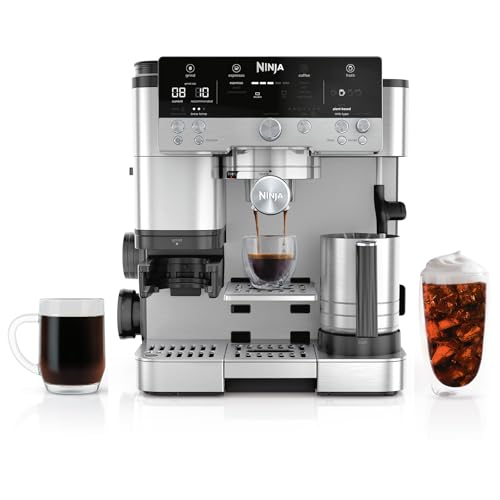
- Makes espresso, drip coffee, and cold brew
- 25-setting built-in conical burr grinder
- Automatic frothing and guided drink preparation
Best For: Home users and small beverage stations seeking versatility
Professional Service Choice
Nuova Simonelli Appia Life 2 Group

- Programmable volumetric dosing for consistency
- Automated backflushing and cool-touch steam wand
- Commercial 240-volt, 3,400-watt platform
Best For: High-volume cafés and professional coffee operations
Precision Specialty-Coffee Setup
Breville Dynamic Duo Dual Boiler and Grinder

- Dual boilers support simultaneous brewing and steaming
- PID temperature control with heated group head
- Smart Grinder Pro includes 60 grind settings
Best For: Home baristas and small specialty-coffee setups
Versatile Automatic Pick

- 20 preset hot and iced drink recipes
- Integrated grinder and automatic milk frothing
- Cold brew in under three minutes
Best For: Offices and households seeking convenient drink variety
Hands-On Barista Choice

- Integrated precision conical burr grinder
- PID temperature regulation and low-pressure pre-infusion
- Manual steam wand for microfoam and latte art
Best For: Home baristas who want hands-on control
Fast Semi-Automatic Workhorse
Chefman Crema Deluxe Espresso Machine
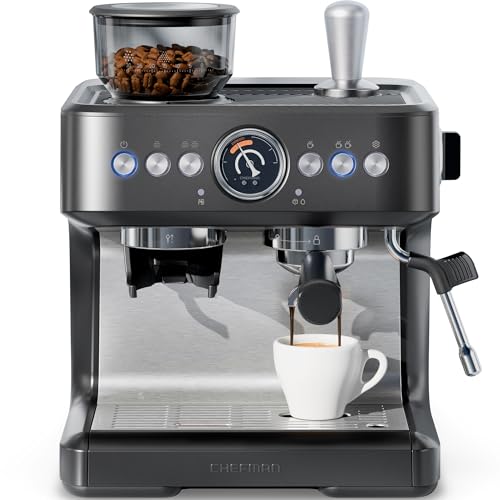
- Double boiler enables brewing and frothing together
- 30-setting conical burr grinder
- Large removable 3-liter water reservoir
Best For: Users seeking fast, customizable espresso preparation
Best Overall Convenience

- Touchscreen drink customization with up to 8 saved coffees
- Integrated grinder and automatic microfoam steam wand
- 3-second ThermoJet heating with PID temperature control
Best For: Home baristas seeking guided, customizable espresso drinks
Best Compact Pick
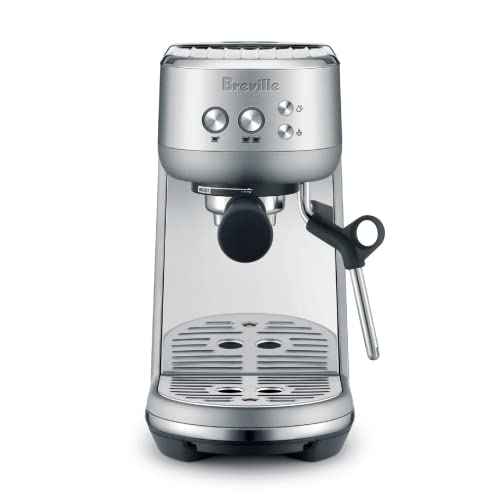
- Small footprint for compact home kitchens
- 3-second heating with PID-controlled extraction
- Automatic steam wand for adjustable microfoam
Best For: Users with limited counter space and a separate grinder
Best Hands-On Control
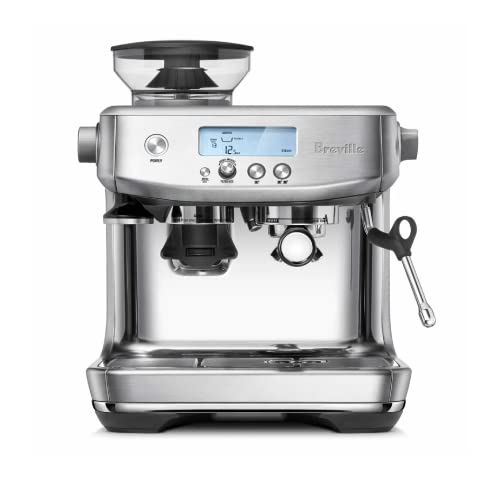
- Integrated grinder with precise on-demand dosing
- Manual steam wand supports latte-art microfoam
- LCD provides grinding and extraction guidance
Best For: Enthusiasts developing hands-on espresso and milk-texturing skills
High-Volume Café Pick – Commercial 2-Group Semi-Automatic Espresso Machine
This commercial espresso machine is built for cafés and restaurants that need to prepare two beverages at once. Its 1.6-gallon boiler, rotary pump, stainless steel construction, and semi-automatic controls support steady service while giving the operator control over extraction time.
Best For: Small cafés, restaurants, and other busy service environments needing two-group brewing.
Pros:
- Two groups allow simultaneous brewing of different beverages.
- 1.6-gallon boiler and rotary pump support continuous operation.
- Stainless steel construction is durable and easy to clean.
- Semi-automatic controls provide hands-on extraction control.
Cons:
- Its 21.65-inch width and 20.5-inch depth require substantial counter space.
- Semi-automatic operation requires more barista involvement than a fully automatic machine.
Choose this model when throughput and operator control matter more than push-button convenience. The two-group layout is particularly useful during peak periods.
Versatile All-Rounder – Ninja Luxe Café Premier 3-in-1
For buyers who want more than espresso, this commercial espresso machine alternative combines espresso, drip coffee, and cold brew in one countertop system. It includes a 25-setting conical burr grinder, assisted dosing and tamping, and automatic milk frothing to simplify drink preparation.
Best For: Home users and small-scale beverage stations wanting espresso, coffee, cold brew, and automatic frothing in one machine.
Pros:
- Offers espresso, three drip coffee styles, and two cold brew styles.
- Built-in grinder provides 25 grind settings.
- Automatic frothing includes steamed milk, thin froth, thick froth, and cold foam.
- Barista Assist Technology guides grinding, dosing, tamping, temperature, and pressure.
Cons:
- Its 120-volt design and single-machine format are less suited to high-volume commercial service.
- The many functions may be unnecessary for buyers focused solely on espresso.
The Luxe Café Premier is a strong choice for versatility and ease of use rather than traditional café throughput. Its guided workflow is helpful for beginners who want broad drink options.
Professional Service Choice – Nuova Simonelli Appia Life 2 Group
This commercial espresso machine is designed for high-volume locations that need repeatable, streamlined service. Its two groups, programmable volumetric dosing, automated backflushing, cool-touch steam wand, and durable steel-based construction support professional workflows.
Best For: Commercial cafés, restaurants, and high-volume professional coffee operations.
Pros:
- Programmable volumetric dosing offers one-touch shot consistency.
- Two groups support simultaneous beverage preparation.
- Automated backflushing simplifies group cleaning.
- Cool-touch steam wand improves handling safety and cleanup.
Cons:
- At 220 pounds, it is difficult to move and install.
- Its 240-volt, 3,400-watt requirement may need dedicated commercial electrical service.
- The 31-inch width demands a large, sturdy installation area.
The Appia Life is best suited to established commercial spaces prepared for its electrical and installation requirements. Volumetric controls and maintenance features make it a practical choice for consistency across operators.
Precision Specialty-Coffee Setup – Breville Dynamic Duo Dual Boiler and Grinder
This commercial espresso machine-style setup pairs a dual-boiler espresso machine with a Smart Grinder Pro for detailed control over brewing. PID temperature control, a heated group head, a 58 mm portafilter, and simultaneous extraction and steaming support specialty-coffee preparation.
Best For: Home baristas and small specialty setups prioritizing precise extraction and fresh grinding.
Pros:
- Dual boilers allow extraction and steaming at the same time.
- PID control and a heated group head support temperature consistency.
- Smart Grinder Pro offers 60 grind settings and automatic grind-and-dose operation.
- 58 mm portafilter accepts a professional-style 22-gram dose.
Cons:
- Semi-automatic operation requires hands-on preparation.
- The 120-volt setup is less appropriate for demanding commercial service.
- The separate grinder and espresso machine require considerable counter space.
The Dynamic Duo is compelling when shot precision and grinder control are more important than commercial-scale capacity. Its dual-boiler design brings several professional-style features to a smaller setup.
Versatile Automatic Pick – De'Longhi Magnifica Duo
The De’Longhi Magnifica Duo is a practical commercial espresso machine alternative for offices or high-volume home setups that prioritize convenience. Its fully automatic operation, integrated grinder, and 20 hot and iced drink recipes make it easy to prepare varied beverages with minimal hands-on work.
Best For: Offices, households, and users who want one-touch hot and cold coffee drinks.
Pros:
- Offers 20 preset recipes, including espresso, drip coffee, iced lattes, and cold brew.
- Uses separate brewing technologies for espresso, drip coffee, and cold brew.
- Includes integrated grinding plus LatteCrema Hot and Cool milk-frothing technology.
- Removable, dishwasher-safe frothing components simplify cleanup.
Cons:
- Its 17.5-inch depth may require considerable counter space.
- Fully automatic controls provide less manual brewing customization than a semi-automatic machine.
Choose this model when menu variety and ease of use matter more than traditional barista-style control. Cold Extraction Technology and the large 60.87-fluid-ounce capacity also suit frequent drink preparation.
Hands-On Barista Choice – Breville Barista Express
The Breville Barista Express is a strong commercial espresso machine option for users who want direct control over grinding, dosing, extraction, and milk texturing. Its integrated conical burr grinder, PID temperature regulation, and manual steam wand support a more involved café-style workflow.
Best For: Home baristas who value adjustable espresso preparation and manual microfoam control.
Pros:
- Integrated grinder doses freshly ground beans directly into the portafilter.
- PID temperature regulation supports precise espresso extraction.
- Low-pressure pre-infusion is designed for balanced flavor extraction.
- Includes a manual steam wand, 54mm portafilter, tamper, and cleaning accessories.
Cons:
- Manual operation requires more practice and preparation than an automatic machine.
- Its 1-year limited warranty is shorter than some competing coverage options.
- The listed water capacity is 67 ounces, which may require refilling during heavier use.
This is the better fit for buyers who enjoy adjusting grind size, dose, and shot preparation. It can go from beans to espresso in under a minute, but the hands-on process is central to its appeal.
Fast Semi-Automatic Workhorse – Chefman Crema Deluxe Espresso Machine
The Chefman Crema Deluxe is a commercial espresso machine-style choice for users who want semi-automatic control with faster simultaneous brewing and steaming. Its double boiler, 30-setting conical burr grinder, and large removable reservoir make it suited to preparing multiple espresso drinks in succession.
Best For: Home users who want café-style control, adjustable grinding, and simultaneous espresso brewing and milk frothing.
Pros:
- Double boiler allows brewing espresso and frothing milk at the same time.
- 30 grind settings provide broad adjustment for different beans and preferences.
- Offers customizable shot temperature and volume with single and double baskets.
- Large 3-liter removable water tank supports multiple drinks between refills.
Cons:
- At 29.5 pounds, it is relatively heavy to move.
- Semi-automatic operation requires more user involvement than one-touch machines.
- Its 13.66-inch depth and 12.68-inch width require substantial counter space.
The Crema Deluxe stands out when speed and customization are equally important. Its 58mm portafilter, 15-bar pump, steam wand, and included accessories create a capable setup for users willing to manage the brewing process.
Best Overall Convenience – Breville Barista Touch
The Breville Barista Touch is a strong commercial espresso machine alternative for home users who want guided preparation with integrated grinding and automatic milk texturing. Its touchscreen streamlines the process from grinding to brewing and steaming, while adjustable settings support more personalized drinks.
Best For: Home baristas who prioritize convenience, customization, and café-style milk drinks.
Pros:
- Touchscreen guides the Grind, Brew, and Milk process and stores up to 8 personalized coffees.
- Integrated conical burr grinder delivers a precise dose from whole beans.
- Automatic steam wand lets you adjust milk temperature and texture.
- ThermoJet heating reaches extraction temperature in 3 seconds.
Cons:
- Its touchscreen-focused design may be more automation than hands-on users want.
- The machine is relatively substantial at 12.7 inches deep, 15.5 inches wide, and 16 inches high.
Choose the Barista Touch if you want repeatable espresso drinks with minimal guesswork. The combination of PID temperature control, low-pressure pre-infusion, programmable milk settings, and saved recipes makes it particularly practical for households with varied coffee preferences.
Best Compact Pick – Breville Bambino
The Breville Bambino is a compact commercial espresso machine alternative for smaller home kitchens. It focuses on essential espresso preparation, offering rapid heat-up, PID temperature control, low-pressure pre-infusion, and an automatic steam wand without an integrated grinder.
Best For: Countertop-conscious users who already have ground coffee or a separate grinder.
Pros:
- Compact design fits comfortably in smaller kitchens.
- ThermoJet heating reaches the target extraction temperature in 3 seconds.
- Automatic steam wand creates adjustable milk temperature and texture for microfoam.
- Supports one- or two-cup preparation plus hot water and steam functions.
Cons:
- It does not include an integrated coffee grinder.
- Its 1-year limited warranty is shorter than the 2-year warranties listed for the other machines here.
The Bambino is a sensible choice when space and quick startup matter more than built-in bean-to-cup convenience. Pair it with a capable grinder for a compact setup that still provides temperature-controlled extraction and hands-free milk steaming.
Best Hands-On Control – Breville Barista Pro
The Breville Barista Pro is a hands-on commercial espresso machine alternative for users who want built-in grinding and more manual control over milk texturing. Its integrated grinder, LCD guidance, rapid ThermoJet system, and powerful steam wand support a traditional barista-style workflow.
Best For: Enthusiasts who want guided dosing and extraction while manually refining latte-art milk texture.
Pros:
- Integrated conical burr grinder delivers a dose on demand from whole beans.
- Powerful steam wand is designed for manual microfoam texturing and latte art.
- LCD display shows grinding and extraction progress for easier adjustments.
- ThermoJet heating reaches extraction temperature in 3 seconds and transitions quickly to steaming.
Cons:
- Manual milk texturing requires more practice than the Barista Touch’s automatic wand.
- The LCD interface provides guidance but does not offer the Barista Touch’s touchscreen workflow and saved drink recipes.
The Barista Pro strikes a useful balance between convenience and control. It handles grinding and dosing while leaving milk preparation in the user’s hands, making it a good fit for developing technique without giving up rapid heat-up or guided on-screen information.
How We Picked the Best Commercial Espresso Machines
We evaluated these machines by looking at the features that most affect daily espresso service: brewing and steaming capacity, temperature stability, control layout, grinder integration, automation, footprint, and cleaning requirements. We also considered whether each machine is better suited to a commercial counter, a low-volume office, or a home barista setup.
Commercial-grade equipment should support repeatable shots and efficient milk steaming, while home-focused models may offer easier setup, lower space requirements, and more guided controls. Product claims and specifications should still be checked against the manufacturer’s current documentation before purchase.
Quick Comparison
| Best For | Recommended Type | What to Prioritize |
|---|---|---|
| Busy café | Two-group volumetric machine | Boiler capacity, steam recovery, serviceability |
| Small coffee bar | Compact semi-automatic or volumetric model | Workflow, footprint, water connection |
| Home enthusiast | Single or dual-boiler semi-automatic | Temperature control, grinder quality, learning curve |
| Convenience-focused user | Automatic or touchscreen machine | Programmable drinks, cleaning, milk system |
Key Buying Factors for a Commercial Espresso Machine
Boiler and Steaming Capacity
For sustained service, boiler size and steam recovery matter more than peak wattage alone. A dual-boiler design can brew and steam simultaneously, while a larger commercial boiler is better suited to repeated milk drinks. Single-boiler machines can work well for lower-volume use but may require pauses between tasks.
Group Count and Workflow
Two-group machines let multiple drinks be prepared at once and are generally the better choice for cafés. A single-group machine saves space and cost, but it can become a bottleneck during busy periods. Volumetric dosing also helps staff repeat shots with less manual timing.
Grinder, Controls, and Consistency
A capable grinder is essential because grind size and dose have a major effect on extraction. Choose tactile manual controls for hands-on preparation, or guided presets and touchscreen controls when speed and ease of use are more important. Built-in grinders simplify a home setup but may be less flexible than a dedicated commercial grinder.
Installation and Maintenance
Check whether the machine uses a reservoir or requires a plumbed water line, and confirm the electrical requirements before ordering. Plan for backflushing, descaling where appropriate, steam-wand cleaning, gasket replacement, and access to local service support. A machine that is easy to maintain can deliver better long-term value than one with more features but limited support.
Who Should Buy Which Commercial Espresso Machine?
Choose a two-group commercial machine if you operate a café or expect continuous drink orders. Pick a dual-boiler setup for home or light commercial use when simultaneous brewing and steaming are important. Automatic and touchscreen models suit offices, households, and users who want repeatable drinks with less technique. Compact single-boiler machines are a practical starting point for smaller counters, occasional entertaining, and buyers who want to develop barista skills without committing to full commercial equipment.