The best energy-efficient mini refrigerators make it easier to keep drinks, snacks, and everyday essentials cold without taking up much space or adding unnecessary power use. This roundup covers compact models suited to bedrooms, dorms, offices, RVs, garages, and small apartments.
We compare practical differences such as Energy Star certification, capacity, freezer configuration, temperature control, noise, shelf layout, and convenience features so you can choose a refrigerator that fits both your space and routine.
Best 10 Energy Efficient Mini Refrigerators Picks for 2026
Quiet Efficiency Pick

- ENERGY STAR certified; 207 kWh/year listed
- Below-42 dB operation for quiet spaces
- Reversible door and removable shelf
Best For: Bedrooms, dorms, and other compact spaces
Storage-Focused Compact Pick
BLACK+DECKER 2.5 Cu. Ft. Fridge
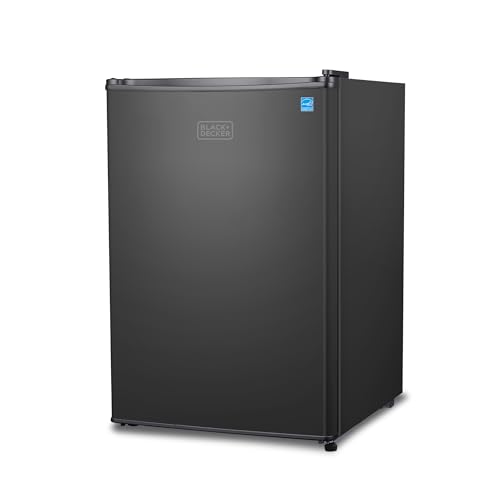
- 2.5 cubic feet of storage
- ENERGY STAR certified with R600a refrigerant
- Two removable shelves and useful door bins
Best For: Dorms, offices, and home bars needing flexible storage
Ultra-Quiet Small-Space Pick
BANGSON 1.7 Cu. Ft. Mini Fridge
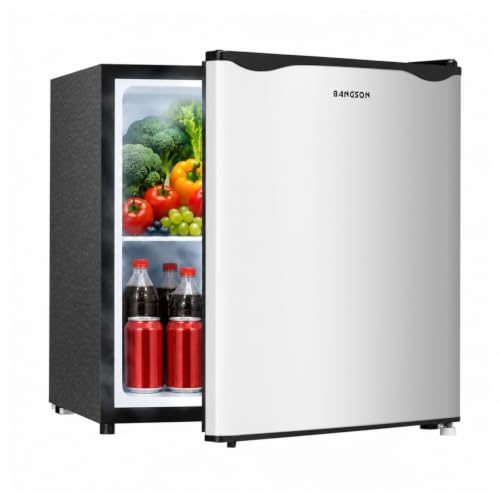
- Below-37 dB operation
- 0.55 kWh per day listed energy use
- Freezer compartment, wheels, and reversible door
Best For: Bedrooms, dorms, and movable office storage
Maximum Capacity Pick
Upstreman 3.2 Cu. Ft. Mini Fridge

- Largest capacity at 3.2 cubic feet
- ENERGY STAR certified; 206 kWh/year listed
- Two shelves, crisper drawer, and three door racks
Best For: Users needing more food and beverage storage
Best Compact Pick
Frigidaire EFR115 1.6 Cu. Ft. Mini Fridge

- Compact 1.6-cu.-ft. design
- 200 kWh annual energy use
- Quiet operation below 37 dB
Best For: Small rooms, offices, dorms, and personal storage
Best Capacity Pick
Midea 3.1 Cu. Ft. Energy Star Mini Fridge

- Energy Star certified
- 3.1 cu. ft. with 0.92-cu.-ft. freezer
- Reversible door and interior LED light
Best For: Users needing more food storage and freezer capacity
Best Retro Pick
Frigidaire EFR176 1.6 Cu. Ft. Retro Mini Fridge

- Retro-inspired compact design
- 200 kWh annual energy use
- Reversible door and flush-back profile
Best For: Stylish personal storage in dorms, offices, and bedrooms
Most Balanced Capacity
EUHOMY 3.2 Cu. Ft. Mini Fridge

- 3.2 cu. ft. capacity with a 0.3-cu.-ft. micro-freezer
- Uses as low as 0.66 kWh per day
- Quiet, reversible, and space-conscious design
Best For: Dorms and offices needing flexible chilled storage
Best Small-Space Pick

- Compact 1.6-cu.-ft. interior with internal freezer
- Runs at up to 35 dB
- Reversible door and adjustable temperature control
Best For: Personal storage in bedrooms, offices, and study areas
Best Feature-Rich Value
3.2 Cu. Ft. Energy-Saving Mini Fridge

- Reports only 0.55 kWh of daily energy use
- Includes crisper drawer, LED light, and two glass shelves
- Quiet operation with one-touch defrosting
Best For: Everyday dorm, bedroom, and office food storage
Quiet Efficiency Pick – Midea 1.6 Cu. Ft. Mini Fridge
For shoppers comparing energy efficient mini refrigerators for a bedroom, dorm, or apartment, the Midea WHS-65LB1 offers a compact 1.6-cubic-foot design with ENERGY STAR certification. Its compressor uses a listed 207 kWh per year, while the below-42 dB operation is suited to quieter spaces.
Best For: Small rooms, bedrooms, dorms, garages, and apartments where low noise and minimal footprint matter.
Pros:
- ENERGY STAR certified with listed annual consumption of 207 kWh.
- Reversible door and removable glass shelf support flexible placement and storage.
- Adjustable thermostat, chiller box, and 2-liter bottle rack add everyday convenience.
- Compact 1.6-cubic-foot footprint measures 18.6 inches wide by 17.7 inches deep.
Cons:
- Its 1.6-cubic-foot capacity is smaller than the other larger models in this roundup.
- Manual defrost requires periodic maintenance.
This is a practical choice when quiet operation, compact dimensions, and straightforward energy performance are more important than maximum storage.
Storage-Focused Compact Pick – BLACK+DECKER 2.5 Cu. Ft. Fridge
The BLACK+DECKER BCRK25B is one of the more practical energy efficient mini refrigerators for shoppers who want extra usable storage without moving to a full-size appliance. It provides 2.5 cubic feet of capacity, ENERGY STAR certification, two removable glass shelves, and multiple door-storage options.
Best For: Dorm rooms, offices, home bars, small apartments, and RV campers needing flexible food and beverage storage.
Pros:
- ENERGY STAR certified and uses R600a refrigerant with a high-efficiency compressor.
- Two removable glass shelves make it easier to arrange different-sized items.
- Door bins include full- and half-width storage for cans, containers, and 2-liter bottles.
- Reversible door and adjustable leveling legs help with placement.
Cons:
- The freezer compartment is limited to 0.2 cubic feet.
- It is taller and heavier than the smallest models here, at 26.6 inches high and 41.9 pounds.
Choose this model if flexible organization and a larger fresh-food area are priorities, while still keeping an ENERGY STAR compact refrigerator in consideration.
Ultra-Quiet Small-Space Pick – BANGSON 1.7 Cu. Ft. Mini Fridge
The BANGSON 1.7-cubic-foot mini fridge is a compact option among energy efficient mini refrigerators, with listed consumption of 0.55 kWh per day and noise below 37 dB. Its small freezer compartment, reversible door, rolling wheels, and leveling legs make it convenient for tight rooms and frequent repositioning.
Best For: Bedrooms, dorms, offices, guest rooms, and apartments where quiet operation and easy movement are useful.
Pros:
- Listed energy use is 0.55 kWh per day, with 202 kWh annual consumption shown in the specifications.
- Below-37 dB operation is suitable for sleeping, studying, or working nearby.
- Built-in 0.2-cubic-foot freezer compartment supports ice cubes, ice cream, and frozen items.
- Reversible door, leveling legs, and bottom wheels offer flexible placement.
Cons:
- Only one shelf and 1.4 cubic feet of fresh-food capacity are listed.
- Manual defrost requires occasional maintenance.
This model balances a small footprint with unusually quiet operation and easy mobility, making it appealing when space and room comfort are the main concerns.
Maximum Capacity Pick – Upstreman 3.2 Cu. Ft. Mini Fridge
For shoppers who need more room while still considering energy efficient mini refrigerators, the Upstreman BR321 offers 3.2 cubic feet of total capacity, including a 0.3-cubic-foot freezer and 2.9 cubic feet of refrigerator space. It is ENERGY STAR certified and listed at 206 kWh annually.
Best For: Dorms, bedrooms, offices, apartments, and kitchens that need the most storage among these compact options.
Pros:
- Largest listed capacity in this roundup at 3.2 cubic feet.
- ENERGY STAR certified with 206 kWh annual energy consumption listed.
- Two adjustable glass shelves, a crisper drawer, and three door racks improve organization.
- 38 dB operation, reversible door, and adjustable leveling feet support convenient placement.
Cons:
- The freezer is not suitable for storing ice cream or ice cubes, according to the supplied notes.
- At 33.1 inches high, it needs more vertical clearance than the smaller models.
- Manual defrost requires periodic upkeep.
This is the strongest fit when storage capacity matters most, especially for users who want a dedicated crisper and adjustable shelving in a compact footprint.
Best Compact Pick – Frigidaire EFR115 1.6 Cu. Ft. Mini Fridge
For shoppers seeking energy efficient mini refrigerators for a dorm, office, RV, or bedroom, the Frigidaire EFR115 combines a compact 1.6-cu.-ft. footprint with adjustable cooling and a quiet design rated below 37 dB.
Best For: Personal food and drink storage in small spaces where low noise and flexible placement matter.
Pros:
- Compact 1.6-cu.-ft. capacity fits countertops and tight rooms.
- Uses 200 kWh annually and is designed for quiet operation below 37 dB.
- Reversible door, removable spill-proof shelf, adjustable thermostat, and leveling legs add flexibility.
- Includes a door bottle area and side-mounted bottle opener.
Cons:
- Its 1.6-cu.-ft. capacity is limited for larger grocery loads.
- The freezer compartment is only 0.1 cu. ft.
- Manual defrost requires occasional maintenance.
The EFR115 is a practical choice when minimizing footprint and operating noise is more important than freezer space. Its reversible door and slide-out shelf make it especially adaptable for dorms, offices, and other compact setups.
Best Capacity Pick – Midea 3.1 Cu. Ft. Energy Star Mini Fridge
The Midea WHD-113FB1 is one of the more versatile energy efficient mini refrigerators for shoppers who need meaningful freezer space without moving to a full-size appliance. Its 3.1-cu.-ft. layout includes separate refrigerator and freezer sections.
Best For: Dorms, apartments, garages, or kitchens needing more organized food storage and a usable freezer.
Pros:
- Energy Star certified with reported annual consumption of 270 kWh.
- Provides 3.1 cu. ft. of total capacity, including a 0.92-cu.-ft. freezer.
- Mechanical temperature controls cover both refrigerator and freezer compartments.
- Reversible door, interior LED light, removable glass shelves, crisper drawer, and 2L bottle rack improve usability.
Cons:
- At nearly 33 inches tall and over 52 pounds, it is less portable than countertop models.
- Manual defrost requires periodic upkeep.
- Its 270-kWh annual energy use is higher than the smaller 1.6-cu.-ft. options listed here.
Choose the Midea when storage capacity and a dedicated freezer outweigh the need for the smallest possible footprint. The Energy Star certification and adjustable controls make it a strong all-around option for regular use.
Best Retro Pick – Frigidaire EFR176 1.6 Cu. Ft. Retro Mini Fridge
For buyers who want energy efficient mini refrigerators with more personality, the Frigidaire EFR176 pairs a retro-inspired black exterior with a compact 1.6-cu.-ft. design. It is sized for snacks, drinks, and everyday personal storage.
Best For: Dorms, offices, bedrooms, and entertaining spaces where style and flexible placement are priorities.
Pros:
- Retro design adds visual appeal to compact spaces.
- Uses 200 kWh annually and includes an adjustable thermostat.
- Reversible door and flush-back design support flexible placement.
- Wire shelf, 2L door basket, chiller compartment, ice cube tray, and bottle opener improve convenience.
Cons:
- Its 1.6-cu.-ft. capacity is best suited to personal rather than bulk storage.
- The 0.2-cu.-ft. freezer area is limited.
- Manual defrost requires occasional cleaning and maintenance.
The EFR176 makes the most sense when appearance matters alongside basic efficiency and compact storage. Its reversible door and flush-back profile help it fit neatly into varied room layouts.
Most Balanced Capacity – EUHOMY 3.2 Cu. Ft. Mini Fridge
The EUHOMY 3.2-cubic-foot refrigerator is a practical choice among energy efficient mini refrigerators when you need both fresh-food storage and a small freezer compartment. Its compact footprint, reversible door, quiet operation, and reported energy use as low as 0.66 kWh per day suit dorm rooms, bedrooms, offices, and small kitchens.
Best For: Dorms, bedrooms, and offices that need full-size mini-fridge capacity with a micro-freezer.
Pros:
- Provides 3.2 cubic feet of total capacity, including a 0.3-cubic-foot micro-freezer.
- Reported energy consumption is as low as 0.66 kWh per day, with annual energy consumption listed at 180 kWh.
- Quiet 38 dB operation, reversible door, adjustable feet, and seven-position temperature control.
- Includes two removable glass shelves and a drip tray for easier defrosting and cleanup.
Cons:
- The freezer is a micro-freezer intended for short-term storage rather than large frozen-food loads.
- Manual defrosting requires occasional maintenance.
Choose this model if storage flexibility matters more than having a large freezer. Its listed energy use and compact 2.2-square-foot footprint make it a well-rounded option for everyday dorm or office use.
Best Small-Space Pick – VEVOR 1.6 Cu. Ft. Mini Fridge
The VEVOR 1.6-cubic-foot model is a compact option for shoppers comparing energy efficient mini refrigerators for a bedroom, office, or study corner. It uses compressor cooling, offers adjustable temperature settings, and combines a small fresh-food compartment with an internal freezer.
Best For: Personal beverage and snack storage where floor space is limited.
Pros:
- Compact 1.6-cubic-foot capacity fits small rooms and corners.
- Compressor cooling with circulating airflow helps maintain stable temperatures.
- Temperature adjusts from 30.2°F to 50°F, and the unit operates at no more than 35 dB.
- Reversible door, adjustable shelf, and door racks make the interior easier to organize.
Cons:
- Its listed annual energy consumption is 230 kWh, higher than some larger models in this roundup.
- The 5.7-liter freezer compartment and 22.7-liter fresh-food capacity limit bulk storage.
- Manual defrosting is required.
This VEVOR is best when dimensions and quiet operation take priority. It offers useful temperature control and a small freezer, but its limited capacity is better suited to individual use than shared food storage.
Best Feature-Rich Value – 3.2 Cu. Ft. Energy-Saving Mini Fridge
This 3.2-cubic-foot mini fridge is a strong contender among energy efficient mini refrigerators for dorms, bedrooms, and offices. It combines reported consumption of 0.55 kWh per day with organized storage, a small top freezer, LED lighting, and a one-touch defrosting system.
Best For: Users who want generous mini-fridge storage with convenient organization and low reported daily energy use.
Pros:
- Offers 3.2 cubic feet of storage with a 0.2-cubic-foot freezer compartment.
- Reports energy use of 0.55 kWh per day and noise below 37 dB.
- Includes two detachable glass shelves, a crisper drawer, door storage, and LED lighting.
- Features a reversible door, leveling legs, six thermostat settings, and one-touch defrosting.
Cons:
- The freezer compartment is small compared with the main refrigerator section.
- Its listed annual energy consumption is 215 kWh, so actual operating cost will depend on local electricity rates.
- The supplied details list the door orientation as left, while the product description also highlights a reversible door; verify the configuration before installation.
Consider this model if you want a roomy compact refrigerator with more organization features than a basic mini fridge. Its low reported daily use, quiet compressor, and convenient defrosting design make it especially practical for everyday room or office storage.
How We Picked the Best Energy Efficient Mini Refrigerators
We focused on compact refrigerators that emphasize efficient operation, useful storage, and dependable everyday design. Priority went to models with Energy Star certification or clearly stated energy-saving features, while also considering capacity, freezer availability, temperature adjustment, shelf flexibility, and noise suitability for bedrooms or study areas.
We also included a range of sizes, from roughly 1.6-cubic-foot personal refrigerators to 3.2-cubic-foot units with more substantial freezer and food-storage space. Product claims should always be checked against the current manufacturer specifications, since energy use can vary with room temperature, placement, contents, and usage habits.
Quick Comparison
| Best For | What to Prioritize |
|---|---|
| Bedroom or office | Low operating noise, compact footprint, and adjustable temperature control |
| Dorm room | Freezer compartment, practical storage, and easy-to-clean shelves |
| RV or garage | Durable construction, suitable dimensions, and reliable cooling controls |
| Maximum efficiency | Energy Star certification, appropriate capacity, and good ventilation clearance |
| More food storage | A 3.1- to 3.2-cubic-foot layout with flexible shelving |
Key Buying Factors for Energy-Efficient Mini Refrigerators
Energy Use and Certification
Energy Star certification is a useful starting point because it indicates that a model meets established efficiency requirements. However, efficient operation also depends on selecting the right size. An oversized refrigerator may consume more electricity than necessary, while an overloaded small unit can struggle to maintain temperature.
Capacity and Freezer Design
Personal 1.6- to 1.7-cubic-foot refrigerators are convenient for drinks and snacks. Models around 2.5 to 3.2 cubic feet are more practical for groceries, meal prep, or shared use. Check whether the freezer is a true separate compartment, an icebox, or simply a small chiller area.
Noise, Controls, and Layout
For bedrooms and offices, look for low-noise operation and a thermostat that allows precise adjustment. Removable or slide-out shelves make cleaning easier and accommodate taller containers. Door storage, bottle holders, and reversible doors can also matter when every inch of space counts.
Placement and Maintenance
Leave the manufacturer-recommended clearance around the refrigerator so heat can escape efficiently. Keep the door seal clean, avoid placing the unit beside a heat source, and allow hot food to cool before storage. These habits help the compressor work less and support consistent cooling.
Who Should Buy Which Energy Efficient Mini Refrigerators?
Choose a 1.6- or 1.7-cubic-foot model if you need a compact personal refrigerator for beverages, snacks, or skincare. A 2.5-cubic-foot option is a useful middle ground for an office, bedroom, or dorm. If you need frozen food storage or groceries for several days, choose a 3.1- or 3.2-cubic-foot refrigerator with a freezer compartment.
Buyers prioritizing documented efficiency should start with the Energy Star-certified Midea and BLACK+DECKER options. Those seeking retro styling, a bottle opener, or flexible temperature settings may prefer models that emphasize convenience and design. Before ordering, measure the available space, confirm door swing clearance, and verify the outlet and operating requirements for your intended location.