Freshly milled flour can bring more flavor, aroma, and control to homemade bread, tortillas, pastries, and whole-grain cooking. The right mill depends on how often you grind, how much counter space you have, and whether you prefer manual control or electric speed.
We compared 10 practical options, including traditional stone-burr mills, hand-operated grinders, stand-mixer attachments, and high-powered electric models.
Best 10 Grain Mill with Stone Burrs Picks for 2026
Best for Self-Sufficient Bakers
Lehman's Manual Power Grain Mill

- Grinds dry grains to pastry flour
- Six-cup hopper for larger batches
- Manual operation with motorization option
Best For: Home bakers who value capacity and self-sufficiency
Best KitchenAid Attachment
KitchenAid All Metal Grain Mill

- Fits household KitchenAid mixers
- Provides 12 grind settings
- Includes a cleaning brush
Best For: KitchenAid owners milling low-moisture grains
Best Manual Multipurpose Mill

- Operates without electricity
- Adjustable for coarse or fine grinding
- Processes grains, spices, herbs, and nuts
Best For: Home, camping, and preparedness use
Best Compact Cast-Iron Option

- Clamps to tables from 1/2 to 2 inches
- Adjustable coarse-to-fine grinding
- Handles grains, coffee, spices, and nuts
Best For: Small-batch coarse grinding and varied kitchen tasks
Best Manual Granite Pick
Handmade Countertop Stone Mill

- Natural granite grinding disks
- Heavy 37-pound countertop design
- Manual, electricity-free operation
Best For: Traditional home milling of grains, spices, and herbs
Best Wet-and-Dry Option
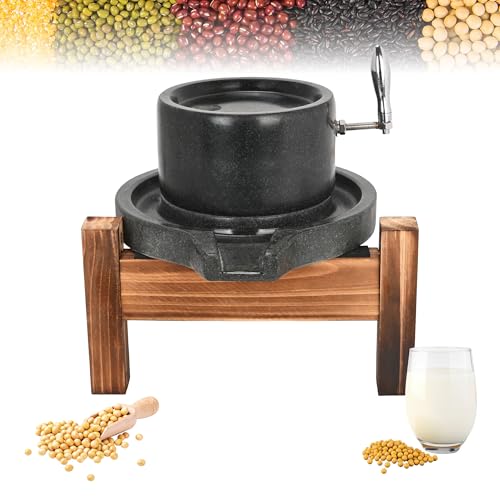
- Handles wet and dry grinding
- Granite core with wooden frame
- Detachable parts rinse clean
Best For: Versatile manual preparation of grains, nuts, seeds, and pastes
Best Adjustable Electric Alternative
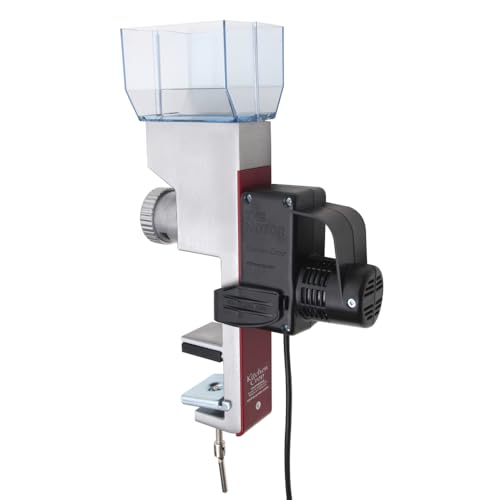
- Motorized grinding with included motor
- Dial adjusts from coarse to fine
- Five-year warranty and mounting clamp
Best For: Home bakers prioritizing adjustable texture and electric convenience
Rustic Manual Pick
Natural Granite Stone Grain Mill

- Solid natural granite construction
- Deep grooves for smoother grinding
- Stable wooden base and heavy-duty handle
Best For: Hands-on home grinding of grains and spices
Flexible Countertop Pick
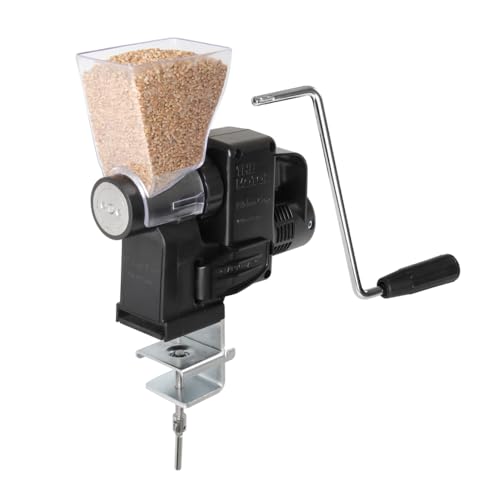
- Stainless steel burrs for many dry grains
- Adjustable coarse-to-fine grind control
- Includes hand crank and electric motor
Best For: Small batches with flexible manual or powered operation
High-Speed Powder Pick

- 2,000-watt motor and 28,000-rpm speed
- 550g capacity for larger dry batches
- Safety interlock, overload protection, and timer
Best For: Fast superfine grinding of dry grains and spices
Best for Self-Sufficient Bakers – Lehman's Manual Power Grain Mill
For shoppers seeking a grain mill with stone burrs, this manual Lehman’s model is a substantial alternative built around stainless steel grinding burrs. It handles free-flowing dry grains such as wheat, corn, rye, rice, quinoa, and small beans, with an extra-large hopper for larger batches.
Best For: Home bakers and self-sufficiency-minded users who want a manually operated mill with a large hopper and the option to add motor power.
Pros:
- Grinds several dry grains down to pastry flour.
- Six-cup hopper supports larger milling sessions.
- Large 12-inch flywheel helps make hand grinding easier.
- Can be motorized and bolted to a work surface.
Cons:
- At 26 pounds and 14 inches high, it is not especially portable.
- Uses stainless steel burrs rather than stone burrs.
This is a strong choice when capacity, stability, and versatility matter more than compact storage. Its manual design also provides an electricity-free milling option, while the motorization capability leaves room to expand later.
Best KitchenAid Attachment – KitchenAid All Metal Grain Mill
If you already own a KitchenAid stand mixer, this attachment offers a convenient way to add grain milling without buying a separate hand-crank machine. It processes low-moisture, low-oil grains including wheat, corn, and rice, with 12 settings ranging from coarse to fine.
Best For: KitchenAid owners who want an integrated grain mill for occasional or routine processing of suitable dry grains.
Pros:
- Fits household KitchenAid stand mixers.
- Offers 12 grind levels from coarse to fine.
- Includes a cleaning brush.
- Ten-cup listed capacity provides room for substantial batches.
Cons:
- Requires a compatible KitchenAid stand mixer to operate.
- Designed for low-moisture, low-oil grains rather than wet or oily ingredients.
- Uses aluminum construction and is not a stone-burr mill.
This attachment makes the most sense for an existing KitchenAid setup. It saves counter space compared with a standalone mill while giving you broad control over grind size.
Best Manual Multipurpose Mill – White Hand Grain Mill
This heavy-duty manual grinder is worth considering if you want a grain mill with stone burrs but need a broader food-grinding tool. Its stainless steel discs handle dry grains, beans, spices, herbs, nuts, and coffee, while the adjustable setting supports everything from coarse meal to finer grinding.
Best For: Home, camping, and preparedness users who want an electricity-free mill with a wide range of dry-food applications.
Pros:
- Manual operation works without electricity.
- Adjustable grind supports coarse meal and finer processing.
- Handles numerous dry grains, spices, herbs, and nuts.
- Large flywheel can be belt-driven with a suitable motor.
Cons:
- Wet, fresh, oily, and sticky materials cannot be ground.
- Its 28.6-pound weight and large dimensions make it less portable than compact mills.
- Uses stainless steel discs rather than stone burrs.
With its large hopper, flywheel, and optional belt-drive setup, this mill is aimed at users who prioritize capability over minimal size. It is especially practical where manual operation and ingredient versatility are important.
Best Compact Cast-Iron Option – Victoria Manual Grain Mill
The Victoria manual mill is a compact, clamp-on option for shoppers comparing a grain mill with stone burrs with traditional cast-iron designs. Its adjustable screw and white iron discs accommodate grains, coffee, spices, seeds, nuts, and other foods, though it is not intended to produce superfine flour.
Best For: Users who want an affordable-style manual grinder for coarse grain meals, coffee, spices, and varied kitchen tasks.
Pros:
- Heavy-duty cast-iron construction with a wooden-handled crank.
- Clamps to tables between 1/2 and 2 inches thick.
- Adjustable coarseness and fineness settings.
- Includes a rubber protector to reduce slipping and protect surfaces.
Cons:
- Cannot grind to a superfine texture.
- Will not turn whole wheat into fine powder.
- Uses white iron discs rather than stone burrs.
This mill is best viewed as a versatile hand grinder rather than a dedicated fine-flour machine. Its table clamp and broad ingredient range make it useful for smaller, coarse-grinding jobs around the kitchen.
Best Manual Granite Pick – Handmade Countertop Stone Mill
If you want a grain mill with stone burrs and no electrical parts, this handmade countertop model uses natural granite disks to grind wheat, corn, coffee, nuts, herbs, and spices. Its compact but heavy 37-pound construction is designed for stable manual milling.
Best For: Home cooks who prefer traditional, chemical-free countertop milling for bread, tortillas, spices, and small-batch ingredients.
Pros:
- Natural granite stone disks help preserve flavor and nutrients.
- Heavy wooden-and-granite construction provides countertop stability.
- Handles both grains and a range of spices, herbs, coffee, and nuts.
- Requires no electricity and installs directly on a countertop.
Cons:
- Manual grinding requires physical effort.
- At 37 pounds, it is not especially portable.
- The notes do not specify a coarseness-adjustment system.
This is a solid fit for buyers prioritizing traditional stone milling and rugged countertop stability over speed, portability, or automated controls.
Best Wet-and-Dry Option – Granite Hand Grinder
This grain mill with stone burrs is designed for both wet and dry ingredients, giving it broader kitchen use than a dry-grain-only grinder. The granite core, wooden frame, stainless steel handle, and detachable parts support hands-on milling and easier cleanup.
Best For: Home users who want to process wheat, corn, soybeans, seeds, nuts, spices, and ingredients for pastes or liquids with one manual mill.
Pros:
- Supports wet and dry grinding for ingredients such as soybeans, sesame, almonds, and grains.
- Natural granite core and wooden frame provide a traditional design.
- Food-grade 304 stainless steel components and an ergonomic crank are intended to reduce effort.
- Detachable, water-polished parts can be rinsed clean with water.
Cons:
- Repeated grinding or pre-soaking may be needed for finer powders or smoother liquids.
- Its listed dimensions and wooden construction require dedicated storage space.
- Manual operation is slower than an electric mill.
Choose this model if wet-grinding versatility and cleanability matter as much as making flour. It is less suited to buyers seeking a compact, high-speed electric appliance.
Best Adjustable Electric Alternative – Stainless Steel Burr Mill
Although it uses stainless steel rather than stone burrs, this grain mill is worth considering when adjustable texture and motor-assisted grinding are priorities. It handles dry, non-oily grains and spices, with a dial that ranges from coarse cracked grains to fine bread-quality flour.
Best For: Bakers who want adjustable flour texture, motorized operation, countertop clamping, and compact storage.
Pros:
- Adjustable coarseness supports cracked grains through fine flour.
- Stainless steel burrs process wheat, rice, oats, barley, rye, peppercorns, and non-oily seeds.
- Includes a motor and a secure mounting clamp for countertops or tables.
- Backed by a stated five-year warranty.
Cons:
- It does not use stone burrs, so it is not a direct match for a stone-burr search.
- Recommended only for dry, non-oily grains and ingredients.
- The listed capacity is 2 cups, which may require repeated batches.
This is the practical alternative for shoppers willing to trade natural stone for motorized convenience and adjustable output. Its compact form and warranty add appeal for regular home baking.
Rustic Manual Pick – Natural Granite Stone Grain Mill
If you want a grain mill with stone burrs for hands-on, small-batch preparation, this manual granite model emphasizes slow grinding and a classic countertop design. Its deep grinding grooves are intended to support smoother crushing and a more even flour texture, while the natural stone construction may help preserve the original character of the grain.
Best For: Home cooks who prefer manual grinding, rustic materials, and controlled processing of grains or spices.
Pros:
- Solid natural granite construction with strong wear resistance.
- Deep grinding grooves support smoother crushing and more even flour.
- Heavy-duty handle and wooden base provide a stable, comfortable setup.
- Rinsable surface and an attractive stone-and-wood appearance.
Cons:
- Manual operation requires more time and effort than an electric mill.
- Designed for slow grinding rather than high-volume processing.
- Its listed use is grinding, so it may be less versatile than an adjustable electric model.
This is a distinctive choice for shoppers who value traditional preparation and visual appeal over speed. The granite burr-style grinding surface and stable base make it a practical fit for occasional home use and small batches.
Flexible Countertop Pick – Kitchen Crop Grain Mill
This Kitchen Crop model is a practical alternative for shoppers comparing a grain mill with stone burrs against a compact metal-burr design. Its stainless steel burrs handle a broad range of dry, non-oily grains and seeds, and the included motor lets you switch between manual hand-crank grinding and powered operation.
Best For: Small-batch users who want adjustable textures, countertop mounting, and both manual and electric operation.
Pros:
- Stainless steel burrs grind wheat, rice, oats, barley, rye, corn, beans, spices, and more.
- Adjustment dial ranges from coarse cracked grain to fine bread-quality flour.
- Includes a hand crank and electric drive motor for flexible use.
- Compact two-cup hopper and clamp base suit small countertop batches.
Cons:
- Designed for dry, non-oily grains and seeds rather than wet or oily ingredients.
- Two-cup capacity limits the size of each batch.
- Requires a counter or table up to two inches thick for the clamp mount.
Although it does not use stone burrs, this model stands out for texture control and operating flexibility. It is worth considering when adjustable flour consistency and the choice between hand cranking and motorized grinding matter more than a traditional stone mechanism.
High-Speed Powder Pick – VEVOR 550g Electric Grinder
For shoppers who prioritize speed over a traditional grain mill with stone burrs, this VEVOR electric grinder uses a 2,000-watt motor and high-speed blade system to turn dry grains, cereals, coffee, and spices into fine powder. Its 550-gram capacity and included sieve support larger batches, while timed operation and safety features add convenience.
Best For: Users needing fast, superfine grinding of dry grains and spices in a home, kitchen, or small commercial setting.
Pros:
- High-speed 28,000-rpm motor can produce fine powder quickly.
- 550-gram capacity is larger than a small two-cup mill.
- Handles dry grains, cereals, coffee beans, spices, and other suitable materials.
- Lid interlock, overload protection, and a 0–5-minute timer improve operating safety.
Cons:
- Uses blades rather than stone burrs, so it is not a traditional stone mill.
- Not suitable for wet, fresh, oily, or sticky materials.
- Requires five- to ten-minute rest periods after each five minutes of operation.
- Grinding chamber should be cleaned with a dry cloth or brush rather than water.
This is a better fit for rapid powder production than for slow, traditional flour milling. Follow the dry-material, fill-level, cleaning, and rest-period instructions to get the most consistent results from its high-speed blade system.
How We Picked the Best Grain Mill with Stone Burrs
We focused on the factors that matter most in everyday grain milling: burr or grinding-surface design, capacity, power source, adjustability, construction, ease of use, and cleanup. The selection includes compact home options as well as larger manual and electric machines so different households can find a suitable match.
Because product descriptions vary, check the manufacturer’s specifications before buying—especially if you need a true stone burr mill. Some listed grinders use stainless-steel burrs or pulverizing mechanisms rather than natural stone, which may produce a different texture and heat profile.
Quick Comparison
| Mill Type | Best For | Main Advantage | Trade-Off |
|---|---|---|---|
| Manual stone mill | Traditional flour making | No electricity required | Slower and more labor-intensive |
| Electric grain mill | Frequent baking | Fast, consistent output | Uses counter space and power |
| Stand-mixer attachment | Occasional home use | Uses equipment you already own | Depends on mixer compatibility |
| High-speed pulverizer | Large batches and spices | Very powerful grinding | May not offer stone-burr milling |
Key Buying Factors for a Grain Mill with Stone Burrs
Stone Type and Grind Adjustment
Look for clearly stated stone burr or granite grinding surfaces if that is essential to your purchase. Adjustable settings let you move from coarse meal to finer flour, but the finest setting and actual results can vary by grain and machine.
Capacity and Output
A larger hopper reduces refilling during batch baking, while a compact hopper is easier to store. Consider how much flour you typically need at once rather than choosing the biggest model automatically.
Manual Versus Electric Operation
Manual mills are useful during power outages and can be simple to maintain, but hand cranking takes time. Electric mills are more convenient for frequent use; compare motor power, duty cycle, noise, and whether the unit can handle hard grains without overheating.
Build Quality and Cleanup
Cast iron, steel, wood, and stone can all be durable, but weight affects portability. Removable grinding components and accessible surfaces make cleanup easier. Never wash porous stone parts unless the instructions specifically allow it.
Who Should Buy Which Grain Mill with Stone Burrs?
Choose a manual stone mill if you value traditional milling, have modest batch requirements, or want an option that works without electricity. Choose an electric grain mill if you bake often and prioritize speed and repeatable results. Choose a stand-mixer attachment if storage is limited and you already own a compatible KitchenAid mixer. Choose a high-powered grinder for demanding batch work or multipurpose dry ingredients, but verify that its grinding system suits flour making.
Before ordering, confirm the supported grains, expected flour texture, voltage, included accessories, warranty, and return policy. A mill that matches your normal batch size and workflow will be more useful than one selected solely for maximum power or capacity.