Finding a cabinet that fits large shoes without wasting entryway space can be surprisingly difficult. Narrow compartments may work for smaller footwear but leave wide or high-top shoes cramped, forcing you to keep pairs on the floor.
This roundup compares 10 shoe cabinets with different layouts, capacities, door styles, and footprints. Use the guide below to match your footwear collection, available space, and preferred level of visibility to the right cabinet design.
Best 10 Shoe Cabinets for Large Shoes Picks for 2026
Wide-Capacity Pick
70.9-Inch Flip-Drawer Shoe Cabinet

- Holds at least 36 pairs
- Six flip drawers with adjustable storage
- Shallow 9.45-inch depth
Best For: Large households with broad entryway wall space
Farmhouse Storage Pick
Two-Door Adjustable Shoe Cabinet
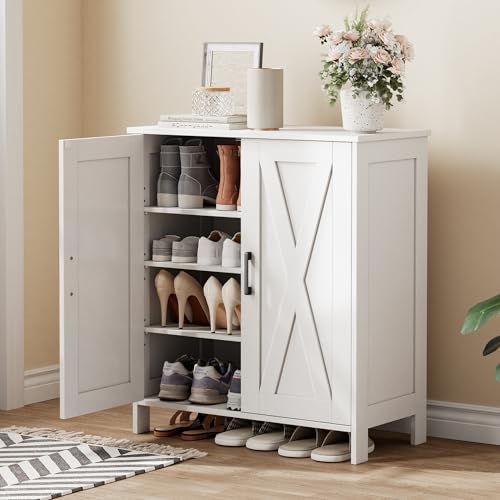
- Three adjustable shelves
- Fits 15+ pairs, depending on shoe size
- Barn doors with wall-anchor hardware
Best For: Farmhouse-style entryways needing flexible storage
Vertical Capacity Pick
12-Tier 36-Pair Shoe Organizer

- Holds up to 36 pairs
- Widened 9-inch cells
- Adjustable sections for taller footwear
Best For: Small spaces with high vertical storage potential
Hidden Boot Storage Pick
Three-Door Adjustable Shoe Cabinet

- Holds about 30 pairs
- Separate storage for boots and high-tops
- Six shelves with enclosed doors
Best For: Entryways needing concealed storage for mixed footwear
Best Overall
48-Inch Walnut Sliding-Door Shoe Cabinet

- Stores around 35 pairs
- Adjustable shelves for boots and high-tops
- Sliding doors with open storage
Best For: Families needing high-capacity entryway storage
Best Narrow Option
Slim White Three-Drawer Shoe Cabinet

- Holds about 18–24 pairs
- Only 9.45 inches deep
- Adjustable panels for varied footwear
Best For: Small entryways and narrow hallways
Best Vertical Storage
Tribesigns 71-Inch Shutter-Door Cabinet

- Nine tiers hold up to 27 pairs
- Adjustable shelves for varied footwear
- Ventilated enclosed shutter doors
Best For: Large collections in space-conscious homes
Best Space-Saving Pick
6-Drawer Flip-Door Shoe Cabinet

- Narrow 9.45-inch depth
- Adjustable panels for varied footwear
- Up to 36 pairs claimed
Best For: High-capacity entryway storage in a shallow footprint
Best for Extra-Deep Shoes
IRONCK 6-Tier Slatted Shoe Cabinet
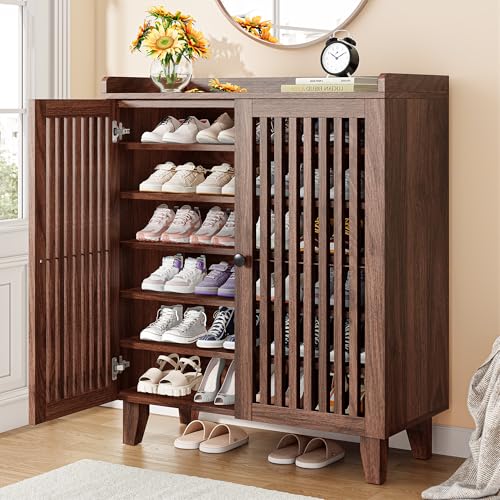
- 14.7-inch interior depth
- Fits men's size 13 shoes per notes
- Adjustable shelves for boots
Best For: Larger footwear and ventilated entryway storage
Best Tall Storage
Tribesigns 8-Tier Shoe Cabinet

- Eight adjustable storage tiers
- Up to 32 pairs claimed
- Enclosed acrylic doors
Best For: Vertical storage for mixed footwear and boots
Wide-Capacity Pick – 70.9-Inch Flip-Drawer Shoe Cabinet
For shoppers comparing shoe cabinets for large shoes, this wide, shallow cabinet offers substantial capacity without extending far into an entryway. Its six flip drawers provide two storage layers each, while the adjustable or removable middle shelf helps accommodate different shoe heights.
Best For: Households needing storage for up to 36 pairs in a low-profile cabinet.
Pros:
- Stores at least 36 pairs across six flip-top drawers.
- Adjustable or removable shelf supports different shoe sizes and heights.
- Wide 70.87-inch top provides display and everyday drop-zone space.
- Includes anti-tip hardware and supports wall or floor placement.
Cons:
- Its nearly 71-inch width requires a broad, uninterrupted wall.
- Assembly is required.
- Engineered-wood construction may not suit shoppers seeking solid wood.
This is a practical choice when width is available but floor depth is limited. The dust-resistant flip-door design keeps footwear concealed, and the walnut-look top adds contrast to the white cabinet.
Farmhouse Storage Pick – Two-Door Adjustable Shoe Cabinet
This farmhouse cabinet is a versatile option among shoe cabinets for large shoes, thanks to three adjustable shelves that can be repositioned for sneakers, flats, boots, and other footwear. Its enclosed two-door design keeps the entryway looking orderly while leaving room for accessories.
Best For: Buyers who want adjustable shoe storage with a farmhouse-style appearance.
Pros:
- Three adjustable shelves allow flexible storage for different shoe heights.
- Accommodates 15 or more pairs, depending on shoe size.
- Barn doors, black handles, and wood legs add farmhouse character.
- Includes a wall-anchoring device for added stability.
Cons:
- Its stated capacity is lower than the larger 30- to 36-pair options.
- At 13.8 inches deep, it uses more floor depth than a narrow flip-drawer cabinet.
- Assembly is required.
Choose this model when adjustable compartments and furniture-style design matter more than maximum capacity. The 31.5-inch height also makes the top accessible for everyday items or décor.
Vertical Capacity Pick – 12-Tier 36-Pair Shoe Organizer
When floor space is limited, this tall organizer uses vertical storage to handle large shoe collections. Its widened nine-inch cells are designed for shoes of varying widths, and selected shelves can be adjusted for boots or other taller items.
Best For: Small entryways, bedrooms, and storage rooms where vertical capacity is the priority.
Pros:
- Stores up to 36 pairs in a 12-tier vertical layout.
- Nine-inch-wide cells accommodate shoes of various widths.
- Adjustable sections can make room for tall boots and other items.
- Also stores bags, hats, figurines, and storage boxes.
Cons:
- At 72.4 inches tall, it may not suit rooms with low ceilings or limited vertical clearance.
- Its open compartment layout does not provide the concealed storage of doors or drawers.
- Assembly is required.
This is the strongest fit for maximizing capacity in a relatively small footprint. The tall particleboard structure includes a wide bottom divider for stability, but placement should still allow comfortable access to the upper tiers.
Hidden Boot Storage Pick – Three-Door Adjustable Shoe Cabinet
This three-door cabinet is a useful choice for shoe cabinets for large shoes when the collection includes boots, heels, or other high-top footwear. The separate door section and adjustable shelving provide more flexibility than a uniform rack, while the enclosed design hides everyday clutter.
Best For: Entryways needing concealed storage for roughly 30 pairs and taller footwear.
Pros:
- Holds about 30 pairs, depending on shoe size.
- Separate door area is designed for boots, heels, and high-top shoes.
- Six shelves and adjustable storage support different footwear arrangements.
- Cross-molding doors, raised legs, and a drop-proof countertop add practical style.
Cons:
- Its 43.8-inch width requires substantial wall space.
- The stated maximum weight capacity is 70 pounds.
- Assembly may be easier with two people.
Consider this model if you want a furniture-like cabinet that separates taller shoes from everyday pairs. The raised base leaves room for frequently worn shoes, while adjustable legs help with stability and floor protection.
Best Overall – 48-Inch Walnut Sliding-Door Shoe Cabinet
If you need shoe cabinets for large shoes and a busy household, this 48-inch walnut cabinet offers generous, flexible storage. Its adjustable shelves can accommodate high-tops, ankle boots, and heels, while the open sections provide room for shoeboxes or display items.
Best For: Families needing high-capacity entryway storage with a mid-century look.
Pros:
- Stores around 35 pairs across eight shelves and four open storage sections.
- Adjustable shelving helps fit footwear of different heights.
- Sliding doors, a scratch-resistant waterproof surface, and anti-tip hardware support everyday use.
- Metal legs and a center support add stability.
Cons:
- Its nearly 48-inch width requires substantial wall space.
- Assembly is required.
- Open middle storage leaves some items visible.
This is the strongest all-around option when capacity and accommodation for larger footwear matter most. Measure your entryway carefully, but the combination of adjustable storage, open compartments, and sliding doors makes it particularly versatile.
Best Narrow Option – Slim White Three-Drawer Shoe Cabinet
For shoppers seeking shoe cabinets for large shoes in a tight hallway, this slim flip-drawer cabinet keeps the footprint narrow at 9.45 inches deep. Adjustable or removable panels provide flexibility for flats, heels, and mid boots while the enclosed drawers help keep footwear away from dust.
Best For: Small entryways, apartments, and narrow hallways where floor space is limited.
Pros:
- Three flip drawers hold approximately 18–24 pairs, depending on shoe size and height.
- Adjustable panels help accommodate different footwear types.
- Compact 9.45-inch depth is suited to narrow spaces.
- Includes an anti-tipping device and a wipe-clean surface.
Cons:
- Capacity varies with footwear size, so bulky shoes may reduce the pair count.
- The narrow design may not accommodate every large shoe comfortably.
- Assembly is required.
This cabinet is a practical space-saving choice, but buyers with many bulky sneakers or boots should verify the internal dimensions before ordering. Its adjustable panels make it more adaptable than a fixed-compartment slim cabinet.
Best Vertical Storage – Tribesigns 71-Inch Shutter-Door Cabinet
When floor space is limited but you still need shoe cabinets for large shoes, this tall Tribesigns cabinet uses vertical storage efficiently. Its nine adjustable tiers can hold up to 27 pairs, and the shutter-style doors provide airflow while keeping footwear enclosed.
Best For: Large families and shoe collections that benefit from tall, enclosed storage.
Pros:
- Nine tiers hold up to 27 pairs of shoes.
- Adjustable shelves accommodate sneakers, high heels, slippers, and ankle boots.
- Ventilated shutter doors encourage airflow while hiding clutter.
- Compact 28.74-inch width makes use of vertical space.
Cons:
- At 70.86 inches tall, it may not suit rooms with low ceilings.
- Each shelf supports up to 15 pounds.
- Assembly and careful placement are important because the cabinet is tall and weighs 113.5 pounds.
This is a strong choice for maximizing capacity without spreading across the floor. Its adjustable shelves are useful for mixed footwear, while the ventilated doors offer a cleaner and fresher enclosed-storage design.
Best Space-Saving Pick – 6-Drawer Flip-Door Shoe Cabinet
For shoppers comparing shoe cabinets for large shoes, this freestanding cabinet combines a narrow 9.45-inch depth with six flip-out drawers and adjustable or removable middle panels. It can hold up to 36 pairs, though actual capacity depends on shoe size and style, while the wall-mount anti-tip device adds stability.
Best For: Entryways that need high-capacity, enclosed storage without taking up much floor depth.
Pros:
- Adjustable or removable panels accommodate heels, sneakers, flats, and boots.
- Six drawers provide two storage layers each and a stated capacity of up to 36 pairs.
- Space-saving flip drawers help keep shoes away from dust, pets, and bugs.
- Top surface provides room for keys, wallets, and accessories.
Cons:
- At 47.24 inches wide, it requires more wall space than narrower cabinets.
- Assembly is required, and two-person assembly or power tools may speed installation.
- Capacity varies by shoe size and style.
This is a practical choice when depth is limited but pair capacity matters. Its adjustable interior is useful for larger or varied footwear, while the 77.2-pound engineered-wood construction and included anti-tip hardware support everyday entryway use.
Best for Extra-Deep Shoes – IRONCK 6-Tier Slatted Shoe Cabinet
Among shoe cabinets for large shoes, the IRONCK stands out for its 14.7-inch depth, which the product notes say fits men’s size 13 shoes. Its six-tier interior holds approximately 24 to 35 pairs, with adjustable or removable shelves for sneakers, heels, and tall boots.
Best For: Households needing deeper compartments and adjustable storage for larger footwear.
Pros:
- 14.7-inch depth is designed to fit men’s size 13 shoes.
- Three adjustable shelves can be repositioned or removed for tall boots.
- Slatted doors allow airflow while keeping shoes enclosed.
- Top shelf adds display or drop-zone space for décor, plants, or lamps.
Cons:
- Stated capacity is approximately 24 to 35 pairs and varies by shoe size and style.
- Assembly takes about 40 minutes for two people according to the notes.
- Its 31.5-inch width and 14.7-inch depth may be less suitable for very tight spaces.
The IRONCK is a balanced option for larger shoes when you want airflow rather than fully sealed doors. Its walnut mid-century styling, solid wood legs, and anti-tip kit make it suitable for a visible entryway or living area.
Best Tall Storage – Tribesigns 8-Tier Shoe Cabinet
This Tribesigns cabinet uses vertical space efficiently, making it a strong option among shoe cabinets for large shoes when floor area is limited. Its adjustable panels and eight-tier design can accommodate up to 32 pairs, from slippers to boots, in a 31.5-inch-wide cabinet.
Best For: Tall entryways or closets that need substantial enclosed storage while preserving floor space.
Pros:
- Eight tiers and adjustable panels accommodate different shoe types, including boots.
- Stated capacity is up to 32 pairs.
- Acrylic doors provide dust protection and make shoe selection easier.
- Waterproof, moisture-resistant, and scratch-resistant features suit everyday household use.
Cons:
- At 67.5 inches high, it requires substantial vertical clearance.
- The 105-pound cabinet may be difficult to position during assembly.
- Assembly is required despite included tools and instructions.
Choose this model when maximum vertical capacity is more important than a low profile. The adjustable interior is helpful for mixed-size footwear, while the enclosed acrylic-door design keeps shoes visible and protected from dust.
How We Picked the Best Shoe Cabinets for Large Shoes
We focused on cabinets that offer practical capacity, usable interior space, and entryway-friendly designs. The selection includes flip drawers, hinged and sliding doors, open compartments, adjustable shelves, and tall vertical organizers. We also considered listed pair capacity, overall dimensions, material and construction details, ventilation features, and whether the cabinet can accommodate bulkier footwear such as men’s larger sizes, boots, or high-top sneakers.
Because fit depends on shoe shape as much as length, shoppers should verify each product’s internal compartment dimensions before ordering. A cabinet advertised for many pairs may still be less suitable for wide shoes if its individual openings are narrow.
Quick Comparison
- Best for maximum capacity: 70.9-inch wide six-drawer cabinet or a tall eight-tier cabinet.
- Best for narrow entryways: Slim flip-drawer cabinets and tall freestanding models.
- Best for flexible storage: Cabinets with adjustable shelves or a mix of closed and open storage.
- Best for farmhouse décor: The barn-door cabinet with wood legs.
- Best for larger, visible footwear: Open-storage or adjustable-shelf designs that avoid restrictive flip compartments.
Key Buying Factors for Shoe Cabinets for Large Shoes
Measure the Compartments, Not Just the Cabinet
Check the internal width, depth, and height of each shelf or drawer. Large sneakers and boots need more clearance than low-profile dress shoes. Also account for the angle required by flip drawers, since slanted compartments may reduce usable depth for oversized pairs.
Balance Capacity with Accessibility
Tall cabinets save floor space but may place everyday shoes on high shelves. Wide cabinets are easier to access and can handle more pairs, although they require a larger wall footprint. Adjustable shelves are especially useful when your collection includes shoes with different heights.
Consider Ventilation and Visibility
Closed doors keep footwear visually contained and reduce dust, while slatted doors, open cubbies, or ventilation gaps allow airflow. If shoes are frequently worn damp, airflow may be more important than a fully hidden design.
Check Stability and Placement
A tall cabinet should be placed on a level surface and secured to the wall when recommended by the manufacturer. Confirm the door swing, drawer clearance, and baseboard compatibility before choosing a location.
Who Should Buy Which Shoe Cabinets for Large Shoes?
Choose a wide six-drawer cabinet if you have a large collection and enough horizontal wall space. Pick a tall eight-tier or 71-inch cabinet when floor space is limited and vertical storage is practical. A model with adjustable shelves is the better choice for mixed footwear, including boots and high-tops. Sliding doors work well where swing-out doors would obstruct a walkway, while flip drawers suit compact entryways that need a slim profile. For a warmer decorative look, choose a farmhouse or walnut-finish cabinet; for maximum everyday convenience, prioritize accessible compartments and a combination of concealed and open storage.