The right shoe cabinet can make an entryway feel cleaner without sacrificing everyday convenience. These 10 picks cover compact flip-drawer designs, tall cabinets, bench-style storage, and decorative options for a range of homes.
Use the buying guide below to compare capacity, access, dimensions, ventilation, and finish before choosing the best fit for your space.
Best 10 Shoe Cabinets with Doors Picks for 2026
Best Bench-Style Pick

- Four doors conceal shoes
- 2-inch padded seat cushion
- Adjustable shelves for varied footwear
Best For: Entryways needing both seating and closed shoe storage
Best Farmhouse Design
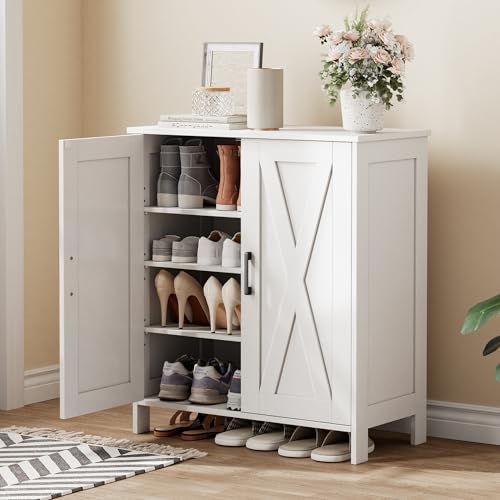
- Two barn-style doors
- Three adjustable shelves
- Holds 15-plus pairs
Best For: Farmhouse-style entryways and multipurpose storage
Best Narrow Option

- 9.45-inch narrow depth
- Two dust-protecting flip doors
- Storage for up to 16 pairs
Best For: Small hallways and compact entryways
Best High-Capacity Pick
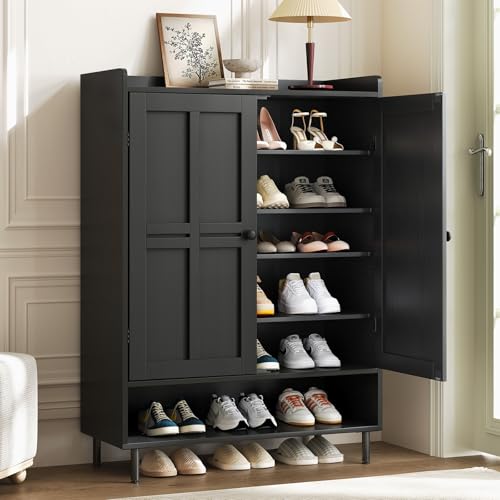
- Holds about 18–24 pairs
- Five hidden and two open shelves
- Three adjustable shelves
Best For: Larger households needing flexible, high-capacity storage
Best Narrow Walnut Pick

- 9.4-inch-deep design for tight spaces
- Holds about 14 pairs of adult shoes
- 80-pound top and anti-tip device
Best For: Compact entryways needing concealed storage
Best High-Capacity Farmhouse Pick

- Stores about 30 pairs of shoes
- Six adjustable shelves with boot storage
- Soft-close hinges and adjustable metal legs
Best For: Large shoe collections and family entryways
Best Airflow Design
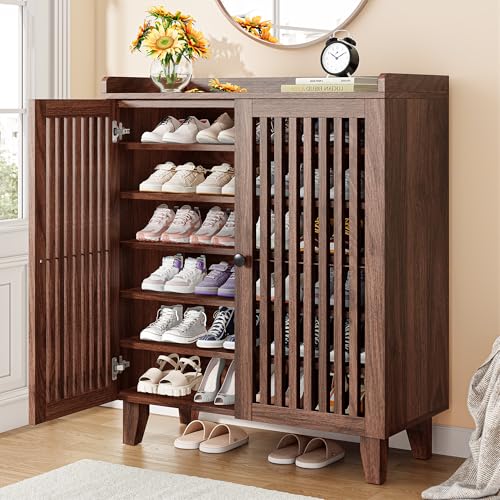
- Slatted doors promote airflow
- Holds approximately 24 to 35 pairs
- Adjustable shelves fit boots and varied shoes
Best For: Ventilated, flexible shoe storage with mid-century style
Compact Everyday Organizer
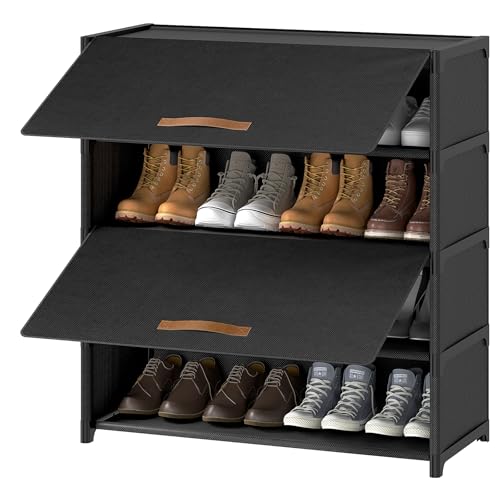
- Stores up to 20 pairs across five tiers
- Enclosed fabric design helps block dust and pets
- Lightweight, flexible option for closets and bedrooms
Best For: Compact everyday shoe storage on a budget
Decor-Forward Entryway Pick

- Holds about 20–25 pairs with five adjustable shelves
- Fluted doors and walnut finish suit modern decor
- Top surface and robot-vacuum clearance add convenience
Best For: Stylish entryway storage with flexible shelf space
High-Capacity Vertical Storage

- Stores up to 32 pairs across eight adjustable tiers
- Acrylic doors protect shoes while keeping them visible
- Tall, narrow design maximizes vertical storage
Best For: Large shoe collections in space-conscious rooms
Best Bench-Style Pick – Padded Shoe Storage Bench
If you want shoe cabinets with doors that also provide a place to sit, this bench-style organizer combines concealed storage with a comfortable entryway seat. Its four doors help keep footwear hidden, while adjustable shelves accommodate different shoe heights.
Best For: Entryways where you want seating and closed shoe storage in one piece.
Pros:
- Thick 2-inch padded cushion provides a comfortable spot for changing shoes.
- Adjustable middle shelves accommodate footwear of various heights.
- Four doors keep shoes concealed and the space looking tidy.
- Supports up to 300 pounds and includes a removable, washable cushion cover.
Cons:
- At 45.3 inches wide, it requires more horizontal space than a narrow cabinet.
- Engineered-wood construction should be protected from moisture and direct sunlight.
This is a practical choice for households that value convenience at the entryway. The integrated seat adds everyday usefulness, while the closed compartments maintain a cleaner visual appearance.
Best Farmhouse Design – Barn-Door Shoe Cabinet
Among shoe cabinets with doors, this farmhouse-style model stands out for its barn-door look, adjustable interior shelving, and compact freestanding footprint. The five-tier layout is designed to hold 15 or more pairs while keeping shoes and accessories organized.
Best For: Farmhouse or transitional entryways that need versatile, enclosed storage.
Pros:
- Two barn doors and black U-shaped handles create a distinctive farmhouse appearance.
- Three adjustable shelves help accommodate flats, sneakers, and boots.
- Offers five storage levels and room for 15-plus pairs of shoes.
- Wall-anchoring hardware adds stability and safety.
Cons:
- Its 31.5-inch height provides less vertical storage than a tall cabinet.
- Particleboard construction may not have the feel of solid wood furniture.
With a 13.8-inch depth, this cabinet balances useful capacity with a relatively manageable footprint. Its adjustable interior also makes it suitable for bags, accessories, and other entryway essentials.
Best Narrow Option – Slim Flip-Door Shoe Cabinet
For tight hallways, this narrow shoe cabinet offers enclosed storage without taking up much floor width. Its two flip doors open to a four-tier interior, while adjustable shelves and an elevated bottom help organize different types of footwear.
Best For: Small entryways and narrow hallways where floor space is limited.
Pros:
- Only 9.45 inches deep, making it suitable for constrained spaces.
- Two flip doors help keep shoes dust-free and away from pets.
- Adjustable or removable shelves can accommodate heels and boots.
- Top fence provides a convenient place for keys, plants, or leashes.
Cons:
- Flip-door access may be less convenient for users who prefer conventional cabinet doors.
- The narrow profile may limit how larger footwear is positioned inside.
This model prioritizes space efficiency without giving up useful capacity, with storage for up to 16 pairs according to the supplied specifications. Its anti-tip kit and metal frame add practical stability for an entryway installation.
Best High-Capacity Pick – Black Cross-Molding Cabinet
This tall black cabinet is a strong option when you want shoe cabinets with doors that combine concealed and open storage. Its cross-molding doors, multiple shelves, and adjustable interior sections provide room for everyday footwear as well as taller boots.
Best For: Households needing high-capacity shoe storage with a bold farmhouse-inspired finish.
Pros:
- Designed to hold approximately 18 to 24 pairs of shoes.
- Includes five hidden shelves plus two open shelves for flexible organization.
- Three adjustable shelves accommodate flats, sneakers, heels, boots, and shoeboxes.
- Adjustable feet help protect floors and level the cabinet on uneven surfaces.
Cons:
- At roughly 45 inches tall and 68 pounds, it may require more effort to assemble and position.
- The black finish and cross-molding design may not suit minimalist or light-colored interiors.
- Assembly is recommended for two people.
With seven listed shelves and a mix of closed and open compartments, this cabinet offers more flexibility than a fully enclosed organizer. It is best suited to buyers who need substantial capacity and appreciate decorative detailing.
Best Narrow Walnut Pick – Modern 2-Drawer Shoe Cabinet
If floor space is limited, this narrow shoe cabinet with doors combines a 9.4-inch depth with two flip drawers for a tidy entryway setup. It holds about 14 pairs of adult shoes, offers a thickened 80-pound-capacity top, and includes an anti-tip device for added stability.
Best For: Small entryways that need concealed shoe storage and a useful display surface.
Pros:
- Narrow profile fits compact hallways and entry areas.
- Two flip drawers keep shoes enclosed and protected from dust and pets.
- Walnut finish and rose-colored arc handles add a decorative touch.
- Anti-tip hardware and clear, numbered assembly instructions are included.
Cons:
- Its stated capacity is lower than larger multi-door cabinets.
- Large boots may require removing the center divider.
- It is made from engineered wood rather than solid wood.
This is a practical choice when width and depth matter most. Its concealed flip-door design and sturdy top make it especially useful near a front door, while the limited boot accommodation may matter to households with larger footwear.
Best High-Capacity Farmhouse Pick – 3-Door Shoe Cabinet
For households with a larger footwear collection, this shoe cabinet with doors provides three enclosed sections and six adjustable shelves. It can hold about 30 pairs, while the separate door offers extra room for boots, heels, and other high-top shoes.
Best For: Families or busy entryways that need high-capacity, adjustable shoe storage.
Pros:
- Three doors and six shelves provide substantial organized storage.
- Adjustable shelves and a separate section accommodate different shoe heights.
- Cross-molding doors add rustic farmhouse character to the black finish.
- Five adjustable metal legs, soft-closing hinges, and a drop-proof countertop improve everyday usability.
Cons:
- At 43.8 inches wide, it needs more wall space than narrow cabinets.
- The 86.3-pound unit may be less convenient to move after assembly.
- Assembly is easier with two people.
This cabinet prioritizes capacity and flexible organization over a compact footprint. Its adjustable interior and dedicated taller compartment make it a strong fit for mixed footwear, provided your entryway can accommodate its wider dimensions.
Best Airflow Design – IRONCK 6-Tier Slatted Cabinet
This shoe cabinet with doors pairs six-tier storage with slatted panels that allow airflow around enclosed footwear. Its 14.7-inch depth fits men’s size 13 shoes, while adjustable or removable shelves provide flexibility for sneakers, heels, flats, and tall boots.
Best For: Buyers wanting ventilated, adjustable storage with a mid-century walnut look.
Pros:
- Six tiers hold approximately 24 to 35 pairs, depending on shoe size and style.
- Slatted doors support airflow and add visual interest.
- Three adjustable shelves can be repositioned or removed for taller footwear.
- Solid wood legs and an anti-tip kit support everyday stability.
Cons:
- Its 42.4-inch height may not suit every available wall space.
- Assembly takes about 40 minutes for two people.
- Slatted doors may not conceal footwear as completely as solid panels.
Choose this model when ventilation and adaptable storage are priorities. The adjustable interior handles varied shoe types, while the walnut finish, pedestal legs, and slatted doors give it a furniture-like presence in an entryway, closet, or living room.
Compact Everyday Organizer – 5-Tier Black Shoe Cabinet
If you need shoe cabinets with doors for a closet, bedroom, or entryway, this five-tier fabric-and-metal organizer offers a lightweight way to keep footwear enclosed. It holds up to 20 pairs and has a simple freestanding design that can also accommodate toys, handbags, hats, or clothing.
Best For: Budget-conscious shoppers seeking compact, enclosed shoe storage for everyday family use.
Pros:
- Five tiers provide storage for up to 20 pairs of shoes.
- Enclosed design helps keep shoes dust-free and discourages pets from chewing them.
- Waterproof, easy-to-clean non-woven fabric with a metal frame.
- Expandable design and included installation tools support flexible storage.
Cons:
- The fabric-and-plastic construction is less substantial than a wooden cabinet.
- Assembly requires each connector and plastic divider to be tightly secured.
- Its 11.82-inch width may limit storage for larger footwear collections.
This is a practical choice when low weight, affordability, and enclosed storage matter more than furniture-style presentation. Its compact footprint works well in smaller spaces, while the flexible interior can support more than just shoes.
Decor-Forward Entryway Pick – Walnut Fluted Shoe Cabinet
For shoppers seeking shoe cabinets with doors that complement their decor, this walnut cabinet combines fluted doors with five adjustable shelves. It stores approximately 20–25 pairs, includes a useful top surface, and offers a more furniture-like presence for entryways, hallways, living rooms, or bedrooms.
Best For: Modern or mid-century interiors that need adjustable, enclosed shoe storage with decorative appeal.
Pros:
- Fluted doors and walnut finish add texture and warmth to the room.
- Five adjustable shelves accommodate different shoe sizes, including boots.
- Top surface provides space for daily essentials, while the bottom clearance accommodates a robot vacuum.
- Anti-tip kit and labeled assembly parts improve setup and stability.
Cons:
- At 71.7 pounds, it is considerably heavier than fabric organizers.
- Assembly is required, even though the instructions and parts are designed for straightforward setup.
- Its 14.6-inch depth requires more floor space than a narrow shoe rack.
This cabinet is a strong middle ground between storage capacity and visual appeal. Adjustable shelving makes it more versatile than fixed compartments, while the fluted walnut-style design helps it function as part of the room’s furnishings.
High-Capacity Vertical Storage – Tribesigns Tall Shoe Cabinet
If floor space is limited but your household has a large footwear collection, this tall shoe cabinet with doors uses vertical storage to hold up to 32 pairs. Its eight adjustable tiers, acrylic doors, and 67.5-inch height make it suited to entryways, hallways, closets, and other areas where capacity is the priority.
Best For: Larger households needing high-capacity, vertical shoe storage in a narrow footprint.
Pros:
- Eight tiers accommodate up to 32 pairs, from slippers to boots.
- Adjustable panels let you customize the storage layout.
- Acrylic doors protect shoes from dust while keeping them visible for quick retrieval.
- Engineered-wood construction is described as sturdy, waterproof, scratch-resistant, and moisture-resistant.
Cons:
- Its 67.5-inch height and 105-pound weight make it a substantial piece to position.
- The tall cabinet has a larger assembly commitment than a basic shoe rack.
- With only 13.8 inches of depth, some bulky footwear may require careful shelf adjustment.
This is the most capacity-focused option in the group. The narrow depth helps conserve floor space, while the tall profile and adjustable shelves make it a practical solution for extensive collections—provided the room can accommodate its height and the cabinet is assembled securely.
How We Picked the Best Shoe Cabinets with Doors
We focused on practical features that matter in real entryways: usable storage capacity, cabinet dimensions, door design, shelf adjustability, materials, stability, and overall versatility. The selection includes narrow organizers for apartments, taller cabinets for larger households, and a storage bench for homes that benefit from a built-in seat.
Because listed pair capacities can vary with shoe size and style, treat them as estimates. Bulky sneakers, boots, and high-top shoes usually require more room than flats or low-profile footwear.
Quick Comparison
| Best For | Look For |
|---|---|
| Small entryways | Narrow cabinets with flip drawers and a shallow footprint |
| Families or large collections | Tall, multi-tier cabinets or adjustable shelves |
| Putting shoes on comfortably | A shoe storage bench with a padded seat |
| Decor-focused rooms | Farmhouse, fluted, slatted, or cross-molding doors |
| Flexible storage | Adjustable shelves and multiple cabinet compartments |
Key Buying Factors for Shoe Cabinets with Doors
Measure the Footprint First
Measure the available width, depth, and height, including clearance for doors or drawers to open. A tall model can maximize vertical space, while a narrow cabinet is often easier to place in a hallway. Check baseboards, nearby furniture, and wall outlets before ordering.
Match Capacity to Your Footwear
Count the pairs you expect to store, then allow extra room for seasonal shoes and larger sizes. Adjustable shelves are especially useful if you store boots, high-tops, or children’s shoes alongside everyday pairs.
Choose the Right Access Style
Flip drawers offer quick access and a slim profile, but each compartment may limit how shoes are positioned. Hinged doors can accommodate more varied footwear, while a bench combines storage with a convenient place to sit.
Check Ventilation and Construction
Closed doors reduce visual clutter, but shoes may need airflow after use. Slatted or ventilated doors can help, especially in busy households. Also check the frame, hardware, shelf supports, anti-tip provisions, and whether wall anchoring is recommended.
Consider the Finish and Maintenance
Walnut, black, farmhouse, and fluted finishes suit different interiors, but appearance should not outweigh usability. Look for smooth, wipe-clean surfaces and doors that align properly after assembly.
Who Should Buy Which Shoe Cabinets with Doors?
- Choose a compact flip-drawer cabinet if you have a narrow hallway or apartment entryway.
- Choose an adjustable-shelf cabinet if your collection includes mixed shoe sizes, boots, or high-tops.
- Choose a tall eight-tier design if vertical space is available and you need substantial capacity.
- Choose a storage bench if sitting down while putting on shoes is a daily priority.
- Choose a decorative door style if the cabinet will remain prominently visible and needs to complement your décor.
Before buying, compare the assembled dimensions, interior clearances, and return policy—not just the advertised pair count. The best shoe cabinet is the one that fits your space, footwear, and daily routine with minimal compromise.