Small-batch bread baking is easier when dough has enough room to expand without drying out or sticking to an oversized bowl. The right proofing box can also simplify portioning, stacking, and rise tracking.
We compared 10 options for home bakers making sourdough, pizza, and everyday loaves, focusing on capacity, lid design, storage, temperature control, and ease of cleaning.
Best 10 Bread Proofing Boxes for Small Batches Picks for 2026
Best Overall for Large Batches
Brod & Taylor 6L Proofing Containers

- Two 6-liter containers for flexible batch planning
- Volume markings help track fermentation
- Dishwasher-safe and freezer-friendly
Best For: Home bakers managing multiple bread, sourdough, or pizza dough batches
Best for Rise Tracking

- Tracking band marks the starting dough height
- Clear walls show rise and bubbles
- Wide opening supports folds and fermentation
Best For: Bakers who want a visible reference during bulk fermentation
Best for Portioning Pizza Dough
Vtopmart Stackable Proofing Boxes

- Two boxes hold 4–6 dough portions
- Locking lids support stacking and transport
- Dishwasher-safe BPA-free plastic
Best For: Pizza makers proofing multiple dough balls in the refrigerator
Best Temperature-Controlled Option
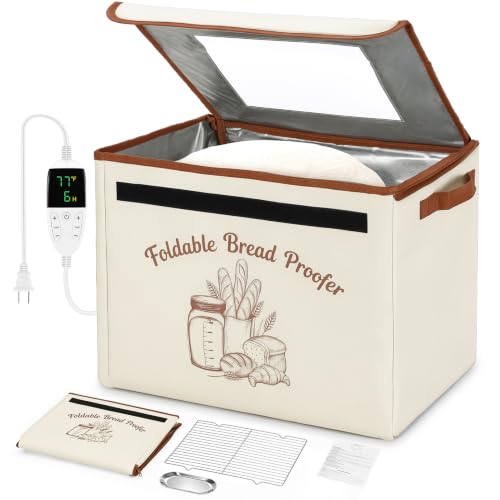
- Seven temperature settings from 50–122°F
- Timers run from 1 to 48 hours
- Folding insulated design includes rack and water tray
Best For: Bakers seeking controlled warmth and timing for sourdough and bread dough
Best Latching Family-Size Boxes
Vababa 2-Pack 16 L Proofing Boxes

- Each box holds approximately four to six dough balls
- Clear BPA-free plastic for easy viewing
- Clip-on lids fasten tightly and resist leaks
Best For: Household bakers wanting roomy latching containers
Best Individual Dough Containers
3-Pack Stainless Steel Proofing Boxes

- Three separate 850 ml containers for individual dough balls
- Fits recommended 250–330 g portions
- Stackable, dishwasher safe, and includes a dough cutter
Best For: Pizza makers proofing three portioned dough balls
Best Commercial-Style Pick

- Holds up to six dough balls
- BPA-free polypropylene construction
- Includes labels and erasable markers
Best For: Organized home or small commercial batches
Best Overall for Large Batches – Brod & Taylor 6L Proofing Containers
For bakers comparing bread proofing boxes for small batches, this two-pack offers a flexible setup for mixing, folding, and fermenting dough. Each 6-liter container holds up to 3,000 grams and includes translucent walls with volume markings for tracking the rise.
Best For: Home bakers who want two stackable containers for sourdough, bread, or pizza dough.
Pros:
- Two containers support simultaneous batches or staged fermentation.
- Translucent walls and volume markings make dough growth easy to monitor.
- Wide bases accommodate stretch-and-fold and coil-fold techniques.
- Dishwasher-safe, freezer-friendly polypropylene is designed for repeated use.
Cons:
- The 12.8-by-10.5-inch footprint may require substantial refrigerator shelf space.
- The large 6-liter capacity may be more than needed for very small dough portions.
This is a strong all-purpose choice when capacity and workflow convenience matter. The two-container format is especially useful for bakers managing multiple doughs, while the markings and moisture-retaining lids simplify fermentation checks.
Best for Rise Tracking – 6L Dough Proofing Container
This 6-liter container is a practical option among bread proofing boxes for small batches, particularly if you want a clear visual reference during bulk fermentation. Its included tracking band, clear walls, and volume markings help show how far the dough has risen without removing the lid.
Best For: Bakers who prioritize visible rise tracking in one reusable container.
Pros:
- Included tracking band marks the dough’s starting height.
- Clear walls and volume markings help monitor bubbles and expansion.
- Wide opening supports mixing, stretch-and-folds, and coil folds.
- Dishwasher-safe, freezer-safe, BPA-free polypropylene simplifies cleanup and storage.
Cons:
- It is sold as a single container rather than a two-pack.
- The low-profile dimensions should be checked against available refrigerator space.
The rise-tracking band gives this container a useful advantage for bakers learning fermentation timing or refining a sourdough routine. Its single-tub workflow keeps mixing and bulk fermentation in one place while the snug lid helps limit surface drying.
Best for Portioning Pizza Dough – Vtopmart Stackable Proofing Boxes
For bread proofing boxes for small batches that focus on individual portions, this two-box set is designed for pizza and bread dough balls. Snap-on lids and latches help keep the boxes secure when stacked, while the larger footprint provides room for 4–6 dough portions.
Best For: Pizza makers and home bakers proofing several dough balls together.
Pros:
- Two trays and covers accommodate multiple dough portions.
- Snap-on locks help secure the boxes during stacking or transport.
- BPA-free plastic is suitable for refrigerator, freezer, and room-temperature storage.
- Smooth interiors are dishwasher-safe for easier cleanup.
Cons:
- The 14.96-inch length may not fit every refrigerator shelf.
- The set is more oriented toward dough portions than a single large bulk-fermentation mass.
This set makes the most sense when your workflow involves dividing dough into balls before proofing. Its stackable design and locking lids are useful for organized refrigerator storage, though shoppers should measure their available shelf space first.
Best Temperature-Controlled Option – Folding Bread Dough Proofer
Unlike passive bread proofing boxes for small batches, this folding dough proofer actively provides a controlled proofing environment. It offers seven temperature settings from 50–122°F, timer presets from 1–48 hours, a water tray for humidity support, and a clear window for monitoring without opening the enclosure.
Best For: Bakers who need more consistent temperature control for sourdough, bread, starter, or pizza dough.
Pros:
- Temperature settings from 50–122°F support a range of fermentation needs.
- Ten timer presets cover short rises through extended proofing.
- Water tray and insulated enclosure help reduce surface drying and heat loss.
- Folds flat for storage and includes a removable metal rack.
Cons:
- It requires access to a power outlet and has more setup than a simple container.
- The unit’s footprint and 10.2-inch height may need dedicated counter or storage space.
- Temperature control is available only within the listed 50–122°F range.
This is the better fit for kitchens where ambient temperature changes make fermentation timing unpredictable. It costs more in space and setup than a passive box, but the adjustable warmth, timer, insulation, and humidity tray provide substantially more control.
Best Stackable Tray Set – 3-Pack Pizza Dough Proofing Trays
For bakers comparing bread proofing boxes for small batches, this three-tray set offers generous capacity without wasting refrigerator space. Each ventilated tray can hold up to six pizza dough balls and stacks with or without its lid.
Best For: Home bakers and pizza makers proofing several dough balls at once.
Pros:
- Each 13-liter tray fits up to six dough balls.
- Stackable design helps optimize refrigerator or storage space.
- BPA-free, food-safe plastic is stain resistant and refrigerator safe.
- Ventilated lids allow some air passage during fermentation.
Cons:
- Hand wash only.
- The lids are intentionally non-airtight, so they may not suit bakers wanting a sealed container.
- The large trays may be more capacity than needed for very small batches.
This is a practical choice when batch capacity and stacking matter most. Its vented lids support proofing, while the broad trays also work for storing fruit and vegetables when not in use.
Best Latching Family-Size Boxes – Vababa 2-Pack 16 L Proofing Boxes
These Vababa containers are a useful option for bread proofing boxes for small batches when you want room for four to six dough balls and a secure lid. Their refrigerator-friendly dimensions and clear construction make dough easy to monitor while it rises.
Best For: Household bakers who want two roomy, latching proofing boxes for dough and general food storage.
Pros:
- Each 16-liter box accommodates approximately four to six dough balls.
- Dimensions are designed to fit most household refrigerator shelves.
- Clear BPA-free plastic makes the contents visible at a glance.
- Clip-on, leak-resistant lids fasten tightly.
Cons:
- The supplied notes do not specify that the lid is ventilated.
- Its larger capacity may be unnecessary for very small dough batches.
- The listed recommended use is for arts and crafts, despite the product description also mentioning dough and food storage.
Choose this set if a tight-closing lid and clear visibility are higher priorities than a purpose-built vented design. The two-box format also gives you flexibility for separate dough batches or other storage tasks.
Best Individual Dough Containers – 3-Pack Stainless Steel Proofing Boxes
For bread proofing boxes for small batches with individually portioned dough, this set uses three compact stainless steel containers. Each 850 ml box is sized for a 250–330 g dough ball, with an airtight clear lid for monitoring fermentation and limiting exposure to air.
Best For: Pizza makers proofing three individual dough balls for 10–12-inch pizzas.
Pros:
- Individual 850 ml containers keep dough balls separate.
- Recommended capacity suits 250–330 g dough portions.
- Stainless steel resists stains, odors, and cracking.
- Stackable and dishwasher safe, with a dough cutter included.
Cons:
- Each container is intended for one dough ball, so capacity is limited to three portions.
- Airtight lids may offer less ventilation than a vented proofing tray.
- The 10–12-inch pizza focus may be less suitable for unusually large dough portions.
This set is the most portion-focused option of the three. It suits small, organized batches where separate containers, airtight cold fermentation, and easy cleanup are more useful than maximum tray capacity.
Best Commercial-Style Pick – Stackable 6-Ball Proofing Box
For bakers comparing bread proofing boxes for small batches, this polypropylene container offers room for up to six dough balls while keeping a compact, stackable shape. Its non-airtight lid allows slight airflow during fermentation, and the included labeling supplies make batch tracking practical.
Best For: Home kitchens, pizzerias, and small commercial batches that need organized refrigerator or prep-station storage.
Pros:
- Holds up to six dough balls in a 15.67-by-11.69-by-4.09-inch container.
- Food-grade, BPA-free polypropylene is stain resistant and dishwasher safe.
- Stacks with or without the lid to help conserve kitchen space.
- Includes a FIFO label sticker and two erasable markers.
Cons:
- The non-airtight lid may not suit bakers seeking a fully sealed container.
- Its larger rectangular footprint may be less convenient for very limited storage.
This is a practical choice when batch organization and stackability matter more than collapsible storage or an airtight seal.
Best Space-Saving Set – Collapsible Silicone Proofing Bowls
These four individual silicone containers are a flexible option for bread proofing boxes for small batches, with each bowl sized for about 300 grams of dough. Their airtight lids help protect moisture, while the collapsible design reduces each container to about 1.2 inches tall for storage.
Best For: Bakers who proof individual pizza or bread dough portions and need a compact, portable, easy-clean set.
Pros:
- Four separate 1,000 ml containers suit individual dough portions.
- Airtight lids help prevent surface drying and odor contamination.
- Collapses flat for space-saving storage and is dishwasher safe.
- Food-grade silicone works in the freezer, refrigerator, and microwave.
Cons:
- Not designed for oven use.
- Each container is intended for approximately 300 grams of dough, limiting larger batches.
- Round bowls may use refrigerator space less efficiently than rectangular boxes.
This set stands out for portioned proofing and storage flexibility, especially when cabinet space is limited and airtight coverage is preferred.
Best Large-Capacity Tray – 5-Quart Dough Rising Container
For bread proofing boxes for small batches that can also handle a larger combined dough load, this 5-quart polypropylene tray holds up to 6.6 pounds of dough or six dough balls. Its translucent walls and volume markings let you monitor the rise without opening the lid.
Best For: Bread, sourdough, and pizza bakers who want one roomy container for mixing, folding, and proofing.
Pros:
- 5-quart capacity holds up to 6.6 pounds of dough or six dough balls.
- Translucent sides and volume markings make rise monitoring easier.
- Lid helps retain moisture and protect dough from air drying.
- Stackable, BPA-free polypropylene is designed for repeated use and easy cleaning.
Cons:
- Sold as a single container rather than a multi-piece set.
- The lid seals in moisture, so it may be less suitable for bakers who prefer airflow during fermentation.
- Its 12.6-by-10.3-by-4-inch tray requires dedicated storage space.
This tray is a strong fit for bakers who value capacity and visibility, particularly when stretch-and-fold work and proofing need to happen in the same container.
How We Picked the Best Bread Proofing Boxes for Small Batches
We evaluated these Bread Proofing Boxes for Small Batches against the needs of home bakers rather than commercial kitchens. Important considerations included usable dough capacity, whether the container accommodates one large dough mass or several portions, lid security, stackability, and how easily the box can be stored between bakes.
We also considered materials and practical features such as clear lids, rise-tracking markings, labels, handles, latches, collapsible construction, and temperature controls. A good proofing box should protect dough from drafts while leaving enough headroom for expansion and making cleanup manageable.
Quick Comparison
- Best for flexible everyday use: A 6-liter container with a lid works well for a single loaf, sourdough batch, or pizza dough.
- Best for multiple pizza portions: Divided or individual containers keep dough balls separate and easier to handle.
- Best for limited storage: Collapsible silicone or folding proofers reduce cabinet space when not in use.
- Best for larger batches: Five-quart and 16-liter options provide extra room for multiple dough portions.
- Best for controlled fermentation: A heated or temperature-adjustable proofer offers more consistency in cool kitchens.
Key Buying Factors for Bread Proofing Boxes for Small Batches
Capacity and Dough Format
Match the box to your usual recipe size. A compact 6-liter container is suitable for many single-loaf batches, while individual trays are better for pizza dough balls. Extra capacity is useful, but an oversized box can take up unnecessary refrigerator space.
Lid Fit and Headroom
Choose a lid that closes securely without pressing against the dough. Clear lids make it easier to monitor fermentation, and a rise band or marked container helps you judge expansion without repeatedly opening the box.
Shape, Stackability, and Storage
Rectangular trays use refrigerator shelves efficiently and are convenient for several dough balls. Stackable designs save space during proofing. Collapsible models are a better choice if storage is a concern, though flexible materials may be less rigid for transporting dough.
Materials and Cleaning
Look for food-grade, BPA-free materials and smooth interiors with minimal crevices. Dishwasher compatibility can save time, but always check the manufacturer’s care instructions, especially for silicone lids, latches, and temperature-control components.
Temperature Control
Basic boxes protect dough from drafts but do not regulate heat. If your kitchen temperature changes significantly, a folding or temperature-controlled proofer may provide more predictable fermentation. Timers are convenient, but they do not replace checking dough readiness.
Who Should Buy Which Bread Proofing Boxes for Small Batches?
Choose a standard lidded container if you mainly bake one loaf or a modest sourdough batch. Choose stackable pizza trays if you regularly divide dough into four or more balls. Choose a collapsible model for small kitchens or infrequent baking. Choose a larger 5-quart or 16-liter box when preparing several pizza portions or a family-sized batch. For the most consistent results in a chilly room, choose a temperature-controlled proofer.