Artisan bread rewards careful mixing, but hand-kneading large batches can be tiring and inconsistent. The right dough kneading machine can improve workflow, develop gluten evenly, and help you prepare everything from sourdough loaves to pizza dough.
This roundup compares 10 options across capacity, controls, fermentation features, mixing power, and countertop practicality. Whether you bake occasionally or produce dough in larger batches, use the guide below to narrow your choices.
Best 10 Dough Kneading Machines for Artisan Baking Picks for 2026
Best for Seasonal Fermentation
Joydeem 9.5Qt Electric Dough Maker

- Large 9.5-quart capacity for substantial batches
- Winter and summer fermentation modes
- Mix, ferment, and filling-blend functions
Best For: Large-batch home bakers who want adjustable proofing
Best All-Purpose Stand Mixer
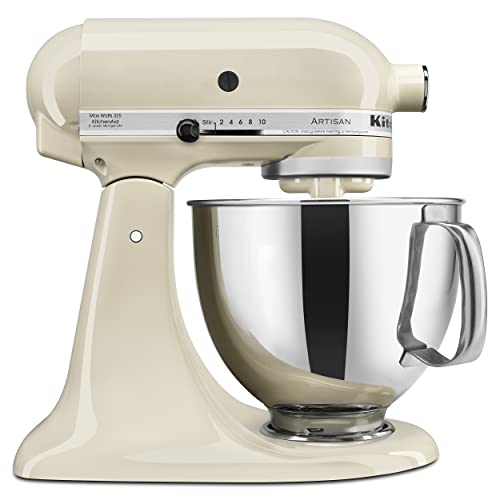
- Durable metal construction with 10 speeds
- 5-quart stainless steel bowl
- Tilt-head design with included pouring shield
Best For: Versatile everyday baking and mixing
Best Compact Option
Kitchen in the box 3.2Qt Mixer
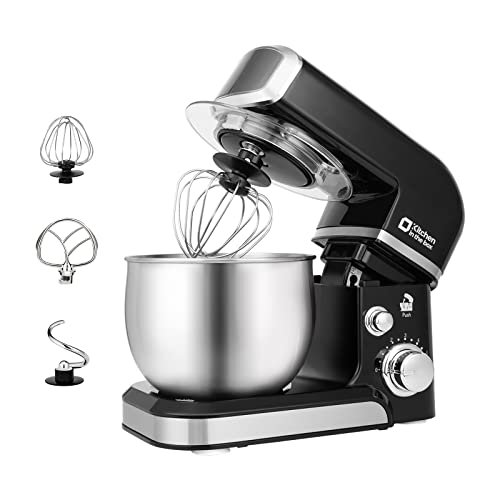
- Lightweight 7-pound footprint
- Six speeds for dough and other recipes
- Includes hook, beater, whisk, and splash lid
Best For: Small kitchens and modest baking batches
Best All-in-One Fermentation Pick
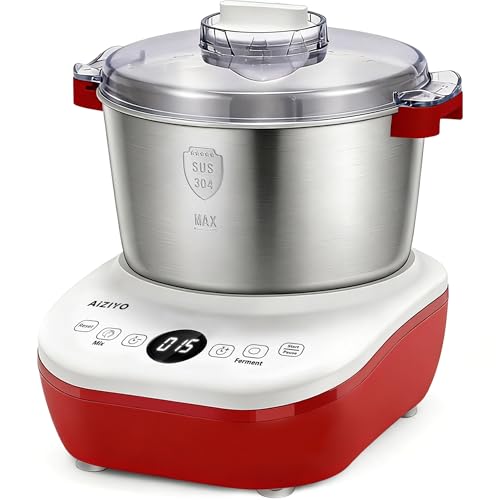
- Mixes and ferments in one appliance
- S-shaped blade supports hand-style kneading
- Wide opening for adding ingredients during mixing
Best For: Home bakers seeking integrated kneading and proofing
Best for Family-Size Batches
7.4Qt Kneading & Fermentation Mixer

- Large bowl for family-size dough batches
- Kneads and proofs without bowl transfers
- Suction feet improve stability during mixing
Best For: Families making bread, pizza, sourdough, or dumplings
Best for Versatile Dough Prep

- Kneads and ferments dough in one machine
- Supports bread, pizza, sourdough, buns, and dumplings
- Ingredient chute and timer simplify operation
Best For: Home cooks preparing multiple types of dough
Commercial Workhorse
Garvee 10.5-Quart Dual-Rotation Mixer

- 10.5-quart stainless steel bowl
- Dual rotation with 650W motor
- Timer and safety shutoff
Best For: Large household or commercial-style dough batches
High-Capacity Fermentation
INTBUYING 17-Pound Dough Mixer

- 17-pound stainless steel capacity
- Bidirectional kneading and pressing
- Three fermentation modes with timer
Best For: High-volume bread and pizza dough preparation
Best for Seasonal Fermentation – Joydeem 9.5Qt Electric Dough Maker
For bakers comparing dough kneading machines for artisan baking, the Joydeem HMJ-A901 stands out for its large capacity and dedicated fermentation controls. Its 300-watt motor, intermittent MIX mode, and adjustable timing support bread, pizza, sourdough, roti, dumplings, and other doughs.
Best For: Home bakers who make large batches and want built-in winter and summer fermentation settings.
Pros:
- 9.5-quart bowl handles 900–2,800g of flour, with a 2,500g maximum for fermented dough.
- Offers MIX, Ferment, Mix + Ferment, and BLEND modes.
- Adjustable mixing times from 5–30 minutes and fermentation times from 5–120 minutes.
- 304 stainless steel bowl and blade, plus silicone suction cups for stability.
Cons:
- The vertical unit is larger than compact countertop mixers.
- Its 300-watt motor operates in intervals rather than offering conventional variable speeds.
This is a specialized choice for batch-focused bakers who value controlled proofing as much as kneading. The separate BLEND mode also adds flexibility for fillings, though shoppers wanting a traditional multi-speed stand mixer may prefer another design.
Best All-Purpose Stand Mixer – KitchenAid Artisan 5-Qt
Among dough kneading machines for artisan baking, the KitchenAid Artisan offers a familiar stand-mixer format with durable metal construction, a 5-quart stainless steel bowl, and 10 speeds. It is suited to dough work as well as general mixing and whipping tasks.
Best For: Bakers who want one versatile countertop mixer for dough, batters, whipped ingredients, and larger everyday recipes.
Pros:
- 10 speeds cover gentle stirring through high-speed whipping.
- 5-quart bowl is designed for both small and large batches.
- Tilt-head design improves bowl access and locks in place during mixing.
- Metal construction and 59 touchpoints around the bowl support thorough mixing.
Cons:
- It does not include a dedicated fermentation function.
- The 5-quart capacity is smaller than the largest dough-specific machines in this roundup.
The Artisan is the strongest general-purpose option here if you want traditional speed control and broad recipe flexibility. Choose it over a dedicated dough maker when whipping, batter mixing, and everyday stand-mixer convenience matter alongside kneading.
Best for Automated Proofing – Joydeem 7.4Qt Dough Maker
The Joydeem JD-HMJ7L is a practical pick among dough kneading machines for artisan baking when automated timing is a priority. Its microcomputer controls, intermittent kneading motion, and fermentation function can complete kneading or a kneading-and-proofing cycle with limited hands-on effort.
Best For: Home bakers who want a straightforward dough-and-proofing appliance with preset timing and a space-saving vertical design.
Pros:
- Microcomputer controls support preset timing and program selection.
- Can knead in about 15 minutes or knead and proof in about 45 minutes, with a drip alert.
- Stainless steel container and blade are dishwasher safe; the top cover is removable.
- Weighted body and bottom suction cup help reduce movement and noise.
Cons:
- It has one speed and is not speed-adjustable.
- The base is not dishwasher safe.
- Its listed noise level is 70 dB.
This machine favors convenience over fine-grained manual control. It is a good fit for routine bread, pizza, bun, and dumpling dough, especially when you want a compact vertical unit to handle timing and proofing automatically.
Best Compact Option – Kitchen in the box 3.2Qt Mixer
For small kitchens searching for dough kneading machines for artisan baking, this lightweight Kitchen in the box mixer provides a compact alternative to full-size models. It includes a 3.2-quart stainless steel bowl, dough hook, flat beater, whisk, and six speeds for more than just kneading.
Best For: New bakers, couples, and apartment kitchens that need a small everyday mixer with multiple attachments.
Pros:
- Compact 7-pound design fits limited storage spaces.
- Six speeds handle dough, thick batters, meringues, and whipped cream.
- Includes dough hook, flat beater, whisk, stainless steel bowl, and splash lid.
- Four anti-slip suction cups help keep the mixer steady.
Cons:
- The 3.2-quart capacity is comparatively limited for large artisan batches.
- Its lightweight plastic-and-metal construction is less substantial than a full-size metal stand mixer.
This is the most space-conscious choice in the group and offers useful versatility for everyday baking. Its smaller bowl makes it better suited to modest dough quantities than to frequent large-batch artisan production.
Best All-in-One Fermentation Pick – AIZIYO DoughChief 7.4Qt
For bakers comparing dough kneading machines for artisan baking, the AIZIYO DoughChief stands out by combining mixing and temperature-controlled fermentation in one compact appliance. Its 7.4-quart 304 stainless steel bowl, S-shaped blade, and touch controls are designed for bread, pizza, and pasta dough.
Best For: Home bakers who want integrated kneading and proofing with beginner-friendly controls.
Pros:
- Mixes and ferments in the same machine, with a 77–100°F fermentation range.
- S-shaped blade and mix–pause–mix program help simulate hand kneading.
- Wide top opening allows ingredients to be added while mixing.
- Large 7.4-quart 304 stainless steel bowl.
Cons:
- Its 250-watt motor and single speed may be less versatile than multi-speed mixers.
- The listed noise level is 75 dB.
- Fermentation requires yeast or fermentation powder.
The DoughChief is a practical choice when consistent proofing matters as much as kneading. Its dedicated ferment function and straightforward operation make it especially appealing for routine bread and pizza baking.
Best for Family-Size Batches – 7.4Qt Kneading & Fermentation Mixer
This 7.4-quart machine is a straightforward option among dough kneading machines for artisan baking, particularly for families making large batches of bread, pizza, sourdough, rolls, or dumplings. It combines kneading and fermentation in one stainless steel bowl to reduce transfers and cleanup.
Best For: Families and frequent home bakers preparing larger dough batches.
Pros:
- 7.4-quart capacity suits larger homemade dough batches.
- Kneads and proofs in one bowl, reducing transfers and mess.
- Intermittent kneading allows rest periods between cycles.
- Suction feet help stabilize the machine during heavier mixing.
Cons:
- The notes identify a fermentation function but do not specify its temperature range.
- At 250 watts, it is focused on household dough preparation rather than heavy commercial use.
- The product details do not list multiple speed settings.
Choose this model if batch size and stability are priorities. Its intermittent kneading approach and suction feet are useful features for handling substantial bread or pizza dough without constant manual intervention.
Best for Versatile Dough Prep – VEVOR 6.9 Quart Dough Mixer
The VEVOR Dough Mixer is a useful contender among dough kneading machines for artisan baking, with dedicated kneading and constant-temperature fermentation. Its 6.9-quart capacity, 250-watt motor, timer, and ingredient chute support everyday preparation of bread, pizza, sourdough, buns, and dumpling wrappers.
Best For: Home cooks who make several types of dough and want timer-based operation.
Pros:
- Handles kneading and fermentation in one appliance.
- 6.5-liter stainless steel bowl accommodates up to 1600 g of flour.
- Detachable ingredient chute lets you add ingredients without stopping.
- Digital controls and timer support convenient operation.
Cons:
- Its 6.9-quart capacity is slightly smaller than the 7.4-quart models in this roundup.
- The 250-watt motor runs at a stated 150 RPM, so it is designed for household use.
- The notes do not specify the temperature range for fermentation.
VEVOR makes the most sense for bakers who value ingredient access and flexible dough applications. The timer and digital control panel add convenience, while the bowl capacity remains suitable for larger household batches.
Commercial Workhorse – Garvee 10.5-Quart Dual-Rotation Mixer
For bakers comparing dough kneading machines for artisan baking, the Garvee Commercial Dough Mixer stands out with a 10.5-quart stainless steel bowl, a 650W motor, and dual rotation. It is designed for larger dough batches and includes a timer, safety shield, and overload protection features.
Best For: Home bakers, restaurants, pizzerias, and small bakeries making larger batches of bread, pizza, cookies, or pastry dough.
Pros:
- 10.5-quart bowl can handle up to 11 pounds of dough.
- Dual-rotation bowl and hook promote thorough mixing.
- 60-minute timer, overload protection, and automatic safety shutoff.
- Food-contact components use stainless steel, with nonslip feet for stability.
Cons:
- At 105 pounds, it is difficult to move or store frequently.
- Its commercial size may be excessive for small kitchens or occasional baking.
This is a heavy-duty option for buyers who prioritize capacity and stable operation over portability. Its two speeds and timer offer straightforward control, while the dual-rotation design suits substantial, repeat baking sessions.
Proofing Pick – 7.4-Quart Dough Mixer with Fermentation
Among dough kneading machines for artisan baking, this 7.4-quart model is geared toward convenience, combining dough mixing with constant-temperature fermentation. Its touch controls, digital display, and top ingredient window make it practical for bread, pizza, and pastry preparation.
Best For: Home bakers and larger families who want integrated proofing and the ability to prepare multiple batches in one session.
Pros:
- 7.4-quart capacity accommodates larger quantities of ingredients.
- Constant-temperature fermentation supports consistent proofing conditions.
- Top window allows water, seasoning, or other ingredients to be added while mixing.
- Stainless steel construction and easy-clean design simplify routine upkeep.
Cons:
- The 250W motor and single-speed setup provide less power and control than heavier commercial mixers.
- Its fermentation-focused features may be unnecessary if you already proof dough separately.
This mixer is a convenience-oriented choice rather than a high-output commercial machine. The built-in fermentation function is its main differentiator, while the digital controls and ingredient window make the workflow easier for regular home baking.
High-Capacity Fermentation – INTBUYING 17-Pound Dough Mixer
For serious artisan baking workloads, the INTBUYING is one of the larger dough kneading machines for artisan baking, with a stated 17-pound capacity and a 750W pure copper motor. Its bidirectional kneading, fermentation modes, removable bowl, and 30-minute timer target efficient bread and pizza production.
Best For: Frequent home bakers and commercial users who need high capacity, integrated fermentation, and quick dough formation.
Pros:
- Large 17-pound capacity supports substantial dough batches.
- Forward-and-reverse kneading simulates repeated manual kneading and pressing.
- Three adjustable fermentation modes and a 30-minute timer add process control.
- 750W motor includes overheat protection; the bowl and kneading rod are designed for easier cleaning and removal.
Cons:
- Its large capacity and 21.26-inch depth require considerable counter or storage space.
- Fermentation and digital controls may be more functionality than occasional bakers need.
This model is best suited to users who regularly make large amounts of dough and want kneading and fermentation handled in the same machine. The locking structure, visual cover, and removable components add practicality for repeated use.
How We Picked These Dough Kneading Machines for Artisan Baking
We focused on machines suited to bread and pizza dough rather than general-purpose mixers alone. The selection includes compact stand mixers, dedicated electric dough makers, fermenting models, and larger commercial-style machines. We considered bowl capacity, stated motor power, control systems, dough-focused functions, construction materials, safety features, and how easily each machine may fit into a home baking routine.
Capacity claims are not the same as practical dough capacity. Dense dough places more strain on a motor than whipped ingredients, so bakers should leave room for expansion and follow the manufacturer’s load guidance.
Quick Comparison
| Best For | What to Look For | Featured Options |
|---|---|---|
| Everyday home baking | Moderate bowl size, multiple speeds, easy cleanup | KitchenAid Artisan, Kitchen in the box |
| Proofing and fermentation | Ferment setting, temperature or timing controls | Joydeem, AIZIYO, VEVOR, 7.4-quart models |
| Large bread or pizza batches | Large capacity, strong motor, stable base | Garvee, INTBUYING |
| Mixed kitchen tasks | Additional attachments or separate blending functions | Joydeem dual-function model |
Key Buying Factors
Capacity and Dough Load
A 3.2- to 5-quart mixer can suit small households and occasional baking, while 7.4- to 10.5-quart machines offer more room for multiple loaves. Commercial-capacity models make sense only if you have sufficient counter space, storage, and a regular need for large batches.
Motor, Kneading Action, and Speed Control
Look beyond wattage. A machine needs a stable transmission, effective dough hook, and sturdy housing to handle stiff dough without excessive movement. Multiple speed settings help you combine ingredients gently before developing gluten at a more controlled pace.
Fermentation Features
Built-in ferment functions can simplify proofing by providing a timed, enclosed environment. They are useful in cooler kitchens, but they do not replace dough temperature awareness or proper fermentation judgment. If you already proof in a controlled oven or proofing box, this feature may be less important.
Construction, Safety, and Cleanup
Stainless steel bowls are durable and generally easy to clean. Check for splash or security shields, non-slip feet, overload protection, accessible controls, and removable components. Face-up touch panels and timed programs can be convenient, but physical controls may be preferable if your hands are flour-covered.
Who Should Buy Which Dough Kneading Machines for Artisan Baking?
Choose a compact stand mixer if you bake smaller batches, have limited space, or want one appliance for cakes, cookies, and dough. Choose a dedicated fermenting dough maker if bread and pizza are your main focus and automated proofing would improve your routine. A larger 7.4- to 10.5-quart model is better for frequent family baking or batch preparation, provided its footprint and cleaning demands are acceptable. For serious production-style use, the 17-pound commercial machine is the most appropriate choice, but it may be excessive for casual home bakers.