Bringing commercial-style frozen desserts into your kitchen requires more than choosing the machine with the highest advertised output. Hopper capacity, electrical requirements, cleaning features, footprint, and dessert style all affect how practical a model will be at home.
We’ve gathered 10 commercial and commercial-style ice cream makers covering hard serve, soft serve, gelato, frozen yogurt, and compact multi-function designs. Use the guide below to match capacity and features to your space, budget, and serving plans.
Best 10 Commercial Ice Cream Maker for Home Kitchen Picks for 2026
Best High-Capacity Hard Serve Pick
Commercial Hard Ice Cream Maker

- Produces about 3.2 gallons per hour
- 304 stainless steel freezing cylinder
- LED controls and automatic cleaning
Best For: Home kitchens and small commercial serving spaces
Best Space-Saving Soft Serve Pick

- Slim 8.3-inch body for tight counters
- Rated for 4–4.5 gallons per hour
- Pre-cooling and one-button cleaning
Best For: Compact home kitchens, parties, and cafés
Best Smart-Control Hard Serve Pick
20 L/H Countertop Ice Cream Maker

- Rated for 16–20 liters per hour
- LCD timer and one-click cleaning
- Durable SUS304 stainless steel construction
Best For: High-volume dessert service and serious home users
Best Three-Flavor Soft Serve Pick
110V 3-Flavor Standing Machine
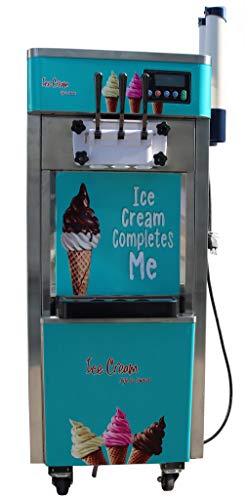
- Two flavors plus a mixed center flavor
- Output rated up to 30 liters per hour
- Adjustable hardness and LCD controls
Best For: Restaurants and high-volume soft-serve service
High-Output Countertop Pick
VEVOR Hard Serve Ice Cream Maker
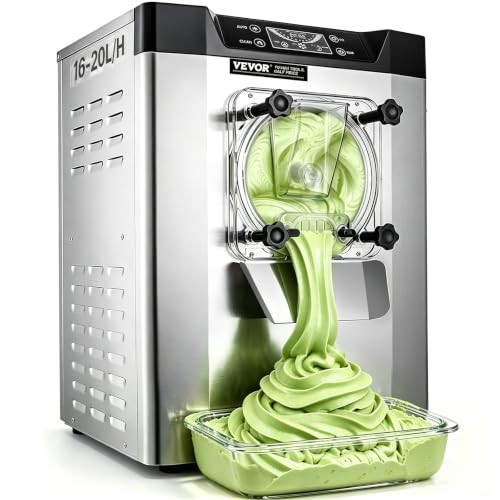
- Produces about 4.2–5.3 gallons per hour
- LCD panel with cleaning and timer functions
- Durable insulated stainless steel housing
Best For: High-volume dessert preparation in a spacious kitchen or small food business
Compact Home Choice
4-in-1 Compressor Ice Cream Maker

- No pre-freezing required
- Makes six frozen or cultured treats
- Slim vertical design for small countertops
Best For: Families and apartment kitchens seeking versatile, small-batch desserts
Soft-Serve Production Pick
Commercial LCD Soft-Serve Ice Cream Machine
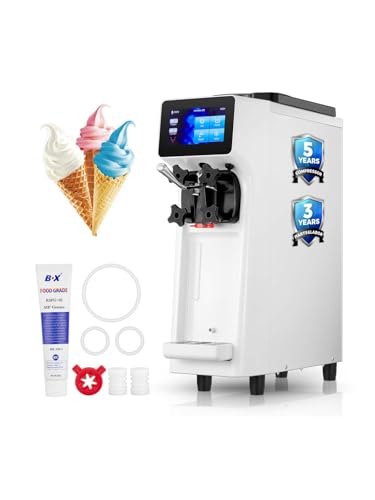
- Produces about 10–20 liters per hour
- Touch controls adjust hardness and temperature
- Includes pre-cooling and automatic cleaning
Best For: High-demand soft-serve service in cafés, events, or large kitchens
Compact Home-to-Café Performer
Countertop Single-Flavor Soft Serve Maker

- 4–5 L/h stated output for parties and small events
- First cone in about 10 minutes, according to the listing
- One-touch automatic cleaning and LCD controls
Best For: Home entertainers, small cafés, food trucks, and single-flavor service
High-Volume Service Workhorse
3-Flavor Countertop Soft Serve Machine

- 20–28 L/h stated production capacity
- Two flavors plus a mixed dispensing option
- Pre-cooling, agitation, and self-cleaning functions
Best For: Dessert shops, cafés, beverage bars, and high-volume events
Flexible Three-Flavor Station
High-Yield LCD Soft Serve Maker

- 22–30 L/h stated output with up to 150–200 servings hourly
- Two flavors plus a mixed flavor option
- LCD controls, freshness mode, alerts, and self-cleaning
Best For: Restaurants, snack bars, buffets, and spacious event kitchens
Best High-Capacity Hard Serve Pick – Commercial Hard Ice Cream Maker
For shoppers seeking a commercial ice cream maker for home kitchen use or a small serving operation, this hard-serve model emphasizes capacity, straightforward controls, and durable food-contact materials. It can produce approximately 3.2 gallons per hour and includes an automatic cleaning function.
Best For: Home kitchens, snack bars, cafés, milk tea stores, and other spaces needing hard ice cream or gelato production.
Pros:
- Produces about 12 liters, or 3.2 gallons, of ice cream per hour.
- Uses a 1290W compressor for fast cooling and low power consumption.
- Food-grade 304 stainless steel cylinder is designed for durability and easier cleaning.
- LED panel, automatic operation, built-in compressor, and automatic cleaning add convenience.
Cons:
- Its 21.46-by-19.29-by-25.39-inch footprint may be large for some home counters.
- Hand washing is listed in the care instructions despite the automatic cleaning feature.
- The machine is intended for hard serve rather than soft serve dispensing.
This is a practical choice when production volume and a stainless steel build matter more than a compact footprint. Confirm available counter space and electrical capacity before buying.
Best Space-Saving Soft Serve Pick – GSEICE Soft Serve Machine
This commercial ice cream maker for home kitchen use stands out for its slim 8.3-inch body, soft-serve format, and quick batch cycle. It combines a 1.6-gallon hopper with a 0.42-gallon freezing cylinder and is designed for continuous serving in compact spaces.
Best For: Home parties, offices, cafés, dessert counters, and users who want soft serve without side ventilation clearance.
Pros:
- Rated for approximately 4–4.5 gallons per hour, with the first batch ready in about 10 minutes.
- Ultra-slim 8.3-inch width can fit directly beside walls or other equipment, with rear heat clearance.
- Pre-cooling and fresh-keeping functions support faster freezing and mix consistency.
- Touch display, one-button cleaning, and dual overrun design simplify serving and improve texture.
Cons:
- Its 29.1-inch height may require careful placement under cabinets.
- The 1.58-gallon listed capacity is smaller than the product’s hourly output rating.
- It makes soft serve, so it is not intended for traditional hard ice cream scooping.
Choose this model if counter width is a major concern and you prefer soft serve. Its automatic features and high output are appealing, but measure vertical clearance and plan for rear ventilation space.
Best Smart-Control Hard Serve Pick – 20 L/H Countertop Ice Cream Maker
For buyers comparing a commercial ice cream maker for home kitchen use with small-business equipment, this countertop hard-serve machine offers high stated output and detailed controls. Its 4.5-liter cylinder, timer, rapid-freeze cycle, and automatic cleaning are aimed at frequent production.
Best For: Restaurants, dessert shops, cafés, food trucks, concession stands, and experienced home users with substantial space.
Pros:
- Rated to produce approximately 16–20 liters, or 4.2–5.3 gallons, per hour.
- High-speed mixer, dual beaters, and puffing technology are designed for smooth, dense texture.
- Sloped LCD control panel includes timer, auto refrigeration, status updates, and one-click cleaning.
- SUS304 stainless steel cylinder and fully enclosed stainless steel shell support durability and easier cleanup.
Cons:
- At 156 pounds, it is difficult to move once installed.
- The roughly 20.87-by-19.69-by-28.35-inch footprint is substantial for a home kitchen.
- The product is listed for commercial use and may exceed casual household needs.
This model makes the most sense when output and control flexibility justify the size and weight. It can also handle gelato, sorbet, and toppings, but users should reserve a stable countertop and verify power requirements.
Best Three-Flavor Soft Serve Pick – 110V 3-Flavor Standing Machine
Commercial 110V 3Flavor Soft Ice Cream Cooling Making Machine 20-30L/H Standing Type(Ite#210051)
Check Price On AmazonThis standing commercial ice cream maker for home kitchen use is built around variety rather than compactness. Its two flavor containers create two single flavors plus a mixed center flavor, while adjustable hardness and an LCD control panel support flexible soft-serve service.
Best For: Restaurants, cafés, buffets, dessert shops, and high-volume settings that want three soft-serve flavor options.
Pros:
- Offers two individual flavors and one mixed flavor from a 2+1 configuration.
- High-horsepower compressors support rapid refrigeration and output up to 30 liters per hour.
- LCD controls display time, temperature, hardness, and quantity.
- One-click cleaning and material-shortage protection add operational convenience.
Cons:
- The standing design is nearly 60 inches tall and needs significant floor space.
- Hand washing is listed in the product-care instructions.
- It is a soft-serve machine, not a countertop hard-serve or gelato maker.
This is the strongest fit for buyers who prioritize multiple flavors and high throughput. Its commercial standing form makes it less suitable for ordinary home kitchens unless ample floor space and a dedicated setup are available.
High-Output Countertop Pick – VEVOR Hard Serve Ice Cream Maker
For a commercial ice cream maker for home kitchen use, the VEVOR hard-serve machine is best suited to buyers who need substantial output in a countertop format. Its 1.1-gallon refrigeration cylinder is designed to produce about 4.2–5.3 gallons per hour, while the LCD panel simplifies operation and monitoring.
Best For: High-volume dessert preparation, small food businesses, and spacious home kitchens that can accommodate a 132-pound machine.
Pros:
- Produces approximately 16–20 liters of ice cream per hour.
- LCD controls include automatic refrigeration, cleaning, time setting, and production monitoring.
- Stainless steel construction, insulated housing, and ventilation support extended use.
- Countertop design supports multiple flavors, including chocolate, vanilla, strawberry, and mango.
Cons:
- Its 132-pound weight and roughly 27.5-inch height make it a substantial installation.
- Hand-wash care may require more cleanup effort.
- Special shipping locations may incur an additional per-package logistics charge.
This is a capacity-focused choice rather than a lightweight household appliance. Choose it when hourly production and commercial-style controls matter more than portability or minimal cleanup.
Compact Home Choice – 4-in-1 Compressor Ice Cream Maker
This 4-in-1 compressor model is a practical commercial ice cream maker for home kitchen shoppers who prioritize convenience and a small footprint. Because it requires no pre-freezing, its automatic design can prepare ice cream, gelato, sorbet, frozen yogurt, soft serve, and homemade yogurt with less advance planning.
Best For: Apartments, small countertops, families, and beginners who want customizable frozen desserts without commercial-scale capacity.
Pros:
- Built-in compressor eliminates the need to pre-freeze a bowl.
- Supports ice cream, gelato, sorbet, frozen yogurt, soft serve, and yogurt.
- Compact vertical design fits more easily in limited kitchen space.
- Detachable mixing parts and a transparent lid support easier use and cleanup.
Cons:
- The 1-quart capacity is considerably smaller than the commercial machines in this roundup.
- Its ABS construction may be less suited to sustained high-volume service.
- Automatic operation offers convenience but fewer specifically listed production controls.
This is the most home-oriented option of the three. Its main advantage is flexibility in a compact package, making it a better fit for household portions than for serving a steady stream of customers.
Soft-Serve Production Pick – Commercial LCD Soft-Serve Ice Cream Machine
For buyers seeking a commercial ice cream maker for home kitchen use with soft-serve capability, this model emphasizes speed, capacity, and automated controls. It offers a 4-liter hopper, a 1.6-liter freezer tank, and a stated output of 10–20 liters per hour, making it better suited to high-demand settings than typical household machines.
Best For: Soft-serve service, parties, food trucks, cafés, dessert shops, and large kitchens with room for a 134-pound appliance.
Pros:
- Produces approximately 10–20 liters per hour, with later batches ready in six minutes or less.
- Touch LCD controls adjust serving size, hardness, and temperature.
- Pre-cooling, freshness, timer, and one-touch automatic cleaning functions add convenience.
- 304 stainless steel construction, removable drip tray, and cooling vents support practical operation.
Cons:
- Its large footprint and 134-pound weight limit flexibility in a typical home kitchen.
- It is designed for commercial output rather than small household portions.
- The supplied guidance specifically says not to add alcohol to the ice cream mix.
This machine makes the most sense when soft-serve presentation and sustained output are priorities. Its controls and cleaning program are useful, but its size and capacity should be matched to available space and expected demand.
Compact Home-to-Café Performer – Countertop Single-Flavor Soft Serve Maker
If you want a commercial ice cream maker for home kitchen use without jumping straight to a large multi-flavor unit, this countertop soft-serve machine offers a practical middle ground. Its stated 4–5 L/h output, automatic cleaning, and LCD controls suit parties, home dessert stations, and smaller service settings.
Best For: Home entertainers, small cafés, food trucks, and users who primarily need one soft-serve flavor at a time.
Pros:
- Produces a stated 4–5 liters per hour—approximately 80–100 cones.
- Fast-freeze system is designed for a first cone in about 10 minutes, with later batches in 4–6 minutes.
- One-touch automatic cleaning reduces routine cleanup.
- Double-puffing technology is claimed to increase overrun by 40% for a creamy texture.
Cons:
- Single-flavor design offers less menu variety than two- or three-flavor machines.
- Its roughly 20 x 15.75 x 20-inch footprint requires substantial counter space.
- The listed 2.5-liter capacity may require refilling during extended high-volume use.
For a home kitchen or modest event setup, this model emphasizes accessible operation and quick serving rather than maximum versatility. Consider it when automatic cleaning and soft-serve output matter more than multiple flavors.
High-Volume Service Workhorse – 3-Flavor Countertop Soft Serve Machine
For buyers comparing a commercial ice cream maker for home kitchen use with equipment capable of heavier service, this VEVOR model is built around high throughput. It offers 20–28 L/h production, two 6-liter hoppers, three dispensing options, and controls for hardness, freshness, timing, and cleaning.
Best For: Dessert shops, cafés, beverage bars, and unusually high-volume home or event operations with adequate space and power.
Pros:
- 20–28 L/h stated yield supports continuous service during busy periods.
- Three dispensers provide two individual flavors plus a mixed option.
- Pre-cooling and hopper agitation help maintain mix freshness and consistency.
- LED controls include hardness adjustment, fresh-keeping, timer, automatic mode, and self-cleaning.
Cons:
- At 183 pounds and about 32.7 x 21.06 x 29.3 inches, it is not an easy fit for most home kitchens.
- The 2,200-watt rating may require careful electrical planning.
- Its commercial capacity can be excessive for occasional household use.
This is the strongest choice here for sustained output and flavor flexibility, but its size, weight, and power demands make it more appropriate for a dedicated commercial or event setting than a typical residential counter.
Flexible Three-Flavor Station – High-Yield LCD Soft Serve Maker
This VEVOR unit is aimed at buyers who want a commercial ice cream maker for home kitchen use but also need the flexibility of a higher-output machine. Its dual 6-liter hoppers, 2-liter cylinders, LCD controls, freshness mode, and three flavor combinations make it suited to larger gatherings and commercial-style service.
Best For: Restaurants, snack bars, buffets, bakeries, and spacious home or event kitchens serving multiple flavors.
Pros:
- 22–30 L/h stated output can support approximately 150–200 100-gram servings per hour.
- Offers two single flavors and one mixed flavor through three dispensing options.
- LCD panel allows hardness adjustment, quantity monitoring, fresh-keeping, and one-click self-cleaning.
- Shortage alerts help indicate when more mix is needed.
Cons:
- Its approximately 34 x 29.3 x 34-inch size is demanding for a standard home kitchen.
- The high-yield commercial design may be more machine than casual users need.
- The listing does not specify a power rating, so buyers should confirm electrical requirements before installation.
Choose this model when flavor variety and maximum stated throughput are priorities. The freshness mode and controls add convenience, but the large footprint favors a dedicated service area over ordinary household counters.
How We Picked the Best Commercial Ice Cream Maker for Home Kitchen
We selected machines that represent the main ways home users shop for commercial-style equipment: countertop hard-serve makers, soft-serve dispensers, three-flavor machines, and compact compressor models. We compared stated production rates, hopper and cylinder capacity, controls, cleaning functions, cooling design, power requirements, and overall suitability for residential use.
Output figures are manufacturer claims and can vary with mix temperature, ambient heat, dispensing frequency, and operating conditions. Before buying, verify the latest specifications, certifications, warranty, dimensions, and electrical requirements.
Quick Comparison
| Machine type | Best suited to | What to prioritize |
|---|---|---|
| Hard-serve or gelato | Scooped desserts and smaller batches | Freezing speed, cylinder size, consistency control |
| Single-flavor soft serve | Home events and regular serving | Counter space, hopper capacity, auto-clean function |
| Three-flavor soft serve | Parties, pop-ups, and variety | Power, ventilation, footprint, and simultaneous capacity |
| Compact compressor model | Small kitchens and occasional use | Portability, batch size, controls, and storage |
Key Buying Factors for a Commercial Ice Cream Maker for Home Kitchen
Capacity and Production Rate
Choose capacity based on servings rather than the largest hourly number. A high-output unit may be unnecessary for occasional family use, while a small machine can become frustrating during parties. Larger hoppers and cylinders also take up more room and may require longer cleaning routines.
Frozen Dessert Style
Hard-serve machines are designed for scooping and often suit ice cream, gelato, sorbet, and frozen yogurt. Soft-serve models dispense directly into cones or cups and may offer one or multiple flavors. A compact compressor machine is usually the better fit when you want flexibility without the size of a full commercial dispenser.
Power, Ventilation, and Placement
Check voltage, wattage, plug requirements, dimensions, and clearance before ordering. High-powered commercial equipment can produce heat and noise, so avoid tight enclosed cabinets. Make sure the counter or cart can safely support the machine’s weight when filled.
Cleaning and Food-Contact Design
Auto-clean programs can reduce routine labor, but they do not eliminate disassembly or sanitizing. Look for removable food-contact parts, accessible dispensing components, stainless-steel construction, and clear instructions for cleaning after each session.
Controls and Consistency
LED or LCD panels, timers, pre-cooling, auto shutoff, shortage alerts, and adjustable firmness settings can make operation easier. These features are especially useful when several people will use the machine or when you need repeatable servings.
Who Should Buy Which Commercial Ice Cream Maker for Home Kitchen?
Choose a compact compressor model for a smaller kitchen, occasional desserts, and modest batch sizes. Select a hard-serve machine if scooped ice cream or gelato is your priority. A single-flavor soft-serve unit is a practical middle ground for frequent home use and parties, while a three-flavor countertop or standing machine makes sense for entertaining, events, or small-scale service.
For most households, the best Commercial Ice Cream Maker for Home Kitchen use is not necessarily the fastest model. Match capacity to realistic demand, confirm that the electrical setup is compatible, and favor cleaning access and reliable controls over headline production figures.