Electric bread machines make it easier to bake fresh bread at home with automated mixing, kneading, rising, and baking. The best models combine useful programs with dependable controls, loaf-size flexibility, and cleanup-friendly designs.
We compared 10 popular options across price points and feature sets to help you find the right machine for daily sandwich bread, specialty recipes, dough preparation, and more.
Best 10 Electric Bread Machines Picks for 2026
Most Customizable
KITCHENARM 29-in-1 Smart Bread Machine
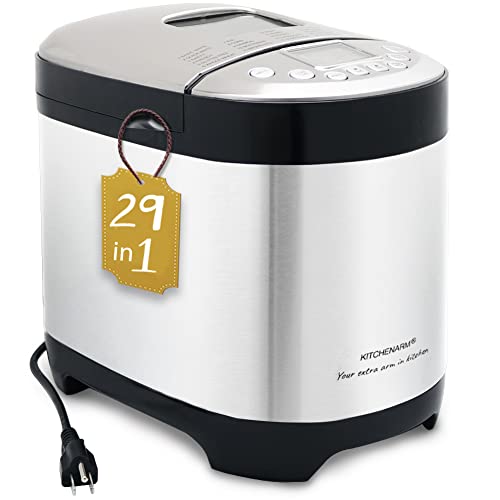
- 29 automatic menus plus a customizable Homemade cycle
- Three loaf sizes and multiple dietary settings
- Stores settings for convenient one-press operation
Best For: Flexible home baking and specialized diets
Best for Even Browning
Zojirushi Virtuoso Plus Breadmaker

- Dual kneading blades support thorough dough mixing
- Lid and bottom heaters promote even browning
- Rapid courses finish loaves in about 2 hours 25 minutes
Best For: Consistent everyday loaves and whole-wheat baking
Best Large-Capacity Pick

- 2.2-pound capacity for larger households
- Automatic fruit-and-nut dispenser
- Dual heaters, ceramic pan, and 15-hour timer
Best For: Family-size loaves and hands-off add-ins
Best Budget-Friendly Starter
Elite Gourmet 2 Lb Bread Maker
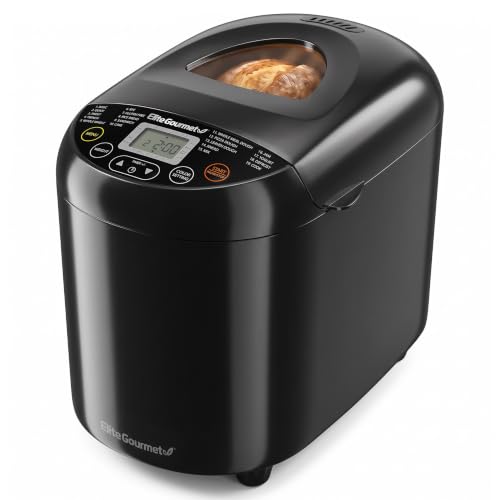
- One-touch automatic kneading, rising, and baking
- 19 presets for bread, dough, cake, and jam
- Three loaf sizes plus delay and keep-warm functions
Best For: Beginners and compact kitchens
Best for Easy Setup
KITCHENARM 19-in-1 Bread Machine

- 19 programs with a fully programmable Homemade cycle
- Three loaf sizes, crust colors, and a 15-hour delay timer
- Gluten-free recipes, recipe cloud access, and saved settings
Best For: Beginners and experiment-focused home bakers
Best for Simple Variety
Elite Gourmet 2-Lb Bread Maker

- 19 preset menus cover bread, dough, and pizza dough
- Three loaf sizes from 1 to 2 pounds
- 15-hour delay timer and 60-minute keep-warm function
Best For: Hands-off baking with a broad preset selection
Best Compact Option

- Compact vertical design for counter-friendly baking
- 12 programs, three loaf sizes, and three crust colors
- LCD display, 13-hour delay timer, and three-year warranty
Best For: Smaller kitchens and straightforward automatic baking
Best ExpressBake Value
Amazon Basics 2-Pound Bread Maker

- 14 programs include gluten-free and dough options
- ExpressBake makes bread in less than 90 minutes
- 2-pound capacity with three crust colors
Best For: Beginners who want fast, programmable homemade bread
Best Specialty-Program Pick

- 20 programs include yogurt, pizza dough, and jam
- Dual heaters support 360-degree baking
- 15-hour delay timer and ceramic nonstick pan
Best For: Families wanting versatile bread and specialty-food programs
Best Beginner Family Model

- 17 programs with three loaf sizes
- 15-hour timer and one-hour keep-warm function
- 600W power with nonstick pan and overheat protection
Best For: Beginners baking flexible-size loaves for the family
Most Customizable – KITCHENARM 29-in-1 Smart Bread Machine
For shoppers comparing electric bread machines, the KITCHENARM stands out for its unusually broad menu selection and extensive customization. It supports 1-, 1.5-, and 2-pound loaves, multiple dietary styles, and personalized cycle programming.
Best For: Beginners and experienced bakers who want maximum recipe flexibility, including gluten-free, keto, whole-wheat, and custom recipes.
Pros:
- 29 programs include bread, cake, jam, yogurt, and a fully customizable Homemade cycle.
- Supports three loaf sizes, three crust colors, a 15-hour delay timer, and one-hour keep-warm function.
- Stores settings for one-press operation and includes 77 recipes plus access to an online recipe cloud.
- Offers alarms for adding nuts and removing the paddle, along with power-interruption recovery.
Cons:
- Hand-wash care may require more cleanup effort.
- Its many customization options may feel more involved than simpler bread makers.
Choose this model if you want an electric bread machine that can grow with your baking skills. Its combination of automatic programs and cycle-level control is especially useful for households with varied dietary preferences.
Best for Even Browning – Zojirushi Virtuoso Plus Breadmaker
The Zojirushi Virtuoso Plus is a premium-feeling option among electric bread machines, with dual kneading blades and heaters designed to support thorough mixing and even baking. It also includes several health-focused courses and a rapid-bake option.
Best For: Bakers who prioritize consistent kneading, even browning, and dedicated whole-wheat or gluten-free programs.
Pros:
- Dual kneading blades thoroughly work the dough.
- Bottom and lid heaters promote even baking and browning.
- Rapid courses prepare white or whole-wheat bread in about two hours and 25 minutes.
- Includes multigrain, whole-wheat, gluten-free, salt-free, sugar-free, and vegan settings.
Cons:
- At 24 pounds, it is considerably heavier than several competing models.
- It offers seven programs, fewer than some multifunction bread makers.
- The manufacturer warranty is one year.
This breadmaker is a strong match for users who value baking consistency over a long list of extra functions. Its dual-heater design and rapid courses make it particularly practical for frequent bread baking.
Best Large-Capacity Pick – Neretva 2.2LB Bread Machine
The Neretva is a practical choice for shoppers seeking electric bread machines with a larger loaf capacity and automatic add-ins. Its 15 programs cover everyday breads as well as gluten-free, sugarless, yogurt, jam, and dough options.
Best For: Families or households that want larger loaves, quieter operation, automatic fruit-and-nut dispensing, and a ceramic bread pan.
Pros:
- 2.2-pound capacity can serve up to six or seven people.
- Dual heaters provide surrounding heat for more even baking.
- Automatic fruit-and-nut dispenser adds ingredients at the intended time.
- Includes a 15-hour delay timer, three crust colors, viewing window, and low-noise motor.
Cons:
- With 15 programs, it has fewer menu options than some highly programmable models.
- The larger capacity may be more than smaller households need.
Consider the Neretva when serving size and convenience are priorities. The automatic dispenser and large pan reduce hands-on work, while the ceramic pan and viewing window add useful everyday features.
Best Budget-Friendly Starter – Elite Gourmet 2 Lb Bread Maker
The Elite Gourmet offers a straightforward entry point for shoppers comparing electric bread machines. Its one-touch operation handles kneading, rising, and baking, while 19 presets cover common breads, doughs, desserts, and preserves.
Best For: Beginners, small kitchens, and households that want flexible loaf sizes without using a conventional oven.
Pros:
- Automatic one-touch kneading, rising, and baking simplifies bread making.
- Supports 1-, 1.5-, and 2-pound loaf sizes.
- 19 programs include gluten-free, white, wheat, rye, French, pizza dough, cake, and jam.
- Offers a 15-hour delay timer and 60-minute keep-warm function.
Cons:
- The supplied notes do not specify a dedicated nut dispenser or dual-heater system.
- Its aluminum construction may be less premium than stainless-steel alternatives.
This is a sensible pick if you want an accessible bread machine with useful presets and scheduling features. Its compact, energy-saving design is especially appealing for apartments and smaller kitchens.
Best for Easy Setup – KITCHENARM 19-in-1 Bread Machine
For shoppers comparing electric bread machines, the KITCHENARM stands out for its combination of beginner-friendly automation and unusually detailed customization. It offers 19 programs, three loaf sizes, three crust colors, and a programmable Homemade cycle for adapting recipes.
Best For: Beginners and home bakers who want gluten-free options, recipe guidance, and control over individual bread-making cycles.
Pros:
- Includes 19 programs, including bread, cake, jam, yogurt, dough, and a fully programmable Homemade menu.
- Supports 1-, 1.5-, and 2-pound loaves, three crust colors, and a 15-hour delay timer.
- Includes 57 recipes, access to KitchenArm’s recipe cloud, and alarms for adding nuts or removing the paddle.
- Offers gluten-free and whole-wheat recipe options plus support for fresh ingredients.
Cons:
- The extensive controls and programmable cycle may be more than casual users need.
- Its 2-pound capacity is the largest listed option, so it may not suit users seeking larger loaves.
The KITCHENARM is a strong choice when flexibility matters more than simplicity alone. Its recipe resources and saved settings help newcomers get started, while the Homemade cycle gives experienced bakers room to experiment.
Best for Simple Variety – Elite Gourmet 2-Lb Bread Maker
The Elite Gourmet is one of the more straightforward electric bread machines for making everyday loaves and doughs with minimal hands-on work. Its 19 preset menus handle mixing, kneading, rising, and baking, while the adjustable loaf sizes suit different household needs.
Best For: Home cooks who want broad preset selection, hands-off operation, and flexible timing for loaves up to 2 pounds.
Pros:
- Provides 19 preset menus for options ranging from basic white bread to pizza dough.
- Makes 1-, 1.5-, or 2-pound loaves and includes a 15-hour delay timer.
- Offers a 60-minute keep-warm function after baking.
- Can reduce oven use and the need for multiple cooking implements.
Cons:
- The supplied notes do not mention a recipe book or included recipe collection.
- It does not list a programmable custom cycle for independently adjusting each stage.
With its large preset menu and practical timing features, the Elite Gourmet is a sensible middle-ground option. It is especially appealing if you want variety without manually programming the bread-making stages.
Best Compact Option – Cuisinart 2-Lb Bread Maker
The Cuisinart CBK-110P1ES is a compact pick among electric bread machines, with a vertical baking cavity designed to save counter space. Its automatic controls cover core bread and dough tasks while still allowing adjustments for loaf size and crust color.
Best For: Smaller kitchens and users who want a recognizable, compact bread maker with simple controls and adjustable loaf settings.
Pros:
- Compact design includes a full-size vertical baking cavity and removable nonstick pan.
- Offers 12 menu programs for bread, cakes, pizza, and other treats.
- Provides three loaf sizes, three crust colors, an LCD display, and audible reminders.
- Includes a 13-hour delay-start timer, 60-minute keep-warm cycle, and limited three-year warranty.
Cons:
- It has fewer programs than the 19-menu KITCHENARM and Elite Gourmet models.
- The delay timer is shorter than the 15-hour timers listed for the other two machines.
- Care instructions specify hand washing.
The Cuisinart favors compactness and straightforward operation over maximum programmability. It is a practical fit for counter-conscious shoppers who still want adjustable loaves, crusts, and several non-bread functions.
Best ExpressBake Value – Amazon Basics 2-Pound Bread Maker
If you want a straightforward way to make homemade loaves, this Amazon Basics bread machine covers the core functions at a practical price point. Its 14 settings include standard breads, doughs, gluten-free options, jams, and an ExpressBake mode for bread in less than 90 minutes.
Best For: Beginners and households seeking a compact, programmable electric bread machine with a fast-bake option.
Pros:
- Automatically mixes, kneads, rises, and bakes up to a 2-pound loaf.
- ExpressBake setting can produce bread in less than 90 minutes.
- Offers 14 programs and light, medium, or dark crust settings.
- LCD display and 550-watt power support simple operation.
Cons:
- Provides fewer programs than some competing models in this roundup.
- The supplied notes do not mention a delay timer or keep-warm function.
This is a sensible electric bread machine for everyday bread and dough preparation, especially if speed and simple controls matter more than a large menu of specialty programs.
Best Specialty-Program Pick – Neretva 20-in-1 Bread Maker
The Neretva stands out among electric bread machines for its broad 20-program menu and upgraded baking design. It supports two loaf capacities, three crust colors, a ceramic nonstick pan, and automatic programs ranging from bread and pizza dough to yogurt, jam, and dried meat floss.
Best For: Families and adventurous home cooks who want a versatile bread maker with delayed-start scheduling and specialty programs.
Pros:
- 20 automatic programs cover breads, cakes, doughs, yogurt, jam, and more.
- 1.65- and 2-pound capacities can serve approximately five to six people.
- Dual heaters provide 360-degree surrounding baking for more even results.
- Includes a 15-hour delay timer, one-hour keep-warm feature, and power-interruption recovery.
Cons:
- The control buttons automatically lock after starting, requiring a three-second press to unlock.
- Its larger program list may be more than needed for users who only make basic loaves.
With quiet operation rated below 40 dB and a ceramic nonstick pan, this model offers a particularly feature-rich setup for users who expect their machine to handle more than standard bread.
Best Beginner Family Model – 2-Pound 17-in-1 Bread Maker
This 17-in-1 bread machine is designed for accessible daily baking: add ingredients, select a program, and let the appliance knead and bake. Its 2-pound capacity, three loaf sizes, 15-hour timer, and beginner-friendly controls make it a practical option for family use.
Best For: First-time bread-machine owners who want flexible loaf sizing, quiet operation, and simple cleanup.
Pros:
- 17 programs include basic, whole wheat, gluten-free, cake, jam, and yogurt settings.
- Supports 1-, 1.5-, and 2-pound loaves with three crust colors.
- 600-watt power and 360-degree heat distribution are designed for efficient, even baking.
- Includes a 15-hour delay timer, one-hour keep-warm function, and overheat protection.
Cons:
- Basic 2-pound bread programs take approximately 3 hours 35 minutes to 3 hours 45 minutes.
- At up to 50 dB, it is rated louder than the Neretva model in this roundup.
This model favors ease of use and family-friendly flexibility over rapid baking. The clear timing guidance and overheat protection may be reassuring for beginners who want predictable, hands-off results.
How We Picked the Best Electric Bread Machines
We focused on the features that have the greatest effect on everyday usability: baking programs, loaf sizes, crust controls, gluten-free and dough settings, ingredient dispensers, cycle customization, and ease of operation. We also considered practical details such as viewing windows, removable pans, nonstick interiors, delayed-start timers, and stainless-steel construction.
Because bread makers vary widely in price and complexity, this list includes straightforward beginner models as well as more advanced machines with homemade cycles, dual heating elements, or larger program libraries. The goal is to match each type of baker with a useful feature set rather than simply favoring the most expensive option.
Quick Comparison
| What to Compare | Why It Matters |
|---|---|
| Loaf capacity | Most models make up to 2 pounds, while some offer smaller sizes for households that need less bread. |
| Programs | Preset cycles simplify common recipes, including basic, whole wheat, sweet, dough, and gluten-free bread. |
| Custom cycles | Homemade settings let experienced users adjust kneading, rising, and baking stages. |
| Special features | Nut dispensers, dual heaters, delay timers, and keep-warm functions can improve convenience. |
| Construction | Metal exteriors may offer a more substantial feel, while compact plastic models can be easier to move and store. |
Key Buying Factors for Electric Bread Machines
Capacity and Loaf-Size Options
A 2-pound machine is a versatile choice for families and regular sandwich bread. If you bake for one or two people, a model with 1-, 1.5-, and 2-pound settings can help reduce leftovers. Check the finished loaf dimensions as well as the listed capacity, since bread-machine loaves are often taller and more rectangular than oven-baked loaves.
Programs and Recipe Flexibility
Look for programs that match how you plan to bake. Dough and pasta settings are useful if you prefer shaping and oven-baking certain recipes, while gluten-free cycles use different timing and mixing patterns. A homemade or fully programmable cycle is valuable for bakers who want to experiment, but beginners may prefer clearly labeled presets.
Controls, Timing, and Cleanup
Large buttons, readable displays, and a delay timer make regular use easier. A removable nonstick pan and kneading paddle simplify cleanup, although any coating should be handled gently. Automatic ingredient dispensers are convenient for nuts, fruit, and seeds, but they add another component to clean.
Heating and Consistency
Even heating can help produce a more uniform crust and bake. Dual-heater designs may be appealing for users who prioritize consistent results, while adjustable crust settings let you choose light, medium, or dark finishes. Read the manual before substituting ingredients, especially for yeast, high-hydration doughs, and gluten-free recipes.
Who Should Buy Which Electric Bread Machines?
Choose a beginner-friendly model if you want basic bread, dough, and a small number of clearly organized controls. Choose a programmable model if you expect to make gluten-free, whole-grain, sweet, or specialty recipes regularly. Choose a machine with a homemade cycle if you already understand dough timing and want more control over each stage. Choose a dual-heater or dispenser-equipped model if even baking and automatic add-ins are more important than keeping the design simple. Finally, prioritize compact dimensions and multiple loaf sizes if storage space or household size is your main concern.