Consistent fermentation is easier when dough is protected from drafts and held at a repeatable temperature. The best bread proofing boxes for small bakeries help improve timing, batch consistency, and workflow without requiring a full-size commercial proofer.
This roundup compares 10 options, from compact lidded containers for pizza dough to folding proofers with timers, racks, humidity features, and wider temperature controls. Use the guide below to match capacity and controls to your bakery’s production needs.
Best 10 Bread Proofing Boxes for Small Bakeries Picks for 2026
Best All-in-One
GIYUDOT Folding Temperature-Controlled Proofer
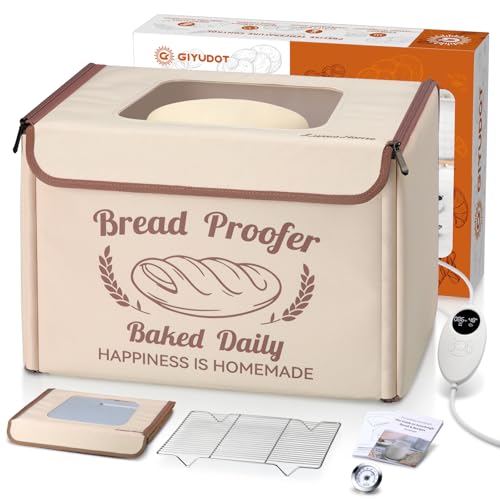
- 50–113°F control and 48-hour timer
- Three heating zones with NTC sensing
- Foldable 36-liter kit with rack and humidor
Best For: Small bakeries needing controlled, versatile fermentation
Best Simple Dough-Tray Value
Vababa 2-Pack Pizza Dough Boxes

- Two 16-liter BPA-free containers
- Fits about four to six dough balls each
- Clip-on lids help retain moisture
Best For: Refrigerator-based dough proofing and storage
Best Compact Heated Option

- 50–113°F heating with a 48-hour timer
- Three-zone warming and insulated lining
- Folds for storage and includes a metal rack
Best For: Small batches and bakeries with limited storage space
Best for Batch Pizza Dough
Zopnny Stackable Proofing Boxes

- Three stackable food-grade plastic trays
- Large footprint for multiple dough portions
- Vented lids and refrigerator/freezer-safe design
Best For: Chilled pizza dough batching and organized storage
Best Overall

- Folds to 1.8 inches thick for storage
- 1°F temperature control with 24-hour timer
- Dual windows and three-sided heating
Best For: Small bakeries needing precise, space-saving proofing
Best Bakery Style
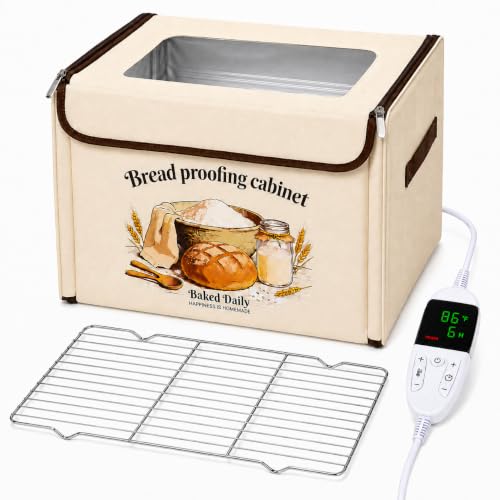
- 12 settings from 86°F to 141°F
- 1-to-12-hour timer with supervised continuous mode
- Folding design with window and metal rack
Best For: Compact kitchens wanting preset control and classic styling
Best Climate-Controlled Pick
CasaChic 2-Story Bread Proofing Box

- Two-tier design for multiple dough batches
- 70–158°F control with humidity gauge and water tray
- Dual windows and fold-flat storage
Best For: Small bakeries needing capacity and detailed proofing control
Best Large-Capacity Folding Pick

- 34-liter collapsible chamber
- 0–48-hour timer for long fermentation
- Waterproof liner and clear viewing window
Best For: Small bakery setups handling bowls, jars, and extended ferments
Best Portable Option
Foldable Bread Proofing Box with Carry Bag

- 20-liter collapsible design with carry bag
- 50–105°F control and 48-hour timer
- Viewing window and insulated construction
Best For: Mobile bakers and small teams proofing moderate batches
Best All-in-One – GIYUDOT Folding Temperature-Controlled Proofer
For small bakeries seeking bread proofing boxes for small bakeries that can handle varied fermentation tasks, the GIYUDOT combines adjustable heat, a long timer, insulation, and a built-in rack. Its 36-liter foldable design offers useful capacity without requiring permanent counter space.
Best For: Small bakeries and serious home bakers needing controlled proofing for multiple dough batches, pizza, yogurt, or kombucha.
Pros:
- Adjustable 50–113°F temperature range with timers up to 48 hours.
- Three heating zones and an NTC sensor support even, stable warming.
- Includes a stainless steel rack, humidor, recipes, and a viewing window.
- Foldable construction and a 16 × 12 × 12-inch interior help save space.
Cons:
- Its 65-watt electric design requires access to an outlet.
- The single included shelf may limit multi-level batch organization.
- More feature-rich than needed for bakeries wanting only a basic dough container.
The GIYUDOT is the most complete option here for bakers who want active temperature control and versatile fermentation in a compact, insulated enclosure.
Best Simple Dough-Tray Value – Vababa 2-Pack Pizza Dough Boxes
For bakeries looking for straightforward bread proofing boxes for small bakeries, the Vababa two-pack provides lidded plastic containers for refrigerator-friendly dough storage. Each 16-liter box can hold approximately four to six dough balls and has a transparent design for quick checks.
Best For: Small baking operations that proof dough in the refrigerator and prefer simple, reusable containers over heated equipment.
Pros:
- Two 16-liter containers provide capacity for multiple dough balls.
- Clip-on lids help retain moisture during proofing.
- BPA-free, transparent plastic makes contents easy to inspect.
- Suitable for bread dough, pizza crust, and general food storage.
Cons:
- No heating element, temperature control, or timer is included.
- The 5.7-inch exterior height may not suit tall dough vessels.
- Manual container management offers less environmental control than an electric proofer.
The Vababa set is a practical low-complexity choice when your bakery already has suitable refrigerator space and mainly needs covered dough trays.
Best Compact Heated Option – XPLI Folding Bread Proofer
The XPLI folding proofer is a compact option for buyers comparing bread proofing boxes for small bakeries. It provides adjustable warming from 50–113°F, a 48-hour timer, insulated construction, and a viewing window, while folding away when not in use.
Best For: Small bakeries needing an economical heated space for one standard proofing bowl, starter, or pizza dough batch.
Pros:
- Three heating zones provide front, back, and bottom warming.
- Temperature adjusts from 50–113°F with a timer up to 48 hours.
- Foldable design helps reduce storage demands.
- Includes a metal rack and a viewing window for monitoring progress.
Cons:
- The listed interior is intended to fit one standard proofing bowl, limiting throughput.
- It does not list a humidor or recipe materials in the included components.
- Unlike rigid commercial equipment, its polyester folding construction may feel less suited to heavy-duty use.
The XPLI offers the key controls of a heated proofer in a lightweight, storable format, making it a sensible fit for smaller batches and limited workspaces.
Best for Batch Pizza Dough – Zopnny Stackable Proofing Boxes
For operations prioritizing batch organization, the Zopnny three-pack is among the more practical bread proofing boxes for small bakeries. Its stackable, vented containers provide covered space for pizza dough while fitting refrigerator or freezer workflows.
Best For: Small bakeries and pizza-focused kitchens proofing several dough portions without powered temperature control.
Pros:
- Three stackable boxes support organized batch proofing.
- Large 17.32 × 12.63 × 4.56-inch trays accommodate multiple portions.
- Vented lids help maintain moisture without being airtight.
- BPA-free food-grade plastic is listed as refrigerator- and freezer-safe.
Cons:
- No heating, temperature adjustment, or timer is included.
- The 4.56-inch height may restrict larger dough shapes.
- The listed package quantity is three, with no separate powered enclosure or rack.
The Zopnny set is best viewed as a durable, space-efficient dough-tray system rather than a temperature-controlled proofer, especially useful for chilled pizza production.
Best Overall – Folding 130°F Bread Proofer
For small bakeries needing dedicated bread proofing boxes for small bakeries, this folding model combines adjustable heat, insulation, and a space-saving design. Its 36-liter chamber, dual viewing windows, and included rack make it practical for monitoring dough without repeatedly opening the box.
Best For: Small bakeries and serious home bakers that want precise, adjustable proofing with easier storage.
Pros:
- Folds to about 1.8 inches thick for compact storage.
- Adjusts from ambient warmth up to 130°F in 1°F increments and includes a 24-hour timer.
- Three-sided heating, five-layer insulation, overheat protection, and a metal rack support consistent fermentation.
- Dual windows let you monitor dough from the top and front.
Cons:
- The 130°F maximum is lower than some proofers, so it may not suit recipes requiring higher temperatures.
- It is a single 36-liter chamber rather than a multi-zone commercial proofer.
This is the strongest all-around choice when temperature precision and storage flexibility matter. The folding construction is especially useful in compact bakery workspaces, while the rack and viewing windows add day-to-day convenience.
Best Dough Container – 5-Quart Stackable Proofing Tray
Among bread proofing boxes for small bakeries, this 5-quart container is a useful companion for organizing dough before or during fermentation. It holds up to 6.6 pounds of dough, seals in moisture, and fits two containers inside the compatible folding proofing box.
Best For: Bakeries that need a stackable container for bulk dough, multiple dough balls, fridge storage, and use inside a compatible proofer.
Pros:
- Holds up to 6.6 pounds of dough or as many as six dough balls.
- Translucent walls and volume markings make rise progress easy to monitor.
- Stackable design works in refrigerators and compatible folding proofing boxes.
- BPA-free polypropylene resists stains, odors, and sticky dough residue.
Cons:
- This is a passive container, not a heated proofing box.
- The listing specifies one container, so expanding capacity requires additional units.
Choose this tray when your priority is clean, organized dough handling rather than temperature control. Its wide base supports stretch-and-fold work, and the lid helps protect dough from drying during fermentation.
Best Bakery Style – Classic Cream Folding Proofer
For small bakeries shopping for bread proofing boxes for small bakeries with a more traditional look, this cream-colored folding proofer offers 12 temperature settings and a built-in timer. Its soft-sided construction folds away, while the top window and rack support straightforward rise monitoring.
Best For: Small bakeries and kitchens that value a classic bakery appearance, simple preset temperature choices, and compact storage.
Pros:
- Provides 12 temperature settings from 86°F to 141°F.
- Includes a 1-to-12-hour timer plus a continuous mode for supervised use.
- Folds down for cabinet or drawer storage.
- Top viewing window and removable metal rack make monitoring and container placement easier.
Cons:
- The temperature selection is preset-based rather than adjustable in 1°F increments.
- Continuous mode requires active supervision and should not be used while sleeping or away.
- The listing does not specify dual-window viewing or three-sided heating.
This model is a good fit if appearance and a broader 141°F temperature ceiling matter more than fine-grained controls. Its foldable format keeps it practical for kitchens that cannot dedicate permanent counter space to a proofer.
Best Climate-Controlled Pick – CasaChic 2-Story Bread Proofing Box
For small bakeries seeking bread proofing boxes for small bakeries, the CasaChic stands out with a two-tier layout, adjustable 70–158°F temperature control, a humidity gauge, and an included water tray. Its surrounding heating system is designed to create more consistent conditions for dough, sourdough starter, and other fermentation projects.
Best For: Small bakeries and serious bakers that need extra capacity, humidity monitoring, and a broad temperature range.
Pros:
- Two removable racks provide a spacious, double-decker proofing setup.
- Temperature control, humidity gauge, and water tray support a more controlled environment.
- Dual viewing windows help monitor dough without opening the box.
- Folds flat for easier storage when not in use.
Cons:
- At 12 x 16 x 18 inches, it requires more counter or storage space when assembled.
- The 200-watt, 110-volt design may be more capacity than a very small operation needs.
The CasaChic is a strong choice when batch capacity and environmental control matter most. Its foldable construction helps offset the larger footprint, while the two racks make it practical for proofing multiple items at once.
Best Large-Capacity Folding Pick – FOHERE Bread Proofing Box
Among bread proofing boxes for small bakeries, the FOHERE offers a useful balance of capacity and storage efficiency. Its 34-liter collapsible design fits one mixing bowl plus four small jars, while convection heating, insulation, and a 0–48-hour timer support longer fermentation schedules.
Best For: Small bakery workspaces that need a roomy proofer for bowls, jars, sourdough, and other fermentation projects.
Pros:
- 34-liter capacity accommodates a mixing bowl and multiple small jars.
- 0–48-hour timer suits extended sourdough fermentation.
- Convection heating and five-layer insulation are designed to promote even temperature retention.
- Waterproof liner and viewing window simplify cleanup and monitoring.
Cons:
- Hand-wash care may require more maintenance than a fully machine-washable setup.
- The listed temperature information is inconsistent in the supplied description, so buyers should confirm the exact range.
The FOHERE is well suited to operations that proof larger batches but still need the box to collapse for storage. Its long timer and multi-use design are particularly helpful for sourdough, yogurt, kombucha, and other scheduled fermentation work.
Best Portable Option – Foldable Bread Proofing Box with Carry Bag
For small bakeries that value portability, this foldable bread proofing box combines a 20-liter chamber with a carry bag and lightweight insulated construction. Its 50–105°F temperature range and 48-hour timer provide a practical setup for bread, pizza dough, yogurt, and kombucha.
Best For: Small bakery teams or mobile bakers that need a compact, transportable proofer for moderate batch sizes.
Pros:
- Included carry bag makes transport and storage more convenient.
- Foldable, insulated construction helps save space between uses.
- Adjustable temperature and timer controls support different fermentation projects.
- Viewing window allows progress checks without opening the box.
Cons:
- Its 20-liter capacity is smaller than the larger two-tier and 34-liter alternatives.
- Hand-wash care may be less convenient for frequent commercial-style use.
This model makes the most sense when flexibility and portability outweigh maximum capacity. The aluminum-foil lining, zipper closure, and carry bag create a convenient proofing solution for smaller batches and changing work locations.
How We Picked the Best Bread Proofing Boxes for Small Bakeries
We focused on features that matter in a small-bakery setting: usable capacity, temperature range, timer control, portability, cleaning convenience, and suitability for different dough formats. The selection includes folding electric proofers, stackable containers, covered trays, and insulated fermentation boxes so you can compare equipment for sourdough, enriched dough, rolls, and pizza production.
Because listed specifications can vary by seller or model revision, verify the current dimensions, wattage, included racks, temperature accuracy, and maximum dough capacity before ordering.
Quick Comparison
- Best for controlled fermentation: Choose an electric box with adjustable temperature and a long timer.
- Best for pizza batches: Select lidded containers or multi-pack boxes with enough surface area for individual dough balls.
- Best for limited storage: Folding models collapse when not in use and are easier to move between prep areas.
- Best for larger production: Two-story or rack-equipped proofers provide more vertical capacity, but require additional counter or floor space.
- Best for simple workflows: A non-electric covered container can work well when your bakery already has a stable warm environment.
Key Buying Factors for Bread Proofing Boxes for Small Bakeries
Capacity and Footprint
Estimate your normal batch size rather than choosing solely by the largest advertised capacity. Check internal dimensions and tray spacing, especially for shaped loaves that need room to expand. Pizza dough containers should leave enough space between portions to prevent sticking during the final rise.
Temperature Control
Adjustable temperature is useful when working with sourdough, lean dough, enriched dough, or seasonal changes in room temperature. A broad range can provide flexibility, but stable, even heat and a readable control panel are more important than an unusually high maximum temperature.
Timer and Monitoring
A long timer helps coordinate overnight or extended fermentation. Look for clear controls, an end-of-cycle alert, and a sensor designed to reduce temperature swings. A timer does not replace checking dough volume and texture, since recipes and yeast activity vary.
Cleaning and Durability
Removable trays, smooth interiors, and wipe-clean surfaces reduce downtime. Confirm whether the containers are BPA-free and whether racks or lids can be washed safely. Folding fabric or zippered models may be convenient, but they need careful cleaning and thorough drying.
Who Should Buy Which Bread Proofing Boxes for Small Bakeries?
Small bread-focused bakeries should prioritize an electric proofer with stable temperature, a long timer, and enough rack or tray capacity for the day’s typical production. Pizza shops and bakeries making multiple dough balls may get better value from lidded multi-packs that simplify portion separation and stacking.
Home-based or mobile sellers should consider a folding model or a proofing box with a carry bag, particularly when storage and transport matter. Businesses with limited counter space can choose compact containers or collapsible proofers, while higher-volume operations should confirm that the selected unit can handle repeated batches without crowding.
Before buying, compare the box’s internal capacity with your mixing schedule, measure the available workspace, and confirm the return policy. The right choice is the one that provides repeatable conditions without slowing down loading, unloading, or cleanup.