Making bread and pizza dough by hand can be tiring, especially when you bake large batches or need consistent results. The best dough kneading machines under $300 combine powerful mixing with practical capacities and, in many cases, built-in proofing functions.
This roundup compares 10 affordable dough makers and stand mixers for home kitchens, focusing on bowl size, controls, fermentation options, cleanup, and the types of dough each machine can handle.
Best 10 Dough Kneading Machines Under 300 Picks for 2026
Compact Mixer Choice
Kitchen in the box 3.2Qt Stand Mixer
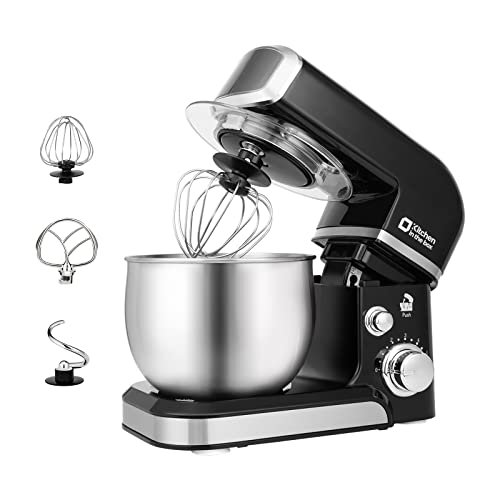
- Lightweight, space-saving design
- Six speeds for varied recipes
- Includes dough hook, beater, and whisk
Best For: Small kitchens and everyday multi-purpose mixing
Large-Batch Versatility Pick

- 9.5-quart bowl for substantial batches
- Four modes for dough and fillings
- Adjustable seasonal fermentation settings
Best For: Large households and frequent batch baking
Simple Proofing Value

- Kneads and proofs in one machine
- 6.5-liter stainless steel bowl
- Ingredient chute and digital time controls
Best For: Routine family baking with integrated proofing
Large-Batch Proofing Pick

- 6.34-quart 304 stainless steel bowl
- Two proofing temperatures with digital timer
- Simulated hand-kneading mode
Best For: Home bakers making larger batches with built-in proofing
Family-Size Everyday Choice

- 7-liter bowl for 400–1600g of dough
- Automatic kneading, resting, and fermentation
- Transparent lid with convenient ingredient opening
Best For: Families preparing varied dough recipes in flexible batch sizes
Hand-Kneading Style Pick
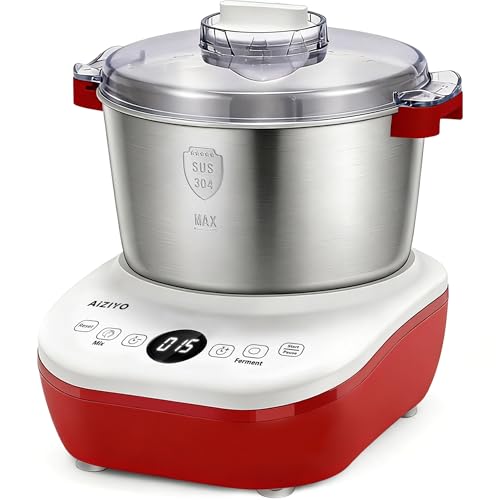
- Mix-pause-mix program simulates hand kneading
- 77–100°F built-in fermentation range
- Wide opening for adding ingredients mid-mix
Best For: Bakers seeking controlled proofing and hand-style dough development
Family Batch Pick
7.4Qt Kneading & Fermentation Machine

- 7.4-quart capacity for larger dough batches
- Kneads and ferments in one stainless steel bowl
- Intermittent kneading and suction feet support steady operation
Best For: Families and frequent home bakers
Quiet Control Pick
6.5Qt Dough Mixer with Knob Control

- Handles 300–1,400 grams of dough
- 77–95°F constant-temperature fermentation
- Low-noise design with knob controls and suction-cup base
Best For: Home bakers wanting quieter, hands-on operation
Timed Fermentation Pick – Joydeem 7.4Qt Dough Maker
For shoppers comparing dough kneading machines under 300, the Joydeem JD-HMJ7L stands out as a dedicated dough maker with preset timing, intermittent kneading, and fermentation. Its 6.6-quart capacity and 250-watt motor are suited to family-size batches of bread, pizza, buns, and dumplings.
Best For: Home bakers who want timed kneading and proofing with a large stainless steel bowl.
Pros:
- Preset programs can knead dough in 15 minutes or knead and proof in 45 minutes.
- 6.6-quart capacity supports larger family batches.
- Removable, dishwasher-safe stainless steel bowl and blade simplify cleanup.
- Suction cups and a weighted body help reduce movement and noise.
Cons:
- Only one speed is listed, so mixing control is limited.
- The reported noise level is 70 dB.
- The base is not dishwasher safe.
The JD-HMJ7L is a practical choice when automated timing and fermentation matter more than adjustable speeds. Its vertical design and removable top also make it convenient for smaller work areas and ingredient adjustments.
Compact Mixer Choice – Kitchen in the box 3.2Qt Stand Mixer
Among dough kneading machines under 300, this Kitchen in the box stand mixer is the compact, multi-purpose option. It combines a 3.2-quart stainless steel bowl with six speeds and separate dough, beater, and whisk attachments for everyday baking.
Best For: Apartment kitchens, couples, and new bakers who need a lightweight mixer for small batches.
Pros:
- Compact 7-pound design fits small kitchens and limited storage spaces.
- Six speeds provide more control for dough, batter, whipping, and delicate mixing.
- Includes a dough hook, flat beater, whisk, and stainless steel bowl.
- Four anti-slip suction cups help keep the mixer stable.
Cons:
- The 3.2-quart bowl is smaller than dedicated family-size dough makers.
- The 300-watt motor is intended for daily use rather than stated large-batch capacity.
- It does not list a fermentation function.
This mixer makes sense if dough preparation is only part of your routine and you also want tools for cakes, cream, and batters. Its smaller bowl is a limitation for frequent large batches, but the six-speed control adds versatility.
Large-Batch Versatility Pick – Joydeem 9.5Qt Dough Maker
For buyers seeking dough kneading machines under 300 with substantial capacity, the Joydeem HMJ-A901 offers a 9.5-quart bowl and a 300-watt motor. Its Mix, Ferment, Mix + Ferment, and Blend modes cover dough, proofing, and filling preparation for recipes such as bread, pizza, roti, dumplings, and sourdough.
Best For: Larger households and bakers who prepare substantial dough batches or mixed fillings.
Pros:
- 9.5-quart bowl handles up to 2,800g of flour, with a 2,500g fermented-dough maximum.
- Adjustable mixing time from 5 to 30 minutes and fermentation time from 5 to 120 minutes.
- Winter and summer fermentation modes support different environments.
- Continuous Blend mode is useful for evenly mixing fillings.
Cons:
- Larger 12.9-by-12.2-by-13.8-inch dimensions require more counter space.
- The supplied notes do not list multiple kneading speeds.
- Its larger capacity may be excessive for small households or occasional bakers.
The HMJ-A901 is the strongest fit here for high-volume preparation and recipe flexibility. Its adjustable fermentation settings and separate filling mode make it more versatile than a basic kneading-only machine, provided you have room for its larger footprint.
Simple Proofing Value – VEVOR 6.9Qt Dough Mixer
The VEVOR 6.9-quart dough mixer is a straightforward option among dough kneading machines under 300. Its 250-watt, 150-RPM motor continuously mixes dough, while the built-in fermentation function supports bread, pizza, sourdough, steamed buns, and dumpling wrappers.
Best For: Families that want one machine for routine kneading and constant-temperature proofing.
Pros:
- 6.5-liter stainless steel bowl can handle up to 1,600g of flour.
- Kneading and fermentation are combined in one appliance.
- Detachable ingredient chute allows additions without stopping the machine.
- Digital controls support convenient operating-time settings.
Cons:
- Continuous mixing does not simulate intermittent hand-kneading.
- The notes do not specify adjustable speed settings or fermentation temperature ranges.
- Its 11.61-by-11.42-by-13.19-inch body needs dedicated counter space.
This VEVOR model favors simple operation and practical family-size capacity. It is a good match for shoppers who value combined kneading and proofing, though those wanting more detailed program or speed control may prefer a more adjustable machine.
Large-Batch Proofing Pick – 6L Electric Dough Maker
For shoppers comparing dough kneading machines under 300, this 6-liter electric dough maker stands out for combining automatic mixing, simulated hand-kneading, and proofing in one countertop appliance. Its 304 stainless steel bowl, digital touch controls, and two proofing temperatures make it practical for bread, pizza, dumplings, noodles, and other dough-based recipes.
Best For: Home bakers who want a generously sized bowl and built-in proofing for larger batches.
Pros:
- 6.34-quart food-grade 304 stainless steel bowl suits large batches.
- Two proofing settings—98°F and 102°F—support different fermentation conditions.
- Simulated hand-kneading mode uses alternating blade movement to help develop chewy dough.
- Digital timer and touch controls simplify proofing and mixing adjustments.
Cons:
- At 65 dB, it is not designed as an especially quiet appliance.
- The 200-watt motor may be better suited to home-baking quantities than very heavy commercial workloads.
This model is a strong all-in-one choice when proofing control and capacity matter more than a compact footprint. The clear lid also lets you monitor fermentation without opening the bowl.
Family-Size Everyday Choice – Sakerplus 7L Dough Maker
Among dough kneading machines under 300, the Sakerplus electric dough maker is geared toward frequent family baking and meal prep. Its 7-liter bowl handles approximately 400–1600 grams of dough, while automatic kneading, resting, and fermentation functions cover recipes from bread and pizza to noodles and dumplings.
Best For: Families and home cooks who need flexible capacity for both small and larger dough batches.
Pros:
- Large 7-liter bowl accommodates approximately 400–1600 grams of dough.
- Combines kneading, resting, and fermentation in one machine.
- Transparent lid helps contain ingredients while allowing progress checks.
- Non-slip feet, side handles, and a digital control panel support convenient operation.
Cons:
- The notes do not specify exact fermentation temperatures or a dedicated countdown range.
- The housing uses aluminum and plastic along with stainless steel, rather than being entirely metal.
The Sakerplus is a practical capacity-focused option for everyday preparation. Its removable bowl and included kneading hook, measuring cup, and spoon add convenience for routine use.
Hand-Kneading Style Pick – AIZIYO DoughChief 5.3QT Mixer
If you are comparing dough kneading machines under 300 and want fermentation control with a more hands-on kneading pattern, the AIZIYO DoughChief is worth considering. Its mix-pause-mix program and S-shaped blade are designed to simulate hand kneading, while the ferment mode maintains a stated 77–100°F range for dough proofing.
Best For: Home bakers who prioritize hand-kneading-style motion and adjustable proofing for bread, pizza, pasta, and mochi.
Pros:
- Mix-pause-mix operation is designed to mimic natural hand kneading.
- Built-in ferment mode maintains a 77–100°F temperature range.
- Wide top opening allows ingredients to be added while mixing.
- Touch controls include digital display and time-setting functions.
Cons:
- The 5.3-quart capacity is smaller than the 6L and 7L models in this roundup.
- Its listed 75 dB noise level is higher than the 6L model’s stated 65 dB.
- Fermentation requires yeast or another fermentation powder, according to the product notes.
The DoughChief offers a focused combination of kneading motion and proofing control in a relatively compact package. It is especially appealing for users who want to fine-tune dough preparation rather than simply mix ingredients.
Family Batch Pick – 7.4Qt Kneading & Fermentation Machine
For shoppers comparing dough kneading machines under 300, this 7.4-quart electric dough maker is designed for larger home batches. It mixes, kneads, and ferments in one 304 stainless steel bowl, with intermittent kneading intended to help control heat and mimic a rest-between-kneads rhythm.
Best For: Families and frequent home bakers making bread, pizza, sourdough, rolls, or dumplings in larger batches.
Pros:
- Generous 7.4-quart capacity for family-size dough batches.
- Combines kneading and fermentation in one bowl.
- 304 stainless steel bowl is designed for easier release and cleanup.
- Suction feet help stabilize the machine during kneading.
Cons:
- Its larger capacity may be more than needed for small batches.
- At 250 watts, it is positioned for home baking rather than heavy commercial use.
This is a practical choice when capacity and an integrated fermentation function matter most. Its stainless steel bowl and stabilizing suction feet add convenience for recurring bread and pizza dough preparation.
Feature-Rich Choice – 7.4Qt Dough Mixer with Top Window
Among dough kneading machines under 300, this 7.4-quart model stands out for its constant-temperature fermentation, digital controls, and top ingredient window. Its 250-watt motor and stainless steel construction are suited to preparing bread, pizza, and pastry dough for larger households or gatherings.
Best For: Bakers who want a large-capacity mixer with timed controls and the ability to add ingredients without stopping.
Pros:
- 7.4-quart capacity can handle larger batches for families or gatherings.
- Constant-temperature fermentation supports a consistent proofing environment.
- Top window allows water, seasoning, or other ingredients to be added during mixing.
- Includes digital display, time setting, and automatic shutoff features.
Cons:
- Only one speed is listed in the supplied specifications.
- Its 7.4-quart size may be less convenient for very small recipes.
This model is a strong fit if monitoring fermentation and making mid-cycle additions are priorities. The large stainless steel bowl and intermittent operation design make it geared toward repeat home baking with fewer interruptions.
Quiet Control Pick – 6.5Qt Dough Mixer with Knob Control
For those comparing dough kneading machines under 300, this 6.5-quart mixer offers a more compact capacity with a removable lid, knob controls, and built-in fermentation. It is specified for 300 to 1,400 grams of dough and uses intermittent kneading, suction-cup stabilization, and low-noise technology for routine bread, pizza, pasta, and dumpling preparation.
Best For: Home bakers who want hands-on knob control, lower-noise operation, and a defined dough range for medium-to-large batches.
Pros:
- 6.5-quart bowl handles 300 to 1,400 grams of dough.
- Constant-temperature fermentation is adjustable from 77–95°F.
- Removable lid allows ingredients to be added while the machine runs.
- 304 stainless steel bowl and blade are designed for durability and easier cleaning.
Cons:
- The bowl is not recommended for dishwasher cleaning.
- Fermentation requires yeast or baking powder.
- Its knob interface may appeal less to shoppers seeking digital controls.
This is a well-rounded option for buyers who prefer tactile controls and a slightly smaller capacity than the 7.4-quart alternatives. The stated noise reduction, suction-cup base, and repair coverage add reassurance for regular home use.
How We Picked the Best Dough Kneading Machines Under 300
We focused on machines priced below $300 that are designed for bread, pizza, pastry, or general kitchen mixing. The selected models include dedicated dough makers and compact stand mixers, giving shoppers options for both large batches and everyday countertop use.
Our comparison emphasizes practical specifications: bowl capacity, dough-focused functions, fermentation or proofing support, control design, removable parts, and construction materials such as stainless steel. Capacity claims should be considered alongside the manufacturer’s recommended flour or dough limit, since an oversized bowl does not always mean the motor can knead a full load efficiently.
Quick Comparison
| What to Compare | Best For | Why It Matters |
|---|---|---|
| 3.2 to 5.3 quarts | Small households and occasional baking | Uses less counter space and suits smaller recipes |
| 6 to 7.4 quarts | Regular bread and pizza baking | Balances batch size with manageable storage |
| 9.5 quarts | Large batches and frequent baking | Provides more room for substantial dough quantities |
| Fermentation function | Yeast-based dough recipes | Helps maintain a controlled proofing environment |
| Stand-mixer design | Multi-purpose kitchen use | Can handle more than dough when compatible attachments are included |
Key Buying Factors for Dough Kneading Machines Under 300
Capacity and Batch Size
Choose capacity based on how much dough you normally make, not the largest advertised bowl measurement. A compact mixer may be easier to store and better for one loaf, while a 6- to 9.5-quart machine is more suitable for multiple loaves, family-size pizza batches, or holiday baking.
Motor and Dough Handling
Dense dough places more strain on a motor than cake batter or whipped eggs. Look for a stable base, dough-specific settings, and clear guidance about maximum flour or dough quantities. Avoid assuming that more speed settings automatically mean better kneading.
Fermentation and Controls
Built-in fermentation can simplify yeast baking by providing a warmer, more consistent environment. Touch panels and preset programs are convenient, while manual timing and speed controls give experienced bakers more flexibility. Confirm whether the machine supports separate kneading and proofing stages.
Bowl, Lid, and Cleanup
Stainless-steel bowls are durable and generally easy to clean. Removable lids can help with access and washing, but inspect the included parts and care instructions before buying. A machine that is difficult to lift or clean may be frustrating even if its capacity is impressive.
Who Should Buy Which Dough Kneading Machines Under 300?
Choose a compact stand mixer if you make small batches, need a lighter appliance, or want one machine for dough, eggs, and other everyday mixing tasks.
Choose a mid-size dedicated dough maker if bread and pizza are your main priorities and you value kneading and proofing controls in one appliance.
Choose a larger 7- to 9.5-quart model if you regularly prepare multiple loaves, large pizza batches, or dough for a family. Before purchasing, verify the recommended load, countertop footprint, noise expectations, and return policy.